




















Exclusive Interview with István Pesti, Chef of Platán Gourmet in Tata
- 17 Oct 2025 9:15 AM

This year marks ten years since István Pesti arrived in Tata, bringing a new culinary vision that gradually transformed the Platán experience. What began as a single restaurant has evolved over the years into a diverse gastronomic world — today encompassing a fine-dining restaurant, a bistro and a manor house, each with its own character and philosophy.
When the MICHELIN Guide first turned its attention to rural Hungary, Platán Gourmet, the fine-dining arm of the Platán family, was immediately recognized with two MICHELIN Stars — an achievement that made it Hungary’s only two-star restaurant outside Budapest.
Now, another milestone marks this ongoing journey: Platán Udvarház has been awarded 1 MICHELIN Key, joining Platán Gourmet (2 MICHELIN Stars) and Platán Bistro (Bib Gourmand) among the MICHELIN Guide’s recommendations.
"You can forget an experience. But a memory stays with you," says István Pesti, who believes that this very difference is what imprints a truly exceptional dinner in a guest’s mind forever.
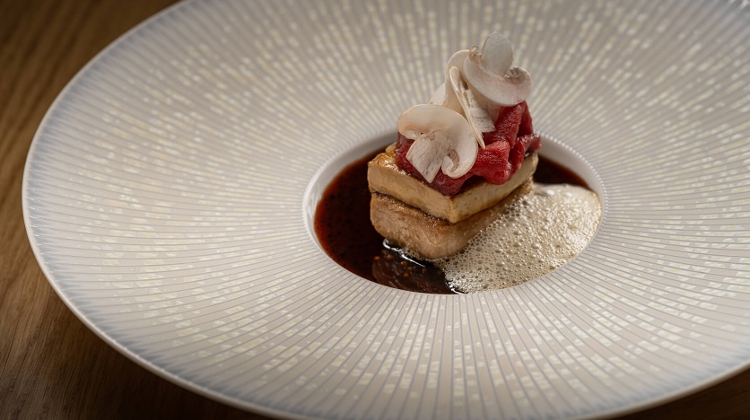
On the occasion of the restaurant’s 10-year anniversary and the latest MICHELIN recognition, we spoke with Chef István Pesti about the journey, the evolution of Platán, and the philosophy behind creating not just experiences, but lasting memories.
1. Every restaurant you’ve played a major role in has ended up on Michelin’s radar, and Platán Gourmet received two stars right off the bat. How do you explain that success?
I firmly believe that energy never disappears—it only changes form. Waiting for success without working for it — without giving it your all — just focusing on what’s in it for you, that doesn’t work. Of course, I want to live comfortably, be successful, and make good money, but I feel that none of that comes from simply wanting it.
Our team never worked for success — we worked because we wanted to create something excellent. Sure, every chef dreams of winning a Michelin star, but many harbor that dream long before they’ve put in the effort. Chasing a star as your sole objective is a dead end. You don’t become a great chef to earn a Michelin star; you earn a Michelin star because you cook extraordinarily well.
Some restaurants are now laser‑focused on snagging a second star; they’re convinced they’re already in our league. And look — anyone can reach it. If we did, so can they.
What I can’t swallow is the 23‑year‑old who’s spent half a year in one kitchen and assumes two stars will fall into their lap because they’re ‘just that amazing.’ That mindset is a real problem.
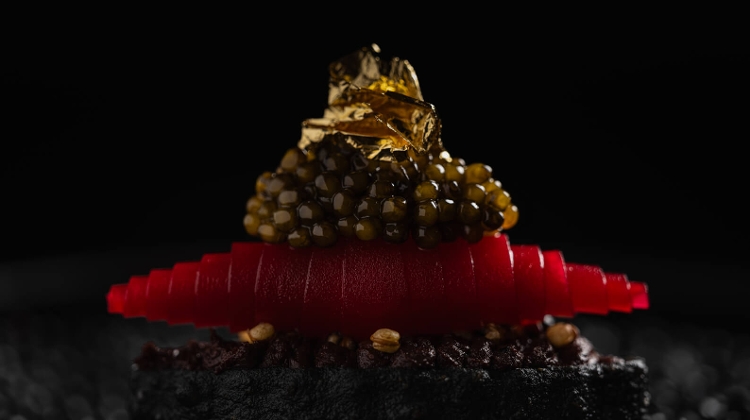
2. Why do you think you deserved those two Michelin stars?
That’s not the right way to look at it. It’s not something we deserved. But it’s nice that Michelin keeps track of me. They see that I’ve been working honestly for many years.
Our team is always evolving, always pushing to improve, and consistently meeting high standards. Consistency is everything to Michelin: they have to be certain that the quality they champion is real, repeatable, and waiting for guests at every restaurant they recommend.
What sets Platán Gourmet apart is a layer of surprise no one else in Hungary offers—the elusive ‘wow factor’ Michelin prizes so highly. We’ve built in show elements I first experimented with years ago: unexpected moments threaded through the meal.
I think far beyond the kitchen; I design an end‑to‑end experience, always through the guest’s eyes. That perspective guides everything we do.
We’re very intentional in what we do. We’re not tossing around fireworks for the sake of show. Instead, we pair world‑class cuisine with touches that, while not strictly about the food, enrich the time our guests spend with us. It’s these extra touches that turn an experience into a lasting memory. It’s far more complex.
And, of course, there’s the fact that we’re technically skilled and exceptionally strong when it comes to flavor. In that respect we outperform a great many restaurants — not just in Hungary, but around the world. We’re proud of how confidently we work with flavors; we don’t hold back.
Platán Gourmet is out in the countryside, and we committed to this standard back when there was no talk whatsoever of Michelin even considering rural restaurants. That alone shows we didn’t do it for awards; we did it because we wanted to create something remarkable.
The owners only allowed Platán Gourmet to be launched after the bistro because they knew that if we couldn’t keep moving forward, I’d thank them for the opportunity and head to another restaurant where I could build something new again.
Platán’s growth since then has followed a beautiful — really steep — upward curve. We’ve put in an incredible amount of work together with the team.
That’s how all of this came together and eventually led to those two stars.
3. Are there downsides to having two Michelin stars? From a financial standpoint, is your success tempered by whether Platán Gourmet is actually turning a profit?
Profit isn’t tied to the star count. Would life be tougher without them? Absolutely. But the challenges we face don’t come from holding two stars. It’s not that guests shy away from a two‑star restaurant; it’s that we’re in Tata, where premium international tourism is nonexistent.
That’s the missing piece — the steady stream of foreign diners a restaurant like Stand benefits from in Budapest. We draw just as many Hungarian guests; they simply have the tourists on top.
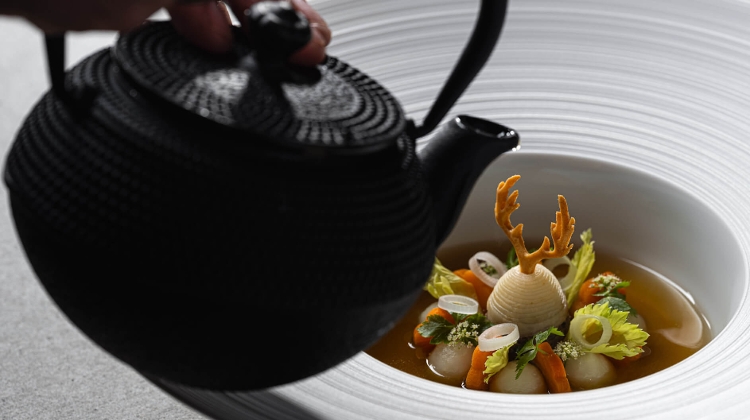
4. Compared to what you once imagined this profession would be, how do you see it now?
I’ve been a chef for 27 years — this is my calling. It’s what I’ve wanted to do my entire life. Even in school I knew I wanted to be a cook; that’s why I didn’t go to high school. Maybe that determination is what made me better than average. This was the profession I wanted.
The hard part was discovering — rather painfully — that cooking school would also never teach me what I really needed to know. Our vocational teacher was terrible, and he was also our homeroom teacher. He didn’t like me. One day a substitute came in and explained that you make brown sauce by ‘sweeping out the bottom of the fridge.’
Even at sixteen I was outraged that this was how they actually taught it. In the old days that was how brown sauce was made — throwing in every leftover.
Later, in a professional kitchen, they also urged me to toss in whatever was on hand. I told them, ‘This isn’t a bin; I’m making a proper sauce.’ They didn’t understand. I was barely twenty, coming in early so I’d have the time to do it my way. Older chefs—ten, fifteen years my senior—were stunned to see that this was even possible.
When I first entered the profession, opportunities were still quite limited. You mostly had to teach yourself, picking up tricks here and there.
5. Where does your love for cooking and creating come from?
They could easily have put me off cooking at home, because I was always assigned the monotonous jobs: shelling peas, whipping egg whites, scrubbing vegetables. I’m not sure why cooking still appealed to me—there was simply a love of good food inside me.
There’s a psychological side to it as well. I always felt I was more than people credited me for. Looking back, I don’t think anyone expected anything of me. Even when I started working, no one saw potential in me.
To this day, I have a bit of impostor syndrome — like someday they’ll find out I don’t actually know what I’m doing, that it just happened to turn out well, or I’ve just hidden my limitations well. But that feeling also fuels me. I’m constantly driven to prove I can really do this.
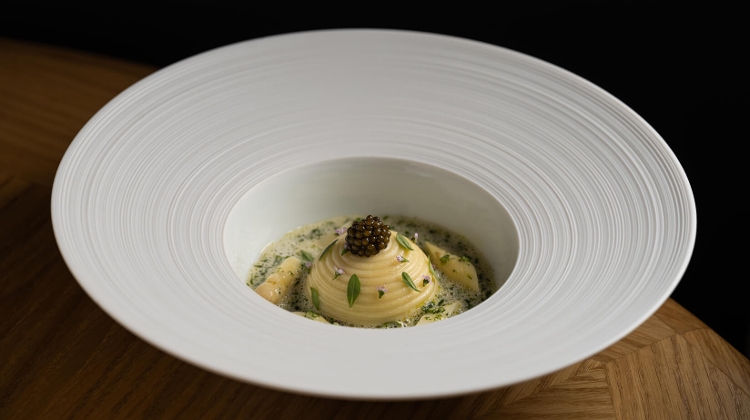
6. When you first started out, this profession was regarded very differently. Today, chefs are held in high esteem and treated with real respect.
When I started working, the chef’s profession had zero prestige. If I told people what I did, they looked down on me — as if the job automatically implied you were an alcoholic and a chain‑smoker. Yet over the past four decades I’ve watched that low‑status trade become fashionable.
I was sixteen when I heard about a Swiss chef whose clientele literally followed him to a new restaurant. I never imagined I’d live to see that level of chef loyalty in my own career — back then the notion felt downright surreal.
7. If you were to map out stages of your growth, would you tie them to the restaurants you’ve worked at? After all, each of those places saw you rise to the top role — or earn the top honour — then possible in Hungary.
Yes — there are four main milestones in my career: Cosmo, Babel, Tanti, and Platán. There were smaller projects too, but those are the major ones.
My professional growth is definitely linked to these restaurants. My first head‑chef post came in 1997–98, when Cyrano evolved into Cosmo and launched a fine‑dining line. By 2000 Cosmo ranked among Hungary’s very best; we were doing things no one else had tried, and guests found it genuinely refreshing. Ever since, I’ve been able to keep moving forward because my teams and I never stopped creating work that felt thrilling.
Awards, though, aren’t driven by merit alone; they’re shaped by the circles that hand them out. Talent isn’t always the decisive factor in where the industry chooses to slot you.
At the start of my career there were no rankings or lists like we have today. A handful of restaurants were famous, and it was the owners — not the chefs — who drew the crowds. That mindset persisted for years— take Babel, for instance, and Hubert Hlatky-Schlichter.
He also believes he is the restaurant’s DNA, not the chef. Personally, I see that as missing the mark, but the debate over whether a chef or an owner determines a restaurant’s success is complex, and people hold many different views.
I’ve been lucky. From the outside, it may have seemed like I was stepping away from a successful place, but I always ended up going forward. After Tanti earned a Michelin star, I left to work in a run-down rural restaurant. People thought I’d bolted because I couldn’t handle the pressure. The star never scared me; I just couldn’t see eye to eye with the owners.
Platán’s outcome was far from certain, yet we turned it into what it is today.
I didn’t build this alone — there was a small crew beside me, and it’s thanks to them we’re here today. I keep saying my pride isn’t just about the past four years; the foundation was poured in the first two and a half, when nobody knew what this place might become.
We invested the sweat and the hours, heads down, no applause. That grind is the only reason we’re standing here now. We didn’t walk into a sure bet — we walked into a wreck and turned it into something real, long before even the owner believed it was possible.
8. You never worked abroad with a famous chef. Did that ever make you feel you were starting from a different place?
Everything I know is self‑taught. Often my team and I just invented our own solutions. Thirty years ago I was already devouring magazines and cookbooks — spending a small fortune on foreign titles long before that was fashionable.
I don’t speak English, and that’s a serious gap. I probably would have grown immensely overseas, but language closed that door and pushed me down a different road. Then again, perhaps abroad I’d have been sucked into a grind that squeezed the creativity out of me. I’m sure international experience would have given me plenty — what it might have cost me, we’ll never know.
9. How much do you draw inspiration from others? Do you still find time to visit places abroad that meet your own high standards?
Not since Covid. Before that, I traveled a lot. I love experiencing restaurants as a guest. One trip to Denmark really stayed with me — four restaurants in four days. It gave me a lot, even emotionally. We met two chefs who were incredibly humble and down-to-earth despite their talent.
10. In just a few words, how would you sum up your profession? Is ‘monotonous’ the first term that comes to mind — or would you call it ‘creative’ instead?
It’s really a blend. Cooking is 90 percent repetition, 10 percent creativity. Day in, day out, you reproduce the same dishes — that’s the monotony. Plenty of Michelin kitchens barely tweak their menus for years, sometimes decades; return ten years later and you’ll get virtually the same plate. That reliability sells, so why meddle with it?
We’ve taken the opposite tack, rotating menus far more often because we crave that constant movement — that jolt of energy that keeps the craft fun.
Words that define the job? Stress, tension, invention, endurance, relentless physical and mental load.
Humility should be on the list, though it’s not always present; for me it’s essential. Just as essential is the ability to see the big picture and build solid systems.
But maybe the most important thing is building a team — because this is not a one-man show. Netflix had a series about sports coaches called The Playbook — in Hungarian the title was Kisokos az Élethez.
It’s a documentary in which basketball and football coaches, men and women alike, talk about how they assemble a team, how they motivate the players, what they pass on during training sessions.
I heard lines in that film that I myself have said, and it felt wonderful to hear them verbatim from people far more accomplished than I am. In the first episode there’s a sentence that really stuck with me: a basketball coach who’d moved to a new city and was initially at odds with his players told them, ‘It’s not about what’s good for you, it’s not about what’s good for me — it’s about what’s good for us.’
Team interest overrides individual interest. And at Platán, my colleagues and I have given up a lot. We sacrificed things many people wouldn’t today — free time, even financial gain — because we chose a path that might not pay the most. All for the sake of creating something meaningful together.
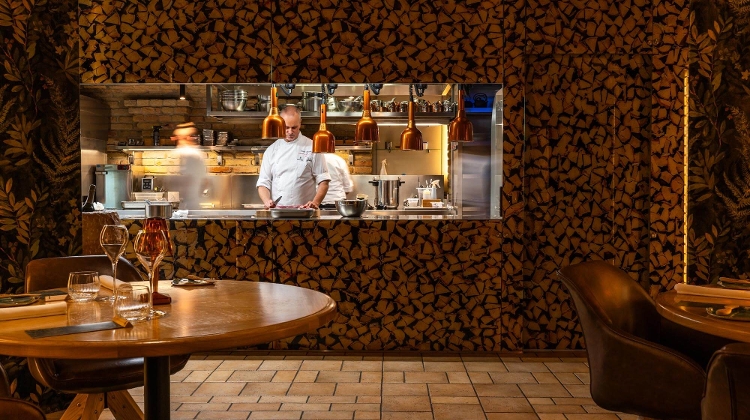
11. It’s been 10 years since Platán Bistro opened and you arrived in Tata. Today, Platán Gourmet has two Michelin stars. Where do you see yourself in your career? Is this the peak?
I’m not sure if I’ve already passed the peak or just crested the horizon. Sometimes it feels like I have — sometimes like there’s still so much potential. I still have so many ideas. Platán Gourmet hasn’t even begun to exhaust its possibilities.
What drives me now is the chance to mentor from behind the scenes, to design and refine the systems that keep us sharp. My ego’s well fed; I’m at peace. And if this is the peak, then I’m content with that.
Address:
2890 Tata, Kastély tér 6
Click here to virtually Platán Gourmet
LATEST NEWS IN specials