









XpatLoop.com News Headlines RSS Feeds
Specials  |  Classifieds  |  Events  |  Gallery  |  Headlines  |  Information  |  Interviews  |  Movies  |  Singles  |  Weather
 
 Thursday 08 January 2009
Servicing Xpats since 2000
Expat Life in Budapest, Hungary - News, Events, Movies, Restaurants, Jobs, Schools, Sport, Clubs in the Hungarian Capital
I'm here: Home / Community & culture channel / Article

Micora Web Solutions - Professional Web Development Services
Powers XpatLoop.com
Community & culture channel

To discuss sponsorship opportunities click here

• Art Galleries
more »
• Charity Societies
more »
• Childcarers
more »
• Community Churches
more »
• Cultural Institutes
more »
• Embassies
more »
• Emergency Numbers
more »
• Expats in Hungary
more »
• Expats worldwide
more »
• Family & Criminal Law Firms
more »
• International Schools
more »
• Kindergartens
more »
• Language Schools
more »
• Libraries
more »
• MBA Providers
more »
• Mothers and Toddlers
more »
• Museums
more »
• Nationality Societies
more »
• Pet Doctors & Vets
more »
• Photographers
more »
• Scouts
more »
• Translation Services
more »
• Universities
more »
• Womens Societies
more »

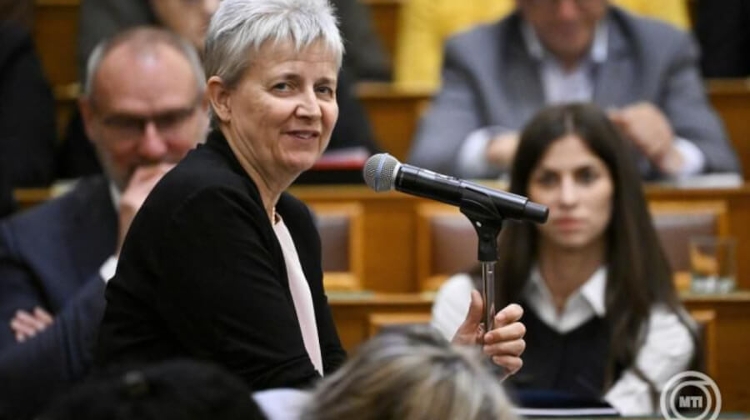
Interview With The President Of The State Audit Office Arpad Kovacs

Interview With The President Of The State Audit Office Arpad Kovacs
"We spent some Ft1,500bn on economic development every year, but it's not doing us much good. And with economic uncertainty driving up the cost of credit, the burden is set to grow by several hundred million more.


We spoke to Arpad Kovacs, president of the State Audit Office (ASZ) about the difficult economic climate and what may still be to come.
 
hvg.hu: Reform is slowing - it seems like we can't get anything done. What's the fundamental problem?

We spent some Ft1,500bn on economic development every year, but it's not doing us much good. And with economic uncertainty driving up the cost of credit, the burden is set to grow by several hundred million more. We spoke to Arpad Kovacs, president of the State Audit Office (ASZ) about the difficult economic climate and what may still be to come. 

hvg.hu: Uncertainty has its costs. How much more difficult has it made things for us?

Á.K.: The state finances its debts by issuing sovereign bonds. It's clear that if there is uncertainty surrounding those bonds it becomes much harder to manage the public debt. If one of the major rating agencies downgrades us, that will eventually have an effect on interest rates.The national bank will be forced to raise interest rates to deal with inflation, and this also has its effect on the budget. In this way, the burden on us grows by many hundreds of billions of forints. The coalition crisis has real financial consequences.

hvg.hu: There's a growing sense of urgency about the need for change. There have been reports demanding it for years, and supposedly the political elite agrees - but nothing ever seems to happen. Why?

Á.K.: Because short-term political interests are not in harmony with long-term interests.

hvg.hu: Is there any way of bringing these two into sync?

Of course there's a chance - public policy is the answer. I think we have to accept that the real economy and state spending are not two enemies but two pillars of the economy and that the real economy can't be strengthened without state spending. If we can create that harmony, then I think it would benefit the economy.

hvg.hu: You've said several times that society needs to be prepared for difficult times to come. Given the tense situation we're in now, isn't a comment like that likely to prove the last straw?

Á.K.: I don't know how far we can go, but this harmonisation process has to be explained to people - and it's for the economic and political elite to bring about the necessary changes while paying close attention to the amount of suffering people aer prepared to put up with.

hvg.hu: Isn't it already too late?

Á.K.: It's never too late.

hvg.hu: Some forecast that the Hungarian economy could pull out of this trough by the end of the year. Do you not share this opinion?

Á.K.: The audit office forecasts growth of 1 to 1.5 per cent less than the government's own unofficial figures. I'm not proud that the audit office's forecast looks set to come true. The PM asked us to comment on the convergence programme. We said nominal, fiscal tightening could be kept up for one or two years, meaning the budget could be stabilised by 2007-08. But programmes that would set the real economy moving are delayed. That's why we don't dare to say that the economy will speed up in 2009-10 after the cuts, creating a surplus. We expect the belt-tightening to last for longer - depending on how quickly we can take joint decisions.

hvg.hu: You've emphasised that something must be done about tax on wages since they are very high. Do you have a concrete proposal for how this could be implemented?

Yes, you have to cut that burden, but I can't decide to what extent. It's clear that much spending could still be cut. There will be some delays, because if you cut wage taxes, then tax take will fall and it's not certain that the tax base will broaden quickly enough to compensate. But these calculations have to be undertaken before any changes are made.

hvg.hu: You said there was five-party agreement on a public finance law and that work was still continuing despite the political crisis. How much progress has been made?

Á.K.: We have drafted regulations that improve budget planning. We have a draft law regulating the financing of institutions. I believe this law has been sent to Parliament for debate. Everyone agrees that some kind of macroeconomic planning organisation is needed. We are doing everything that can technically be done. We aer trying to build breaks into fiscal planning on a consensual basis.

hvg.hu: Some say corruption is widespread in Hungary. How serious are things?

Á.K.: There are two kinds of phenomena here. There are games with corruption - accusing other people of being corrupt. This has become a commercial and political tool. It's led to a situation where the whole of society is regarded as being corrupt. The other phenomenon can be seen at the local authority level. Local authorities behave like company directors, which bears its own risks with respect to corruption. 

Despite that, Transparency International regards Hungary as one of the better countries in this respect - so things are not hopeless. Reforming party finance would probably have a positive effect. But there are things that cannot be solved by administrative measures. The solution is a normal, transparent system of incentives."

Source: HVG


18.04.2008


Readers rating


0