















Big Financial Boost for Budapest as State & City Agree New Deal
- 2 Oct 2026 2:29 PM

The finance minister will appoint a budget supervisor to Budapest to continuously monitor the capital's financial management, and the state will ease the capital's strained finances by repaying past overpayments and releasing subsidies, under agreements announced after the first meeting of the reorganised Metropolitan Council for Public Developments (FKT) on Thursday, 1 October.
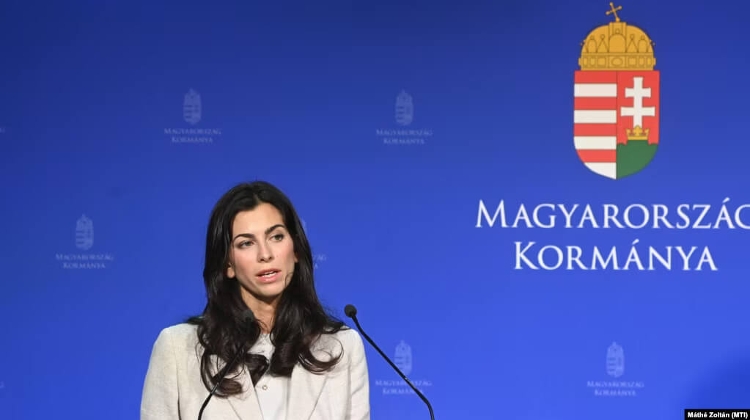
Transport and Investment Minister David Vitezy, announcing the appointment at a news conference held jointly with Mayor Gergely Karacsony, said the supervisor's arrival did not mean any curtailment of the capital's sovereign, autonomous decision-making powers; the supervisor's task would be to gain insight into the processes and monitor them.
The decision was made in a spirit of mutual trust-building, with the full agreement of the parties, so that if liquidity difficulties arose, the two sides would have a view of the capital's financial position on an identical basis and with identical information, and could seek solutions from there, he said.
Karacsony said the capital welcomed the supervisor's arrival, because it would then be clear to everyone under how difficult conditions the capital had been kept on its feet.
The budget will repay more than 85 percent of the capital's past overpayments, allowing the court proceedings over the sums to be closed and the capital to meet this year's payment obligations, Vitezy said.
Under the agreement, the state will also pay the capital the 12 billion forint public transport normative subsidy, because the treasury will not deduct from the sum on account of the unpaid portion of the solidarity contribution. Karacsony said the capital would receive a 120 billion forint subsidy from the government overall.
Regarding the solidarity tax, the mayor said that ideally he would be satisfied if nothing at all had to be paid, but that he would doubtless accept it if the system were reconsidered.
most important thing, he stressed, was that there should be relief affecting the whole of the local government system.
The FKT also accepted a proposal to unify the metropolitan parking system, under which the government will propose amendments to the local government act and the road traffic act to parliament.
Where paid parking exists in Budapest, the capital would operate it and collect the fees, and the revenue could be spent only on road renewal under the Metropolitan Road Renewal Programme.
Vitezy stressed that this did not amount to state intervention: the Metropolitan Assembly, elected in a legitimate, democratic manner, would receive the right to operate parking and to decide on road renewals.
Karacsony said he understood the opposition of the district mayors, because the change was not in their interest, but described a more transparent, more predictable parking system as an interest of Budapest as a whole.
He undertook to halve current operating costs, noting that car owners spend roughly 10 billion forints a year on parking operations, more than half of which goes on operating costs; the condition for the saving was a unified, efficient system applying 21st-century technologies.
Krisztina Baranyi, the mayor of the 9th District and an FKT member, had argued at length for the district interests but failed to convince either Karacsony or Prime Minister Peter Magyar, Vitezy said, adding that he found the dispute with the districts surprising and that one of the protesting districts was making a loss on the service.
The two sides are also creating a transport alliance between the capital and the government. In practice, from Szentendre to Rackeve, Godollo to Zsambek and Vac to Erd, the BKK, the capital's transport centre, will commission all public transport services.
Next year, with its increased workload, the BKK is expected to need 340 billion forints in budgetary funding on top of ticket revenues, a sum Vitezy said would cover the HEV suburban railways, the MAV trains and the Volanbusz services in the region, and which the capital and the government will finance equally, with 170 billion forints each.
The current system in the agglomeration was completely chaotic, he said, adding that the unified arrangement would give the capital back its influence over the HEV lines and agglomeration services, while the state would gain influence over public transport in Budapest.
Repatriated EU funds will make significant developments possible in Budapest and the agglomeration, with the BKK assigned a very significant role.
A 50-50 state-capital company will be designated as developer for transport and public-space projects, with priority investments in the central region, including tram developments, the Szeged Road overpass, the extension of the third metro line and the development of the embankments, realised under joint coordination, Vitezy said.
The Rakosrendezo development will be carried out within a joint organisational structure based on the April design competition, the Student City (Diakvaros) investment will restart on the basis of the earlier competition plan, the Danube port system will be reformed so that the state and capital jointly exploit riverbed and embankment rights, the development of the historic baths will be given new impetus with government partnership, and the Metropolitan Sewage Works will be returned to public ownership, with the rights of its management reverting to the capital in full.
Karacsony said every proposal on the council's agenda had been reached by consensus, and that several of the agreements also fell within the competence of the Metropolitan Assembly. The FKT will reconvene in the coming weeks.
The mayor told the council meeting that district authorities spend more than half of their parking revenues, in some cases 97 percent, on operating the service, which put into perspective how much revenue the districts stood to lose, Vitezy said, concerning the transformation of parking.
He added that each district currently maintains its own IT system and customer service for the purpose, although a single network could serve the whole of Budapest, making the operation substantially more efficient.
He said the government had undertaken, in cooperation with the capital, to create the necessary legislative background, and to guarantee Budapest the same level of digitalisation the Hungarian state provides in the payment of motorway tolls.
"So the era of Santa Claus packages is over," he said.
Asked whether the government had a financial offer for those district authorities that experienced the change in the parking system as a loss, Vitezy replied that it had been decided to carry out road renewals in the districts from this source.
Concerning the BKK's conversion into a regional body, the minister said the company would be governed by a board established on a parity basis.
The most important decisions, concerning major investments, procurement, personnel matters and the composition of the management, should be taken by the board with mutual agreement, he said.
He added that if the board could not resolve a disputed situation, the mayor and the transport minister would have to reach an agreement on the question. There would obviously be disputes, he said, but they hoped these would be "good professional debates".
The budget supervisor can look into all data, become familiar with every financial process, and must be given all the information necessary for the financial operation, and can formulate an opinion, which the public can also learn about, but has no right of veto, Vitezy said in answer to a question.
Concerning public security, Vitezy said the matter had been discussed at the meeting, and the interior ministry had already taken concrete measures. Prime Minister Peter Magyar informed the FKT that the government would significantly increase the number of police officers serving in Budapest.
Police officers currently performing gatekeeping duties at the ministries will move over to a different type of guarding, and the number of police will thereby be able to be increased in Budapest, he said.
Concerning the solidarity contribution, the minister said that because of Budapest's position as a net contributor, this contribution had caused by far the biggest problem here, and the capital's insolvency had arisen as a consequence of it.
The capital is in a special position because every other local authority has other tax types, while Budapest's only revenue is practically the local business tax, which the solidarity contribution burdens, he explained.
He added that the contribution would be reviewed for the whole of the local government system, with its rate set in the 2027 budget.
In the capital's case a significant reduction was needed, he said, remarking in answer to another question that in his view "this form cannot be maintained if the sustainability of the budget is to be ensured".
Asked about restricting night traffic at Ferenc Liszt International Airport, the minister said specifically operational consultations were under way on the subject, with the aim of reducing the number of flights arriving during the deep-sleep period.
The biggest growth in this area had come from Wizzair, which was why he had met the company's chief executive, Vitezy said.
A complete night shutdown, he added, would cause more harm than good. They were looking for a solution in which incentives "stronger than fines" would persuade airlines to use the airport outside the deep-sleep period, he said.
Asked about the termination of the M1 motorway concession, he said the European Commission had published its reasoned opinion finding the contract incompatible with European law, which further strengthened the Hungarian state's right of termination.
He added that consultations with the motorway concessionaire on concluding the contract had begun, with professional talks between the ministry and the MKIF Hungarian Concession Infrastructure Development company starting on Wednesday, 7 October.
Source: MTI – Hungary’s national news agency since 1881.
MTI photo Photo: Pixabay
*********************************************************************************************
You're very welcome to comment and discuss this via our Facebook page: XpatLoopNews
& via: Budapest Expats - The International Community / Expats Hungary - The Original Group
You can subscribe to our newsletter here: XpatLoop.com/Newsletters




LATEST NEWS IN current affairs