
















Watch: Hungary's Folk Culture is Alive & Welcoming
- 8 Oct 2025 5:39 PM
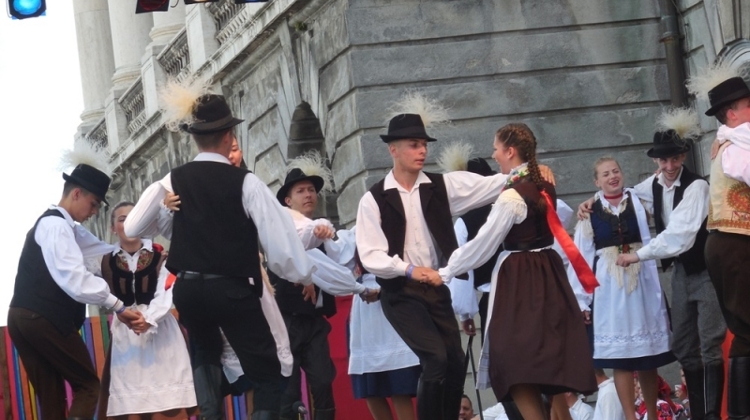
Hungary possesses a remarkably rich vein of folk traditions — a dynamic heritage that expats in Hungary should certainly explore. This deeply rooted culture, encompassing both preserved knowledge and living practices, is a significant part of why the Hungarian countryside is a popular destination for cultural tourism.
The country’s authentic image is defined by practices like the vibrant Busó festivities, traditional falconry, detailed Matyó embroidery, lively folk dancing, and distinct folk music. Even the local art of pálinka distillation and winemaking are integral components of this cultural landscape.
What Makes Hungarian Folk Culture Unique?
Hungarian folk culture — particularly its music, dance, and traditional clothing — enjoys global recognition for two key reasons:
1. Early Preservation: Hungary had the foresight to begin systematically collecting and documenting its folk music and dances early on. This initiative saved an unparalleled treasury of "pure source" folk art that continues to thrive today.
2. Origin in Daily Life: This culture emerged organically from the lives of the people. The spirited, sometimes harsh movements of the dances mirrored the challenges of daily work. Fiery, virtuosic steps were often a symbolic attempt to tame nature, while softer partner dances beautifully embodied the cycles of family life and love, creating a uniquely authentic human art form.
Folk Art is a Living Tradition
As the musician Ferenc Sebő wisely noted: “Traditions are not to be cared for, as they aren’t sick, and are not to be preserved, as they aren’t food. Our traditions can only stay with us if we live them.”
This idea confirms that folk music is an expression of the human spirit, and folk dances are not merely archival artifacts. The true essence of folk culture is its continuity: it must pass through the hearts and minds of the people of each generation. In this way, people continually shape and renew it, ensuring it remains a genuine and substantial treasure for the future.
Hungarian 'Dance House' Culture: A Global Heritage
The Hungarian "dance house" (táncház) phenomenon, which began in Budapest during the 1960s, quickly became a defining cultural movement. It was essentially Central Europe's answer to the West's "Beat" generation, resonating strongly with Hungarian youth searching for their identity and genuine human connection.
These evening events offered a unique experience: live, acoustic folk music accompanied by dance instruction, making this part of the culture accessible to everyone. The concept exploded in popularity, often filling venues beyond capacity.
The dance house movement proved so powerful that it expanded far beyond Hungary’s borders and the Carpathian Mountains. Today, this distinctive Hungarian cultural practice — which has even earned a place on the UNESCO World Heritage list — is celebrated on five continents, from Japan to Brazil.
While the venues have shifted over the decades, the spirit of the dance house culture remains vibrant. By the early 2000s, specialized folk pubs became central to Budapest's folk art scene.
Places like Fonó, Rácskert, Hétker, and Pótkulcs regularly host dance house events that last well past sunrise, stretching across both Buda and Pest's central districts. As the night concludes, traditional songs known as 'matutinals' are played, offering a sweet, melancholic farewell to the night's festivities.
Decoding Hungarian Folk Style: From White Linen to UNESCO Heritage
The diverse world of Hungarian folk culture is visible everywhere, from intricate needlework to historic architecture. Here’s a look at some fascinating details — and the internationally recognized treasures — that define this national heritage.
The Evolution of Hungarian Folk Dress
It’s a fun fact that while Hungarian folk dresses are now synonymous with vibrant, elaborate patterns, the dominant color used in the 18th century was actually white. This was due to the high cost and inconsistent quality of colored dyes available at the time.
The 19th century brought a major shift with industrialization. Suddenly, bright dyes were accessible, and expansive clothing surfaces became canvases for bold colors, each carrying a specific meaning.
Colors communicated a person’s wealth, their religious denomination, or even a state of mind, such as grief. Since the space for decoration on any garment was limited, different regions often competed to showcase their identity through increasingly complex and intricate patterns.
Hungarian Heritage Recognized by UNESCO
Any discussion of authentic Hungarian culture inevitably features Matyó folk art. Dating back to the late 19th century, this style is known for its dense, space-filling floral embroidery, most famously featuring the Matyó rose.
It was primarily used on household textiles and decorations, and its characteristic patterns have influenced other crafts, making the Matyó style instantly recognizable worldwide. Its significance led to its inclusion on the UNESCO List of Intangible Cultural Heritage.
However, Matyó art is not the only Hungarian tradition recognized by UNESCO. Other unique Hungarian cultural elements on this prestigious list include:
Falconry: A time-honored hunting tradition.
Busó Festivities at Mohács: A celebrated, costumed carnival held to mark the end of winter, welcome spring, and invoke fertility.
Indigo Dyeing: The historic and dominant fabric dyeing method used for centuries for both folk costumes and home textiles.
Guardians of Community Art: Folk Houses
Throughout the countryside, folk houses serve a vital purpose: to preserve and present the local community culture and folk art of the past. These sites present excellent examples of folk architecture and feature authentic interiors that illustrate the daily life of a specific social stratum.
Visiting one of the country's dedicated folk houses offers expats a chance to effectively travel back in time, glimpsing life from the late 1800s right up to the 1950s.
Another method used to protect these cultural assets is the relocation of valuable, historic buildings to open-air ethnographic museums. These living museums provide an essential window into the customs and way of life of the Hungarian peasantry.



LATEST NEWS IN community & culture