














Budapest Drug Crisis Can't be Resolved Without Child Protection Reform - Mayor
- 14 Sep 2026 7:11 AM
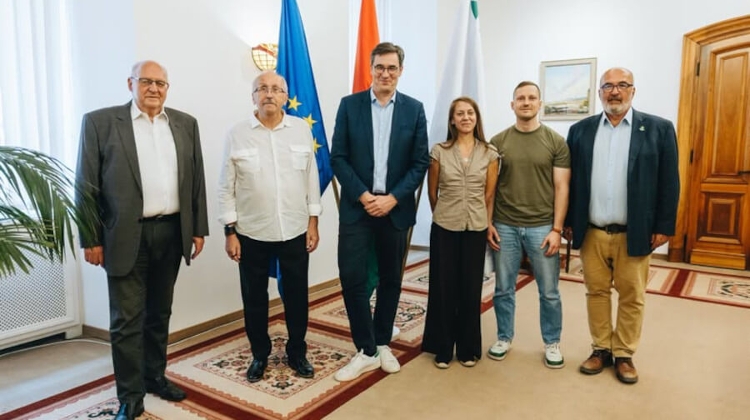
Neither the drug crisis nor related public safety issues can be resolved in the long term without first reforming the child protection system, Budapest Mayor Gergely Karacsony said on Facebook.
Referring to a government briefing on child protection, Karacsony cited a Budapest report saying that 90 percent of street drug users had come from child protection institutions.
He added that many street drug users had fallen into the trap of synthetic drugs after leaving child protection institutions, while a significant number of younger homeless people were also victims of the child protection system.
The mayor said solving the problem required partnership between the government and Budapest, as well as between the state and local councils. The capital has victim protection programmes and an anti-drug strategy, and "cooperation will not fail on our part," he added.
Magyar announces HUF 10 bn scheme to resolve child protection crisis
The government is immediately launching a 10 billion forint (EUR 25.6m) crisis programme to ease the crisis in child protection services, Prime Minister Peter Magyar told a press conference on Saturday.
He also announced that employees would now be allowed to speak of the working conditions, and produced documents he said had shown the involvement of high-ranking Fidesz politicians in issues surrounding child protection services.
Presenting a detailed report on the state of the child protection system, Magyar said that the abuse of children in state care had been systemic and continuous. He declared that Hungary must collectively acknowledge its responsibility for the children entrusted to its care.
"We will not allow politics to fail these already traumatised children -- those removed from families or living in extremely difficult conditions -- ever again," he said.
The government will also break with the practice of concealing problems and crimes from the public, he said. "Perhaps now, the entire country can begin to heal together and speak honestly about what has happened in child protection," he said.
Magyar stressed that the government will no longer cover up issues, will name those responsible, and, most importantly, will learn from past mistakes, steering the system in a completely new direction.
Up to now, child protection employees were working under gag orders and had to sign confidentiality agreements, he said. Those orders must now be lifted to allow affected parties to speak out, he added.
Meanwhile, the sector was suffering from a severe shortage of professionals in the system, he said, warning that it was teetering on the brink of collapse.
He urged everyone to read the newly published report.
During the press conference, Magyar revealed a document which he said showed that former prime minister Viktor Orban had recommended in 2016 that Janos Vasarhelyi, the director of the Bicske children’s home -- since convicted for paedophilia - be awarded a state honour.
Magyar pointed out that when Orban signed the recommendation, authorities had already received multiple reports about Vasarhelyi over the previous five years, with police investigations and ombudsman inquiries under way at the institution. The relevant ministry had also received reports on the matter, he said.
Magyar quoted statements from professionals in the child protection system included in the report. "A child only enters the system when blood is already flowing, as if basic care had ceased to exist," said one.
Another carer stated: "The institutions are in such poor condition, and there are so few adults whom children can trust and form lasting bonds with, that the only rational thing to do in the current system is to escape."
The prime minister declared that child abuse had been systemic and ongoing within the child protection system, with many children suffering from hunger, physical and sexual abuse in state institutions.
He said that the Interior Ministry, led by Sandor Pinter, had been fully aware of the situation.
According to its own internal data, state-run child protection institutions recorded 1,959 cases of child abuse in 2024 and 1,684 in 2025. Over two years, 2,249 police reports were filed, averaging more than three per day.
The actual number of incidents could be much higher, as many cases went unreported, Magyar added.
He expressed personal disbelief that the Orban government had not only been aware of these conditions but had also created them, yet took no action when the consequences became clear. Recalling the previous government’s statements on the issue, Magyar said it should have been a matter of "a drop of humanity" to prevent the children’s suffering.
"Today, it is clear to everyone that they failed not only politically but, far more seriously, in basic humanity."
He also noted that there were multiple attempts to deliver gifts funded by public donations to children in state care in 2024, but the authorities at the time either blocked access to these institutions or obstructed the delivery of the gifts in other ways.
Magyar criticised Attila Fulop, the former state secretary responsible for care policy, who in January 2025 had dismissed the assistance offered by thousands of Hungarians and the delivery of gifts as "pure provocation."
He also condemned Orban’s statement in April 2025, in which he described the care provided to children in state institutions as "in order" and "manageable."
Magyar described as "the depth of cynicism" the comments made by former justice minister Bence Tuzson in September 2025 regarding a report on abuse at the Szolo Street young offenders' institution, commissioned by the government.
Tuzson had claimed that there had been no underage victims in the case. However, a subsequent investigation identified dozens of underage victims, and a government internal review in February 2026 acknowledged systemic problems. Despite this, the necessary structural measures were never implemented, Magyar noted.
At the press conference, Magyar apologised on behalf of the Hungarian state to children failed by the system, now-adult state wards, and professionals who raised concerns, but stressed that the apology only had meaning if followed by action.
He announced an immediate 10 billion forint crisis programme for child protection, saying: "We have no time to wait for next year's budget; immediate action is needed." Of this, around 6 billion forints will go to professional programmes and 3.4 billion to development projects, ideally before the end of the year, he added.
The professional programmes will create 184 new or upgraded places in care, while 120 children in 15 specialist children's homes will receive enhanced protection and care through additional staff and intensive support, Magyar said.
He outlined plans for immediate crisis care for 80 children, including those who frequently run away, have severe psychological or behavioural issues, or struggle with substance abuse.
Targeted care will also be introduced for children with autism spectrum disorders, intellectual disabilities, or severe psychological or behavioural problems, while residential addiction rehabilitation programmes will begin for children with serious substance abuse issues, he added.
Around 440 million forints will be allocated immediately to support at-risk adolescent girls and young mothers, aiming to prevent separation where possible, Magyar said.
Regional psychological, psychiatric, and special education teams will be deployed to areas of greatest need, rather than being tied to a single institution. Also, 1.5 billion forints will be allocated to mental health and professional support for child protection workers, he added.
A separate programme will address the situation of infants stranded in hospitals, expanding foster parent capacities and launching volunteer programmes for temporary hospital stays, Magyar said.
He added that the IT and material infrastructure needed for child protection would also be repaired.
Magyar described the system inherited from the Orban government as "a bled-dry, deeply cruel, and cynically functioning system".
Over 21,000 children are in state care, with severe shortages of professionals and foster parents, underfunded institutions, and staff working in undignified conditions, he said.
He announced a significant, two-step wage hike, with the first step to be implemented this autumn.
Magyar urged professionals "who respect and love children" to trust the government, give it the benefit of the doubt, and see it as a partner. "Fixing 16 years of destruction will be long and difficult work," he added.
The government will submit a legislative package to parliament next week to strengthen children’s rights and safety, Magyar said.
This will include stricter rules on content accessible to minors, such as explicit depictions of sexual violence, sexuality, exploitation, or manipulation, as well as stricter child protection requirements for public advertising, political campaigns, and media content, he added.
The state will also tighten procedures for children stranded in hospitals, ensuring no child remains in hospital for months due to the system’s failure to find suitable care, Magyar said, calling the issue of children stranded in hospitals a priority in the draft law.
"The state will never again ‘look the other way’; we will not hide any more reports. The era of denial is over," Magyar declared. From now on, action, securing necessary resources, and strict accountability would follow, he added.
Asked about current regulations requiring ministerial approval for adoptions by single or same-sex couples, Magyar repeated his earlier view that "only a cruel person would think a child is better off with criminals or in inhumane conditions than with a single parent or two loving same-sex parents."
He said the system would be changed, as such decisions should be made by professionals who can assess the best environment and needs for a child to grow up happy and balanced, rather than by a minister.
Govt publishes report on child protection system
The government published its report on the Hungarian child protection system on Saturday morning. The more than 200-page document is available on kormany.hu.
The report is based on a comprehensive survey conducted between May and August. Its findings are drawn from a nationwide series of visits, during which assessors visited 19 institutions and professional units across 12 counties, met with some 500 professionals, and held nearly 100 hours of personal discussions.
According to the report, of the more than 1.6 million children living in Hungary, 130,000 or nearly 8 percent are registered as at risk. The situation is most critical in northern Hungary, while central and western Hungary have the fewest affected children.
Between 2010 and 2025, the number of children removed from their families increased by 17 percent. In 2010, 99 out of every 10,000 minors did not live with their biological families; by 2024, this figure had risen to 127. Currently, around 23,000 children, including those in aftercare, are being raised in state care.
The document states that by 2026, Hungary’s child protection system has reached the brink of structural collapse.
Social Affairs Minister Vilmos Katai-Nemeth told a press conference held in the Kossuth Children's Home in Budapest that "the system is essentially being kept alive only by the commitment and dedication of the people working within it." They primarily identified the system’s overburdening and the acute shortage of professionals as the greatest challenges.
Beyond protecting children, the state’s duty is to provide them with an environment where they can develop, thrive, and find a loving home, Katai-Nemeth added.
The government prepared the report because they knew that building a new system would require real data, as well as making public the reports "suppressed and silenced by Fidesz," he said.
It was also clear, he added, that professionals working in child protection must be heard, as their experiences and observations are essential for building a new system.
The minister reported that currently, 130,000 children in Hungary are in at-risk situations, 23,000 live in institutions or state care, and 2,700 are waiting to be removed from their families.
"This is tragic; it must be changed," the minister declared.
Govt official: 2nd report on child protection system to drop by year-end
The review of the child protection system will continue until November 20, Szilvia Gyurko, the state secretary for children’s rights and child protection, told a press conference in Budapest on Saturday, presenting the results of the first report on the state of the child protection system and the government’s measures.
Responding to questions, Gyurko said the newly published document is the first phase of an overview of the sector. A second report will be presented by the end of the year, outlining short-, medium-, and long-term service models and county-specific plans, she said.
The government is aiming to decentralise the system, granting more professional autonomy and decision-making power to local providers while allocating more resources to those closest to the children, she said.
The current centralised system inherited from the previous government has bred a disjointed network where several professionals avoided consequences of abusing children or committing substance abuse because the various reports on them failed to converge and lead to consequences, she said.
Psychological suitability tests and impeccable lifestyle examinations for professionals applying to work in child protection can currently take between 2.5 to 5 months. She said this system must be reformed, but in a way that does not compromise children’s safety.
Regarding the adoption system, Gyurko said that until two years ago, there were far more parents waiting to adopt than children available for adoption. However, legislative and political decisions over the past two to three years have radically changed this, and now more children are waiting for adoption than there are parents willing to adopt.
She also revealed that the current system lacks around 400 foster parents, with a significant shortage of those willing to care for multiple children or children with special or complex needs.
Gyurko said the cooperation between foster parent networks and the state needed improvement, noting that while some counties have 19 such networks, the state care system still struggles to provide placement for children.
On the subject of accountability, Gyurko said internal investigation systems are being reviewed, as reports show that in numerous internal investigations so far, children have retracted or changed their testimonies, or testimonies have disappeared, and so nothing has been discovered.
In response to a question about reforming internal investigation procedures for abuse and criminal cases, she said a nearly 100-page investigative document related to the Bicske case will be made public in a few weeks.
Gyurko highlighted that the new procedural rules will include establishing an independent team of experts for cases of sexual abuse. Another key change will require separate internal investigations for reports involving professionals and colleagues, she said.
Regarding the examination of child protection workers’ impeccable lifestyles, she said a methodology tailored to child protection must be developed.
Gyurko added that the package of legislative proposals will cover issues such as guardianship, basic care, and professional services.
Meanwhile, the current structure of the Social and Child Protection Directorate-General is under review.
"The system cannot be maintained in its current form," she declared, adding that if the government is serious about granting competence, authority, professionalism, and decision-making power to field experts and decentralising, then these "bottlenecks" must be eliminated, allowing funds to be redirected to better channels.
Meanwhile, State award for Bicske children's home director proposed by Reformed Bishop Balog
Prime Minister Peter Magyar on Saturday said that Reformed Church Bishop Zoltan Balog was the one to recommend the director of the Bicske children's home -- who was later convicted of paedophilia -- for a state award to Viktor Orban in 2016. Balog later secured a presidential pardon for the accomplice of the director.
Earlier in the day, at a press conference presenting a report on the child protection system, Magyar displayed a document showing that Orban, then prime minister, had proposed in 2016 that Janos Vasarhelyi, the home's director, receive an award.
He emphasised that when Orban signed the nomination, authorities had already received reports about Vasarhelyi for over five years, with police investigations and ombudsman inquiries under way at the institution, and the relevant ministry had received the reports.
Asked by journalists in Kotcse, in south-western Hungary, on Saturday why he had nominated the now-convicted paedophile director of the Bicske children's home for an award in 2016, Orban, the leader of opposition Fidesz and former prime minister, said that someone had submitted the proposal to him and that the press should direct its questions to that person.
Source: MTI – Hungary’s national news agency since 1881.
MTI photo
*********************************************************************************************
You're very welcome to comment and discuss this via our Facebook page: XpatLoopNews
& via: Budapest Expats - The International Community / Expats Hungary - The Original Group
You can subscribe to our newsletter here: XpatLoop.com/Newsletters


LATEST NEWS IN current affairs