




















Recipe Of The Week: Carnival Doughnuts
- 16 Feb 2017 7:40 AM
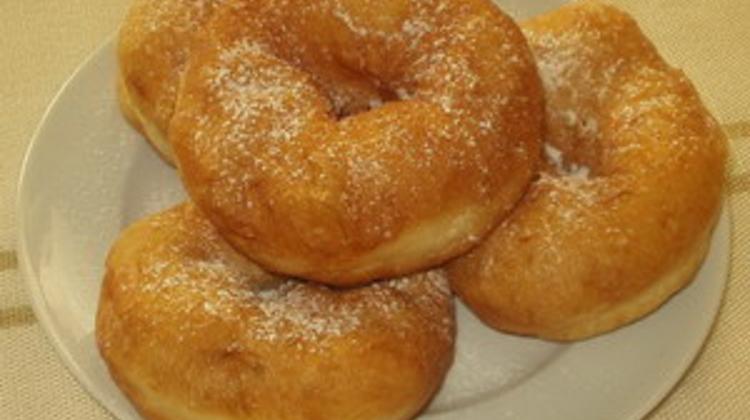
In Hungary it is impossible to have Carnival without doughnuts.
Ingredients for about 28-30 pieces:
500 g flour
20 g yeast
50 g powdered sugar
50 g butter
2 egg yolks
1 shot of rum
A pinch of salt
500 ml milk
1 liter oil or fat for deep frying
Preparation time: 2 hours
Difficulty: ☺☺☺
Preparation:
Mix yeast, 1 teaspoon of sugar and 3 tablespoon of flour in lukewarm milk. Beat the egg yolks with the rum and the remaining sugar, and then add to the ready yeast mixture. Stir well. Add the melted (but not hot!) butter, flour, and enough salted milk to make soft dough. Beat well with wooden spoon for about 20-30 minutes – or with hand mixer for about 10-15 minutes. When dough is ready, it forms a ball and starts to have bubbles inside. Sprinkle with flour, cover, and let rise in a warm place for about 1 hour, until light and doubled in size.
On a floured surface, roll out the dough to 1-inch thickness, turning dough occasionally, to make sure it does not stick to the board. Using a 3-4" cookie cutter or a glass, cut as many rounds as possible. Place on a floured cookie sheet, cover with a cloth, and let rise in a warm place for about 30 minutes, until light and almost doubled in size.
Heat the oil in a saucepan. Test the heat of the oil by dipping a bit of dough in the pan. When the oil is hot enough, it bubbles as the piece of dough starts frying.
Press a dent in the middle of each doughnut, and fry them for 1.5 minutes on each side, until golden brown. Make sure to start frying them upside down (they go in the oil with their dented side down), and cover the pot. You don’t need to cover after you turn them to fry the other side. Drain fried doughnuts on paper towels.
Sprinkle with powdered sugar and/or serve with apricot jam mixed with palinka – Hungarian brandy.
Hint:
Work with warm ingredients in a warm kitchen, do not open the door or window while the dough is rising, and do not over rise it, because doughnuts will not have strips.
Use rum to avoid having greasy doughnuts – during frying, alcohol will evaporate.
Do not cut hole in the doughnuts, just press in the middle.
The oil is hot enough when a small bit of dough bubbles vigorously when added to the oil.
If the oil is too hot, doughnuts will be raw inside and burned outside.
If oil is not hot enough, doughnuts will be greasy.
Fry only a few doughnuts at a time. Adding more would cool the oil too much.
Source: puszta.com
LATEST NEWS IN food & drink