















Long-Term Water Crisis Warning in Hungary - 'Desert-Like Conditions'?
- 19 Aug 2026 1:47 PM
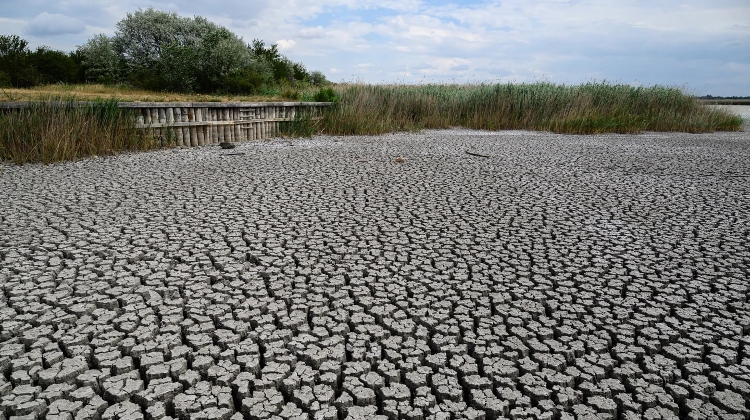
Hungary must prepare for a long-term water shortage as climate change and increasingly dry conditions place growing pressure on the country's water resources, Environment Minister Laszlo Gajdos has warned.
Speaking from the National Water Management Coordination Centre, Gajdos said rainfall levels remain insufficient across the Danube and Tisza river basins, leaving rivers with reduced inflows and limiting the natural replenishment of surface waters.
He warned that water scarcity is becoming a long-term challenge rather than a temporary consequence of the current heatwave.
According to the minister, Hungary needs to adapt to changing climate conditions and rethink how water resources are managed.
"If anyone still thought there was no climate change, if anyone did not believe that processes on Earth have changed completely, they can now see that we are in serious trouble," Gajdos said.
In his strongest warning, the minister said: "Within a few years, as many as one million people in Hungary could be living in desert-like conditions."
The statement refers to the growing risk of increasingly dry regions where prolonged drought, declining groundwater levels, reduced rainfall and rising temperatures could make conditions more difficult for agriculture, ecosystems and communities.
Hungary is already seeing signs of increasing water stress, with lower river levels, drier soils and more frequent periods of extreme heat placing additional pressure on water supplies.
Experts have previously warned that parts of the country, particularly the Great Plain, are among the areas most vulnerable to drought and long-term climate impacts.
Gajdos said urgent action is needed to address these challenges, adding that water management will become one of Hungary's most important environmental issues in the coming years.
Hungary becoming drier despite little change in annual rainfall, ELTE study finds
Hungary is shifting towards a drier climate, even though annual rainfall has barely decreased, according to researchers at Eotvos Lorand University’s (ELTE) Department of Meteorology.
Peter Szabo and Rita Pongracz, researchers at the department, examined how Hungary’s climate has changed over the past five decades in terms of heat and water supply, and which current European climates it may resemble in the coming decades, the specialist portal masfelfok.hu told MTI.
The study found that Hungary has warmed so much over the past half-century that, in recent years, the climate of central Spain has been experienced on average across half of the country.
Although the total annual rainfall has changed only slightly, water supply is deteriorating. A warmer climate increases evaporation demand, meaning that even with the same amount of rainfall, more water may be missing from the system, the study said.
Observations from 1972 to 2025 show that Hungary belonged to the semi-arid climate zone for most of those years. In terms of heat supply, in the 1970s and 1980s, Hungary was homogeneous and fell into the slightly warm climate zone.
However, due to global warming, half of the country now falls into the moderately warm climate zone. Such heat supply conditions currently occur in Europe south of Hungary, including the Po Valley, south-western France and along the Romanian stretch of the Danube.
Regarding the future, the researchers examined a scenario in which global greenhouse gas emissions are significantly reduced after 2040.
Based on current commitments and plans, it is highly likely that by 2100 Hungary will be close to this moderate trajectory; in this scenario, the global average temperatures would be only slightly exceeded, Szabo and Pongracz said.
In the coming decades, a less favourable trend is expected, with the proportion of semi-arid climate categories increasing. After 2040, drier climates are expected to cover an average of 67 percent of the country, they said.
Looking at heat forecasts, researchers said that in the period between 2021 and 2040, up to 67-84 percent of the country could fall under the moderately warm climate zone, one that is currently characteristic of 49 percent of Hungary.
After 2060, small areas could occasionally, temporarily shift into the warm climate zone, which currently corresponds to the climatic conditions of the Mediterranean plains south of Rome, they said.
The shift towards a drier and warmer climate is creating conditions in Hungary similar to those now found in parts of the Mediterranean region. These conditions place significant pressure on soils, natural vegetation and agricultural crops.
According to the moderate scenario examined, in the future, about one-quarter of the country’s area and years will fall into the semi-arid climate zone, while at least four-fifths will fall into the moderately warm heat supply category.
Hungary’s climate is increasingly resembling that of current European regions such as central Spain, the Danube Delta area or northern Greece, they said.
"The natural vegetation of the semi-arid and moderately warm climate zones differs significantly from what is typical in Hungary. These areas also have different agricultural crops, such as olives, figs, almonds, various citrus fruits and red wine grape varieties with higher heat requirements. However, this does not mean that these can simply replace current domestic crops, as soil properties, frost risk and farming conditions also play a major role," the paper said.
The conditions for cultivability and any necessary modifications must be examined in detail before a large-scale transformation of the crop production system, the researchers warned.
They added that it is therefore important for global emissions to remain at least close to the moderate trajectory examined. This requires a significant reduction in energy consumption and a rapid transition to renewable energy sources.
One of the most important lessons from the changes in Hungary is that aridity cannot be judged solely by the amount of rainfall. In a warmer climate, the same amount of rainfall leaves less water for soil, vegetation and agriculture, they summarised.
To map the transformation, the researchers used the Thornthwaite climate classification, which considers not only temperature and precipitation but also the monthly interactions and processes between the atmosphere and the surface that are important for water balance.
Tanacs: Govt plans 'strong, integrated' water science centre
Work will soon begin on establishing a strong, integrated, and internationally recognised water science centre, Zoltan Tanacs, the science and technology Minister, said on Facebook on Monday, noting that the Fidesz government shut down the Water Management Research Institute (VITUKI) in 2012, which meant that Hungary lost its primary hub for water research.
In his post, Tanacs said that the previous government had deemed the institute "unnecessary" and stopped funding its operations.
The minister wrote that for decades, VITUKI had been the cornerstone of Hungary's water management, serving as the country's primary scientific, engineering, and information hub.
It linked continuous monitoring, data collection, basic and applied research, modelling, flood and water-level forecasting, water quality analysis, and the scientific preparation of government decisions, he said.
"We could have made great use of an institute specialising in water management, drought, related risks, and solutions in recent years," Tanacs added.
He noted that at the time of its closure, serious professional debates emerged, with critics arguing that Hungary had lost its integrated institutional centre for water research. VITUKI's experts, tasks, and data assets were dispersed among various organisations, he said.
"In the coming decades, Hungary's security will increasingly depend on how much water we have, where it is located, its quality, how it can be retained, and the scientific basis for related decision-making."
MTI Stock Photo
Source: MTI – Hungary’s national news agency since 1881.
*********************************************************************************************
You're very welcome to comment, discuss and enjoy more stories via our Facebook page:
Facebook.com/XpatLoopNews + via XpatLoop’s groups: Budapest Expats / Expats Hungary
You can subscribe to our newsletter here: XpatLoop.com/Newsletters



LATEST NEWS IN current affairs