











Reports of 'Mini-Coup' in Tisza Dismissed by Magyar
- 15 Sep 2026 6:37 AM

Prime Minister Peter Magyar dismissed reports that crisis erupted and a "mini-coup" had taken place in the Tisza party last November. "I have full confidence in [Tisza deputy leader] Mark Radnai", he said in an interview with public radio.
Rejecting the report published on the 444.hu website, Magyar said he was very proud of the Tisza community. "It is natural for conflicts to arise in a new political community where people come from various backgrounds, directions, and family histories with different worldviews. Those conflicts have been discussed and resolved," he said.
Asked whether "strong parliamentary language might soften" over time to reduce polarisation, the prime minister said: "I understand that criticism. We are taking a very different tone when talking to voters and civilians from the one used with the black-belt criminals sitting in parliament."
Meanwhile, Fidesz: 'Nothing Magyar says can be trusted'
Opposition Fidesz said on Monday in response to a recent interview with Prime Minister Peter Magyar on public radio that "not a single word or promise from Prime Minister Peter Magyar can be trusted, he talks nonsense, arguing one thing one day and the exact opposite the next."
Fidesz press chief Bertalan Havasi said in a statement that Magyar was "building an autocratic system".
"No right can be based on illegality; the draft constitution and electoral law proposed by the future government are just as illegitimate as Peter Magyar’s entire system," he said.
Fidesz leader "Viktor Orban stated clearly and directly at the weekend what those responsible for dismantling the democratic rule of law can expect, including the leaders and future staff of the Tisza-AVH," he added, referring to the communist-era secret police AVH in connection with the newly established National Office for Asset Recovery and Protection NVVH.
Orban calls for resistance against Hungary’s 'recolonisation'
Former prime minister Viktor Orban, the leader of opposition Fidesz, insisted on Sunday that Hungary was undergoing a process of "recolonisation" and urged resistance against it during an appearance on commercial television HirTv.
He also said that his "right-wing, pro-nation" government had restored the country’s sovereignty between 2010 and 2026, insisting that before 2010, 80 percent of Hungary’s strategic economic sectors had been under foreign, primarily German, control."
Orban described the mission of right-wing national politics as fighting against colonisation, vowing to continue this struggle whether in opposition or in government. He promised to "liberate Hungary again".
He criticised the Tisza government for lacking an independent foreign policy, alleging that decisions are dictated by "colonial powers" in Brussels. The government had abandoned Hungary’s "political safety net" with the US, its neutrality in the Russia-Ukraine war, agreements with China, and privileged cooperation with the Turkic world, he said. "We do not want war, migration, gender ideology, or to abandon Christianity," he declared, emphasising the need to ensure "Hungary remains a Hungarian country."
Orban accused the Tisza government of agreeing to a "Tisza-Brussels pact," alleging it would dismantle Hungarian national sovereign forces that opposed Brussels, then "hand over the Hungarian economy to Brussels."
He said the government would follow "all of Brussels’ instructions" in exchange for maintaining power. On EU funds, he argued that fighting for the country is not always pleasant, but the current government refuses to do so.
He dismissed economic struggles as a lack of economic policy rather than a lack of funds, citing energy crises, agricultural sector collapse, a stalled construction industry, and protests from hauliers.
Addressing corruption allegations against his former government, Orban insisted they would prove unfounded, as past decisions had been lawful and justified. He accused Tisza of deceiving voters during the campaign, particularly regarding battery factories and a child sexual abuse case linked to the Szolo Street young offenders' institution.
Orban advised the right wing to focus on its own voters, who he said were understandably disheartened after the election defeat. He acknowledged that as a former prime minister, it was not his role to engage those who do not wish to hear him. "They just voted us out so they wouldn’t have to listen to me," he said.
He urged the right wing to regroup over the next six months, engage with supporters, and reorganise to remain relevant in Hungarian public life. "We are not there yet, so much work lies ahead," he noted.
He described the Tisza government as "aggressive, radical, and neo-communist," and said that Balazs Bus, the former deputy head of the National Cultural Fund (NKA), who is being detained under suspicion of misuse of funds, was a "political prisoner".
Reflecting on the election loss, Orban said "the disappearance of economic success between 2024 and 2026" was the main failure of the Orban government. "I could not prevent this," he said.
Meanwhile, Orban said the Tisza government was building an authoritative regime and called for resistance.
He described the newly established National Asset Recovery and Protection Office (NVVH) as an "AVH-type institution," a reference to Hungary’s notorious secret police under communist rule.
He said the lawmakers setting up NVVH were politically responsible for the body's actions. Meanwhile, "who work within this institution, make decisions, or participate in its procedures, will not escape financial and legal accountability once the rule of law is restored," he said.
Orban declared that his party would track every individual working there, publicising their names, backgrounds, and roles in non-judicial proceedings. "We will expose who they are, who their parents are, what they do there," he said.
At the end of the programme, Orban dismissed speculation about the future structure of the opposition as premature and counterproductive, given uncertainties over electoral laws, the number of parties required, and how candidates must organise themselves.
He said the right wing’s only chance of victory or significant influence lied in unity. If it is fragmented by external forces or self-inflicted division, it stands no chance, he said, noting that applied for left-wing parties too.
Orban described the right wing as inherently diverse but united on three fundamental principles: a sovereign Hungary, the belief that life without freedom is not worth living, and the value of the traditions and heritage passed down by their ancestors.
Commenting on the interview, Magyar said on Facebook late on Sunday that "rather than an honest confession, Viktor Orban dared to openly threaten the prosecutors, policemen and financial officers working at the National Asset Recovery and Protection Office."
"My message to the mafia is: we are not backing down," he said.
Orban: Grace period for 'neo-communists' ended
Viktor Orban, former prime minister and the leader of the opposition Fidesz party, late on Saturday said that "the grace period for neo-communists" was over. "We will take up the gauntlet and fight!", he said in a post with a video showing details of his speech at the Kotcse Picnic earlier that day.
The video showed fragments of Orban's speech in front of the audience of a traditional event of Fidesz and the Christian Democrats (KDNP) in the village of Kotcse in southwest Hungary.
"We are the right wing ... which means that we want a sovereign Hungary," he said.
By contrast, the Tisza party wants to "turn Hungary into a colony again. The name of the coloniser is Brussels," he said.
Tisza "took over the political field. But the other, larger part of their agreement is that they will also take over the economy, which was so hard to turn Hungarian again, and hand it over to foreigners," Orban said.
"Money is flowing out, they will ruin Hungarian companies and hand them over to foreigners."
"We have been patient and fair, we swallows the insults, but after five months [of Tisza governance], that has come to an end: we must pick up the gauntlet and fight," he said.
Source: MTI – Hungary’s national news agency since 1881.
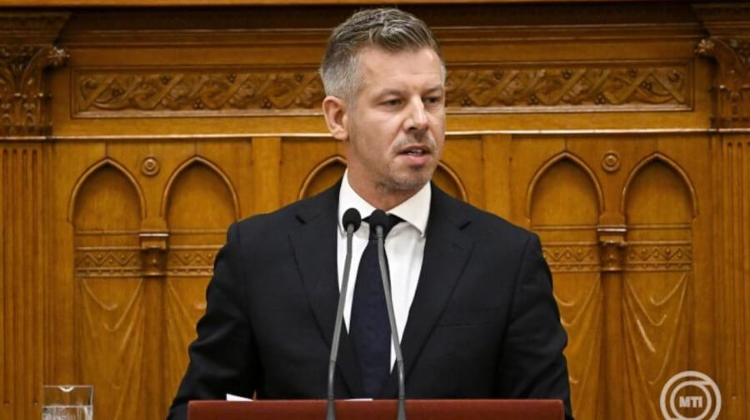
MTI photo
*********************************************************************************************
You're very welcome to comment and discuss this via our Facebook page: XpatLoopNews
& via: Budapest Expats - The International Community / Expats Hungary - The Original Group
You can subscribe to our newsletter here: XpatLoop.com/Newsletters



LATEST NEWS IN current affairs