
















Crackdown on Ads Deemed Harmful to Children in Hungary
- 15 Sep 2026 7:28 AM
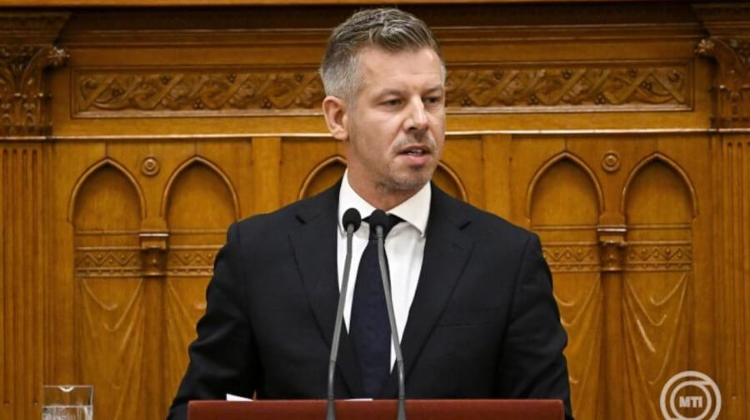
The legislation package on child protection, which the government has just submitted to parliament, is aimed at "cleansing public spaces" of political and commercial advertisements that are harmful to children's development, Prime Minister Peter Magyar said on Monday in parliament.
The package will also end a practice which keeps healthy new-borns in hospital for months due to delays in the child protection system, he added.
The government's bill would require guardianship authorities to complete a full child-protection assessment and action plan within eight days if a child no longer needed to stay in hospital for health reasons, Magyar said.
He confirmed that the government has prepared a big wage hike in two stages for the social and child protection sectors. The first phase will be introduced this autumn and the second in January, he said.
"It is unacceptable for a carer to have to work 80 hours of overtime a month to put dinner on the table for their family," he said.
The prime minister said he hoped that "not a single lawmaker of Fidesz, KDNP or Our Homeland" would vote against the wage hike or planned legal amendments.
He accused former prime minister Viktor Orban and his government of allowing Hungarian child protection to collapse "while simultaneously preaching about Christianity and looting the country".
Magyar: Orban regime's 'gravest betrayal' was of children
Prime Minister Peter Magyar told parliament on Monday that the Orban government and its political community, through "lies and distortions", had "betrayed its own community, its voters, and millions of Hungarians - though its most serious betrayal was of children".
The prime minister noted that this week marked 20 years since the leak of former PM Ferenc Gyurcsany's Balatonoszod speech, in which Hungarians learned that Gyurcsany had "boasted to his own party about lying to the nation".
Magyar said he had been proud to belong to a political community at the time that, together with the nation, declared that voters' trust could not be treated this way, and that what had happened was unforgivable, and governance and politics could not be built "on lies and tricks".
But over time, he said, he had seen that former political community drift further from "what many once believed in", and how "service turned into the exercise of power, the promise of a civic Hungary into propaganda, and self-criticism into reflexive denial".
He noted that a comprehensive assessment of Hungary's child-protection system was published on Saturday, revealing the "history of the systematic starving of resources" within that institutional network.
Magyar said the previous government had allowed both basic and residential care to deteriorate to the point where professionals were "fleeing humiliating wages and brutal overwork", leaving the system unable to care for the most vulnerable children.
He said the three gravest symptoms of the crisis in child protection were that more than a thousand children had waited for months in abusive or neglectful families to be removed, state-run institutions had recorded 1,959 cases of child abuse in 2024 and 1,684 in 2025, and 17,000 children had run away each year.
The Orban government, he said, had known the problems full well, arguing that it had ordered the investigations and its own people had documented the facts, only to "bury them in a drawer". "They knew the system was on the brink of collapse, and they stayed silent," he added.
He cited a February report ordered by the former interior minister, which found a shortage of 1,500 professionals, a turnover rate exceeding 20 percent, and empty foster places and children's care groups due to a lack of carers.
He reaffirmed that the Tisza government is launching a 10 billion forint child-protection crisis programme, as part of which 6 billion forints will go towards professional programmes and 3.4 billion towards immediate equipment upgrades.
The scheme will create 184 new or upgraded places in care, strengthen 15 specialist children's homes to ensure protection for 120 highly vulnerable children, and establish an independent crisis-care network with 80 places.
A residential addiction rehabilitation programme will also be launched, along with 440 million forints in support for at-risk adolescent girls and young mothers, and regional psychological, psychiatric, and special education teams will be deployed, he added. Also, 1.5 billion forints will be allocated for training and mental health support for child-protection workers.
The government would also end the "national disgrace" of healthy infants spending months in hospitals because bureaucracy could not arrange their placement, Magyar said, adding that it will expand the foster parent network, and organise coordinated volunteer support and early development programmes.
The child-protection package will put an end to "institutionalised helplessness", the prime minister said. He vowed that the government would take action with "uncompromising severity" against media content promoting sexual violence, manipulation and exploitation accessible to minors.
"I hope and believe that, despite all our differences, there will be no member of parliament -- whether from [opposition] Fidesz, the Christian Democrats or Our Homeland -- who will vote against legislation that protects children from sex offences and abuse much more strongly and strictly than before," he added.
The new measures, he said, would also "cleanse public spaces" of political and commercial advertisements that are harmful to children's development, and end a practice which keeps healthy new-borns in hospital for months due to delays in the child protection system.
The bill would require guardianship authorities to complete a full child-protection assessment and action plan within eight days if a child no longer needed to stay in hospital for health reasons, Magyar said.
He reaffirmed his earlier announcement of a significant wage hike in two stages for the social and child protection sectors, with the first phase set to be introduced this autumn and the second in January.
He accused former prime minister Viktor Orban and his government of allowing Hungarian child protection to collapse "while simultaneously preaching about Christianity and looting the country".
Magyar also criticised his predecessor for nominating Janos Vasarhelyi, the later-convicted paedophile director of the Bicske children's home, for a state award at the recommendation of former human resources minister Zoltan Balog, despite knowing that police and ombudsman investigations into the man were under way.
Magyar described the government's assessment of the child protection system as a "shared national mirror" that was painful to look into, as it was "distressing to confront what happened to Hungary's children".
Source: MTI – Hungary’s national news agency since 1881.
MTI photo
*********************************************************************************************
You're very welcome to comment and discuss this via our Facebook page: XpatLoopNews
& via: Budapest Expats - The International Community / Expats Hungary - The Original Group
You can subscribe to our newsletter here: XpatLoop.com/Newsletters



LATEST NEWS IN current affairs