













Angelika Regossi, Author of My Thousand Words Series in Hungary
- 24 Nov 2025 5:53 PM
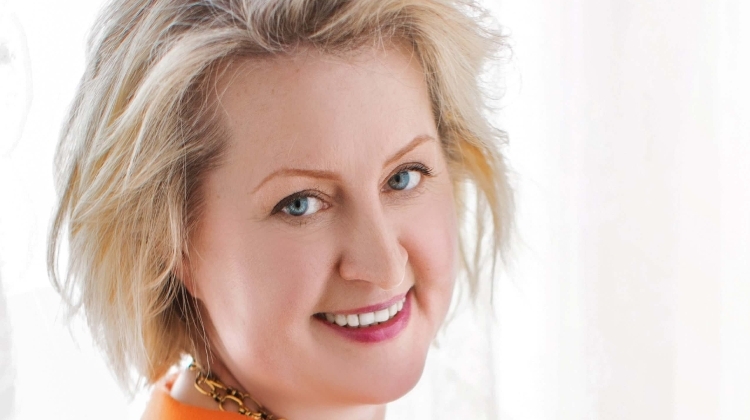
Angelika Regossi was an East Europe news reporter for BBC radio during the unprecedented changes in the region; the fall of the Iron Curtain, the expansion of NATO and the European Union and the transition from communism to capitalism.
In addition to BBC, she freelanced for RFI (Radio France International) and DW radio (Deutsche Welle) and worked as a TV producer for Belgium VRT, German Spiegel, Dutch NOS, the Voice of America, and others. At that time, she was writing under the name Agnes R. Bos, or Агнеш Бос.
Regossi travelled extensively through the region, reporting about the major historical events in East Europe; including several Balkan wars of independence during the break-up of Yugoslavia (1991–2001), the overthrow of the president of Yugoslavia—Slobodan Milosevic (2000)—and his trial for the war crimes at the Tribunal in The Hague (2002).
Regossi also worked from Canada over the independence of Quebec (1995) and other parts of the world, like the war in Iraq (2003), the Karen civil war in the jungles of Burma and religious persecutions in Laos (2005), the Russian war in Georgia (2008) and other places.
Angelika Regossi was born on 21 April 1964 in Transcarpathia, the westernmost region of Ukraine. She began writing at an early age but had difficulties with communist authorities, who persecuted her grandfather in a labour camp in Siberia. With no communists in the family, Regossi had little chance to discover herself in the autocratic USSR. Therefore, in September 1989, she moved to Hungary where communism had just collapsed.
After finishing her reporter job for BBC, in 2015, Regossi moved to the Netherlands where she continued to work on different television documentaries about East Europe.
Angelika Regossi has a university degree and special training in investigative journalism. She speaks several languages: English, Dutch, Hungarian, Russian, Ukrainian, Slovak, and other Slavic languages.
Her hobbies are gardening and of course, travelling.
Links:
Amazon.com : Angelika Regossi
Shop in Hungary:
My Thousand Words Series & Librotrade
Trailer:
1. Where did you grow up?
I grew up in Transcarpathia, which is the westernmost part of Ukraine; it was for centuries Hungarian territory. Except for 26 years, between the two World Wars (from 1920 to 1946). Hungarians called this territory “Kárpátalja”, which means “Carpathian foothills”.
But, after the two years of Soviet Army occupation, in 1946, Transcarpathia was incorporated into Ukraine, at that time the Ukrainian Soviet Socialist Republic. No wonder: The Carpathian foothills are a militarily strategically important place.
In 1989, when Soviet leader Mikhail Gorbachev liberalized the borders and it was a bit easier to escape the USSR, I moved to Hungary to reunite with my father. At least, this was the official version, accepted by the communist Secret Service (KGB) authorities, who issued with difficulty my permission to leave the USSR.
2. If you could be an expat anywhere in the world, where would you choose?
Originally, I wanted to go to the USA, but it was not so simple. Because I didn’t have any connection with the USA, just an American dream. I was looking for opportunities, worked for American companies here, in Budapest, and was stuck in Hungary. You know, I am half Hungarian, so it was close to me.
3. What would you miss most if you moved away from Hungary?
The spirit of the people, the kindness and warmth. You can only realize how nice people are here when you move out. I also like very much Hungarian summers with plenty of fruit, which tastes real. Apricots, peaches, watermelons, and grapes, I would miss a lot. You eat them – and they taste like apricot and peach, and not like grass. You know, sometimes you have this taste when you buy, for example, strawberries in the supermarket.
I will also miss the Hungarian culture and restaurant food. Both are so affordable in comparison with Western Europe.
And nature, also, would miss: the hills of Buda and the south of Hungary. Oh, yes, the thermal spas – where people go to “swim”, but in reality, to sit in the warm water.
I can continue the list. I think you'd better ask – what shall I not miss, and the list will be shorter.
4. Friends are in Budapest for a weekend - what must they absolutely see and do?
I would take them to Parliament – inside and outside. This is the most beautiful building I have ever seen. And to the castle district, and the Jewish quarter – it has such an atmosphere. I adore it.
5. What is your favourite food?
Oh, there are so many. I love to eat good and I also cook well. But if we talk about Hungarian cuisine, I like raspberry fruit soup with almond topping (“málna gyümölcsleves”) on hot summer days. And in winter, a piece of well-prepared meat, you know, one of those tasty recipes with souse.
6. What is your favourite sport/form of exercise?
I don’t do sport myself, too busy for it. Gardening replaced it. But I like to watch mountain skiing and boxing. It is so brutal, but very spectacular.
7. What is your favourite place in Hungary?
Budapest and my home.
8. What career other than yours would you love to pursue?
I wanted to be an actress. But in the USSR, where I grew up, this profession was only for the privileged and for those on whom the communist party could rely. Because actors and actresses were the tools of communist propaganda, and my family was different. We were a communist free family. Even my grandfather was prosecuted in a Siberian camp.
9. What’s a job you would definitely never want?
Oh, I don’t want to tell it. You know, it is so easy to offend people.
10. Where did you spend your last vacation?
I was in the Lillafüred castle hotel, which is in the mountains of East Hungary, close to Miskolc. Such a wonderful place, like a fairytale. And food! It is something unforgettable. The service was also exceptionally good. Probably they can pay me for the advertisement. What do you think?
11. Where do you hope to spend your next one?
I was thinking of going back to Lillafüred, so good it was. But I am open to other places too. It all depends on my time and mood.
12. What was your favourite band, film, or hobby as a teen?
Wow, it was quite some time ago … Let me think. Well, about the band, in my time it was ABBA. Film? We mainly saw soviet films. I loved the series “17 Moments of Spring” with a handsome actor, Vyacheslav Tikhonov. We watched it all together, the whole family. Many times. They showed this film, I think, each year.
And the hobby you asked about. I liked to pretend that I was a famous skater. In winter, it was very cold, and children’s parents were filling the play garden with water, and we could skate. You know, at that time, it was still snow and ice in winter, it was before global warming.
13. A part of temptation, what can't you resist?
A good book. It is so cozy to read something interesting.
14. Red wine or white?
Well, difficult question. Both are very good, of course. But I like champagne with strawberries. And homemade liquor. I make them so good. Many different types.
15. Book or movie?
Book. Because you can let fly your imagination and replay the situations, I mean, re-read them. Also, you can stretch the pleasure for a few evenings, except one, as with the movie.
16. Morning person or night person?
I think I am more active close to the evening. But when necessary, I can start very early too.
17. Which social issue do you feel most strongly about?
Discrimination. It feels terrible, I know it for sure.
18. Buda or Pest side?
No, no, I can not tell. When I start writing, Buda, Pest is crying out with its beautiful parts.
19. Which achievement in your life are you most pleased about?
I am independent – and this is the biggest achievement one can have.
20. What would you say is your personal motto?
NEVER GIVE UP.