










Why Hungary Joined Trump’s ‘Board of Peace’, While Most of Europe is Steering Clear
- 23 Jan 2026 9:57 AM
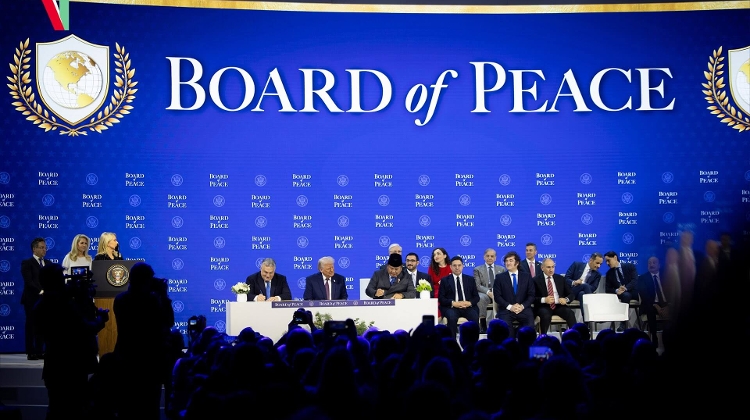
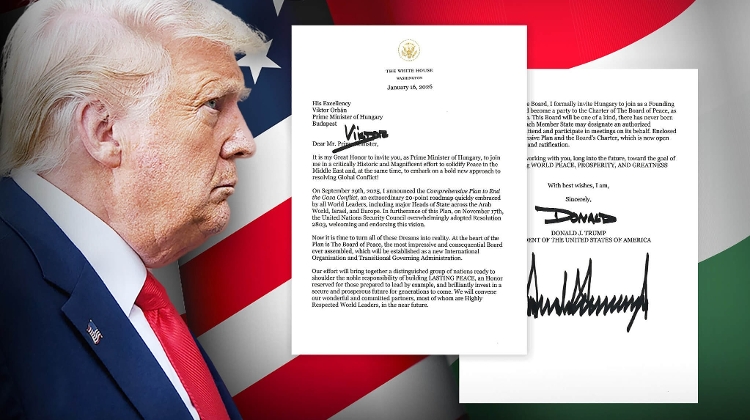
Hungary has once again taken a divergent path in European diplomacy, with PM Orbán accepting an invitation to participate in a Trump's “Board of Peace” initiative.
While Budapest presents the move as a logical extension of its long-standing peace-first foreign policy, the decision stands in sharp contrast to the position taken by most EU member states and the UK — all of whom have so far chosen not to engage.
The split highlights deeper disagreements within Europe over how peace efforts should be framed, who should lead them, and where the political red lines lie.
What exactly is the ‘Board of Peace’?
The “Board of Peace” is an informal initiative associated with former US President Donald Trump and figures close to his political circle.
It positions itself as an alternative platform advocating negotiated settlements, ceasefires, and resistance to prolonged military conflicts — particularly those involving major powers.
It is not a recognised international body, nor is it linked to the United Nations, NATO, or the European Union. Supporters argue that this independence allows for freer discussion and unconventional solutions.
Critics, however, say the lack of structure, transparency, and accountability raises serious concerns.
Reports that Russian President Vladimir Putin is connected to, or represented within, the initiative have further complicated perceptions - especially in the UK and key European countries.
Why Hungary Accepted Trump's Invitation
For Orbán, participation fits a clear and consistent narrative.
Since the start of the war in Ukraine, Orbán has positioned Hungary as a proponent of ceasefires and negotiations, frequently warning against what he describes as “war fatigue” and economic self-harm caused by prolonged conflict.
Joining the initiative allows Budapest to:
* Reinforce its peace-centric messaging to both domestic and international audiences
* Signal independence from EU consensus, particularly on security and sanctions policy
* Maintain strong political links to Trump-aligned US circles, which Hungary sees as strategically important given the uncertainty of future US leadership
From the government’s perspective, the symbolism matters as much as the substance.
Why Most EU Countries Are Saying No
While Hungary sees opportunity, most EU governments see risk.
The primary concern is legitimacy. European leaders generally prefer peace initiatives to operate within established frameworks such as the EU, NATO, or the UN. An informal body tied closely to a single political figure — especially one outside office — is viewed as unreliable and potentially destabilising.
Another key issue is Russia’s perceived involvement. With Vladimir Putin reportedly linked to the initiative, participation could be interpreted as tacit acceptance of Russian narratives on the war in Ukraine. For EU countries that have strongly backed Kyiv militarily and politically, this would be politically untenable.
There are also concerns about mixed messaging. EU leaders are keen to avoid parallel diplomatic tracks that could undermine collective pressure on Moscow or weaken the appearance of European unity.
The UK’s Position
The UK’s decision not to engage reflects similar calculations.
London remains firmly aligned with NATO strategy and has taken a leading role in military and financial support for Ukraine. Joining a Trump-linked initiative — particularly one associated with calls to scale back military involvement — could be seen as contradicting that stance.
Additionally, UK policymakers are wary of initiatives that blur the line between official diplomacy and political advocacy. With no clear mandate, membership criteria, or enforcement mechanisms, the Board of Peace does not fit the UK’s preferred model of international engagement.
Potential Benefits — and Real Risks — for Hungary
Supporters of Hungary’s participation point to several advantages:
* Increased diplomatic visibility
* Alignment with a peace narrative that resonates with parts of the electorate
* Stronger informal ties with influential political actors in the US
However, critics argue the risks are significant:
* Further strain on Hungary’s relationship with EU partners
* Reputational damage through association with controversial figures
* Limited practical impact due to the initiative’s informal nature
Much depends on how prominently the initiative develops — and how closely it becomes associated with Russia’s strategic interests.
A Broader European Divide
Hungary’s involvement in the Board of Peace underlines a widening divide within Europe over how peace efforts should be pursued. While most EU states prioritise unity, institutional legitimacy, and coordinated pressure, Hungary continues to emphasise national sovereignty, bilateral channels, and political signalling.
Whether this approach enhances Hungary’s influence or deepens its isolation remains an open question — one that will likely be shaped by developments in both Washington and Moscow in the months ahead.
*********************************************************************************************
You're very welcome to comment, discuss and enjoy more stories via our Facebook page:
Facebook.com/XpatLoopNews + via XpatLoop’s groups: Budapest Expats / Expats Hungary
You can subscribe to our newsletter here: XpatLoop.com/Newsletters
Showcase Your Business to Expats in the Loop:
As an independent portal we’re grateful to all commercial supporters who help keep you in the loop with fresh insights and inspiration. Do you want your business to reach tens of thousands of potential high-value expat customers? If so please contact us here.

LATEST NEWS IN current affairs