















Record Budapest Heatwaves More Intense Than Ever, Expert Explains
- 14 Aug 2026 4:01 PM
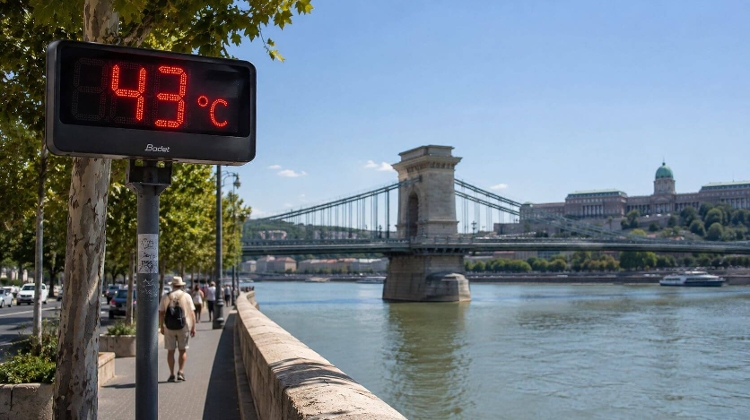
Both of this year’s extreme heatwaves in Budapest were more intense than ever before, according to an analysis published on the specialist portal Masfelfok (One and a Half Degree) - Climate Change Explained.
Peter Szabo, a climate researcher and PhD student at the meteorology faculty at ELTE university said that Budapest had never before experienced heatwaves like the two that occurred this year.
The first began on June 20 and lasted for 12 days, the second began on July 30 and lasted for 9 days. Although the July heatwave was shorter, it was more intense. On both occasions, it was hotter in the capital than in 2007, when the previous all-time heat record was set.
The 1994 heatwave also lasted 12 days, but it was nowhere near as intense as the two this year, Szabo said. Although the heatwave in July 2024 was the longest, lasting 13 days, it was less intense than the one at the start of August this year.
He added that for several decades in the 20th century, moderately intense heatwaves occurred every few years, followed by a longer period during which no heatwaves developed.
However, after 1990, the effects of climate change became apparent, and it was really only after 2010 that heatwaves became prolonged and intense.
During the hottest summer, in 2024, a total of around 1,300 more people died over the course of three weeks of heatwaves, meaning that excess mortality stood at nearly 20 percent nationwide.
Karacsony: Heatwaves will become the norm in Budapest
Budapest is currently enduring "one of the coolest summers of the rest of our lives", Gergely Karacsony, the city's mayor, said in a post on Facebook on Friday, citing professional studies.
Every simulation and scenario examined indicates warming across every part of the capital, Karacsony said. By mid-century, Budapest can expect an additional 1-3.5 weeks of heatwave days and 2-4 extra weeks of tropical nights annually, he said.
"This means that what is now considered extreme heat will become a regular summer condition," the mayor said. Heatwave alerts will shift from emergency response to seasonal operational management, he added.
Karacsony also said the heat would not be evenly distributed across the city, with the greatest increase expected to occur on the Pest side, while the Buda hills will see the least change. The city's hottest core will remain the downtown area.
Preparing the city for this future requires collective effort and a new mindset, Karacsony said. "In recent years, Budapest has led the way, devoting all available European Union funds to this cause, though little was allocated under the Orban government," he said.
The city has invested in green spaces, water management, sustainable energy and greener transport, Karacsony said, adding that a key goal of the newly secured EU funds and the city's financial consolidation was to allow Budapest to expand this work on a larger scale.
Citing a study by the climate department of the Mayor's Office, Karacsony said a temperature rise of 3-5 degrees Celsius was expected across most of the city, with some outer districts of Pest facing increases of over 6 C.
Source: MTI – Hungary’s national news agency since 1881.
MTI Stock Photo
*********************************************************************************************
You're very welcome to comment, discuss and enjoy more stories via our Facebook page:
Facebook.com/XpatLoopNews + via XpatLoop’s groups: Budapest Expats / Expats Hungary
You can subscribe to our newsletter here: XpatLoop.com/Newsletters


LATEST NEWS IN current affairs