



















Opposition Parties Sharply Criticise Orbán's State of Nation Speech
- 16 Feb 2026 1:20 PM
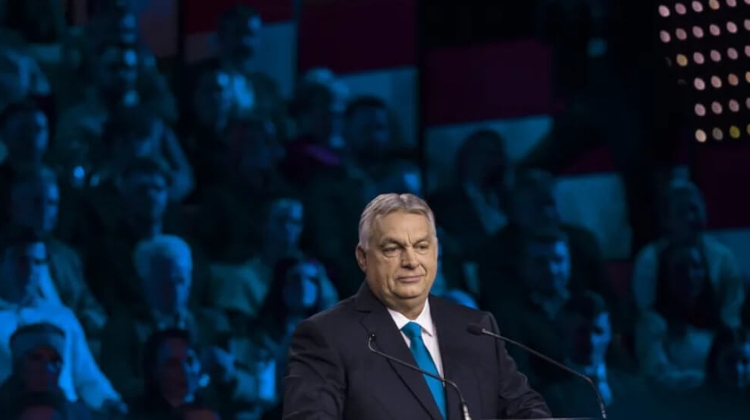
Opposition parties reacted to Prime Minister Viktor Orbán's speech assessing the state of the nation over the past year.
Klara Dobrev, leader of the Democratic Coalition, said Orban had "once again announced his programme, and, as every year, it boils down to this: we will continue".
In a statement, she said millions of families were worse off because they did not fit the ideological model of the right-wing government.
Pensioners who have worked all their lives were counting at the end of the month to see if they could afford medicine and heating, and there were workers who had no choice but to work in toxic factories and unhealthy conditions because there were no other jobs and no real protection, she added.
Under Orban, Hungarians had become the poorest citizens in Europe, Dobrev said, adding that this was the reality of right-wing politics.
"He calls himself a patriot, but in reality he is dividing Hungarians into two groups: the privileged and the abandoned. Those who receive and those who are left out," Dobrev said.
Laszlo Toroczkai, leader of the Our Homeland Movement, said that that once again, Orban had failed in his state of the nation speech to present a positive outlook for the future that could put Hungary on a path to real development, and prevent the increasingly threatening demographic catastrophe.
Orban "mentioned in vain how much money has been taken from the banks, if that money was also given to large global corporations, as they recently helped the toxic Samsung battery plant" with another 133 billion forints (EUR 350m), he said.
Furthermore, instead of financing a rental housing construction programme that would support local entrepreneurs and Hungarians who are tenants, the government was "stuffing the banks with taxpayer money in the form of interest subsidies", he said.
"It is therefore quite implausible to talk about Fidesz protecting our country from big capital and bankers," Toroczkai said.
Orban: People 'on our side' on all major civilisational issues
"The people are on our side on all major civilisational issues," Prime Minister Viktor Orban said in a speech assessing the nation over the past year at Budapest's Varkert Bazaar on Saturday.
Orban said that people did not want migration, war or to send their money to Ukraine.
He also said that during his travels around the country, he saw that the government was supported by those who earn their living from work, "the huge masses who get up early in the morning, work during the day, raise their children after work, take care of their parents, and keep their families together".
They are supported by the elderly, who have worked all their lives and know that the future can only be built on work, he added.
He said there were also many young people supporting the government, most of whom were not satisfied with "fake rebellion".
"These young people truly love their country, think seriously about their future, and are willing to rebel against the idiotic instructions coming from Brussels, international networks, and big capital," he said.
"These young people are with us, and I think they are in the majority. We call on them to come and fight with us for their country," Orban said.
Orban: Five million jobs goal for Hungary
The goal is to create 300,000 new jobs and have 5 million jobs in Hungary, Prime Minister Viktor Orban said in a speech assessing the nation over the past year at Budapest's Varkert Bazaar on Saturday.
Orban said every Hungarian who is able to work should be able to do so. The government has already created 1 million jobs, and today 4.7 million people are working, but the plan is to increase this number to 5 million, which will require 300,000 new jobs, he added.
He said a wage increase programme had been running for 15 years, raising the minimum wage four and a half times and the average wage four times. It will continue and the goal is to reach an average monthly wage of 1 million forints (EUR 2600), he said.
He promised to continue with the fixed 3 percent mortgage for first-time home buyers until every young person has their own home. Tax exemptions for mothers with children will be fully implemented by 2029, and the 14th month pension will be fully introduced, he added.
"Anyone who has seen a government knows that it will be enough of a task to get all this done in the next four years," he said.
Orban: 'Big oil, bankers and Brussels elite preparing to form govt in Hungary'
"It is crystal clear that it is the oil industry, the banking elite and the Brussels establishment that are preparing to form a government in Hungary," Prime Minister Viktor Orban said in a speech assessing the nation over the past year at Budapest's Varkert Bazaar on Saturday.
Orban said the ruling parties' opponents were not Hungary's opposition parties but their "Brussels masters".
The opposition Democratic Coalition, he said, had "sold its soul long ago", and now carried the banner of the "United States of Europe, or the Brussels Empire", while the Tisza Party was a "direct creation of Brussels".
Recalling Fidesz's departure from the European People's Party, he said they had "refused to bow to German demands to admit migrants", led by Manfred Weber, adding that "Tisza was founded by the Germans under Weber's leadership and Ursula von der Leyen's patronage."
As a new development, Orban warned that global capital, "previously operating in the shadows", had now "stepped into the spotlight".
"Before us stands the raw, open power of international finance," he said.
"The stakes are high. It is crystal clear that it is the oil industry, the banking elite and the Brussels establishment that are preparing to form a government in Hungary."
He accused the left -- now "running under the name Tisza Ltd" and "stuffed with billions" -- of acting as their "forward base", enforcing their agenda after striking deals with Shell and Erste Bank.
"Shell, Erste, and Brussels are in a wartime alliance," he said.
Orban: 'Coalition of Tisza, Brussels, big capital' would fleece Hungarian families
Should the "coalition of the Tisza Party, Brussels and big capital" be allowed to come to power in Hungary, they will fleece Hungarian families, Prime Minister Viktor Orban said in an annual speech on the state of the nation on Saturday.
"It is crystal clear that it is the oil industry, the banking elite and the Brussels establishment that are preparing to form a government in Hungary," he added. As long as it has a patriotic government, Hungary will not send weapons to Ukraine, "and our money and young people will not be sent there," he said.
In his 27th annual assessment speech held in Budapest's Varkert Bazaar, Orban said 2026 would be a year of victory for families, the right wing, Fidesz and Hungary.
He highlighted the importance of a sovereign foreign policy as a condition of national independence.
He said that the previous US president had not only backed the Russia-Ukraine war but had "pushed every European state into it -- except Hungary". However, following Donald Trump’s return to office in January last year, the US withdrew from the conflict, leaving Europe "trapped" in the crisis, he added.
"There is a lesson here for those constantly trying to align with larger powers and who do not trust a sovereign foreign policy."
"The danger remains acute," the prime minister warned. "While Brussels makes daily attempts to do so, the [opposition] Tisza Party has already pledged to bind Hungary to a common EU foreign policy."
Orban said that, as he had predicted last year, Donald Trump's return to the US presidency had put Hungarians "back on history's main street", while their opponents had been left "wandering in muddy suburban alleys".
He warned that, if current trends persisted, this century would become "Europe's century of humiliation", as the continent -- unable to participate in a new global industrial revolution - would for the first time since the invention of the steam engine be "a victim, not a shaper" of economic transformation. He blamed crippling energy costs and stifling overregulation for "killing" Europe's economy.
But the prime minister said Hungary "still has a chance", noting that in 2025 he had negotiated deals with the US, Russian, and Turkish presidents to maintain the country's access to affordable oil and gas.
"We will have oil and we will have gas," he said.
"The Paks nuclear plant is being built; we will have enough energy for economic growth and a data-driven economy. Meanwhile, others will be paying four to five times what Hungarians pay for utilities."
Orban said that in last year's speech he had promised that "hard rock and roll is coming to Hungarian domestic politics" because Trump had rebelled against "the global business, media, and political network of liberals".
This, he said, had improved the Hungarian government's chances, "we too can take giant steps and oust from Hungary the foreign influence that limits our sovereignty, along with its agents."
He said this had been the plan, but only half the job had been done because "the oppressive machine in Brussels is still operating in Hungary".
"We will clean this up after April," he added.
"Pseudo-civil organisations, bought-off journalists, judges, politicians, algorithms, bureaucrats, rolling millions of euros. This is what Brussels means here in Hungary today," he said.
Orban cited a US Congressional report, which he said stated that the European Commission pressured social media platforms to censor content ahead of the Slovak, Dutch, French, Moldovan, Romanian, and Irish elections, as well as ahead of the European Parliament elections in June 2024. But the Commission had also "activated rapid response systems" ahead of the French, Moldovan, Romanian, and German elections, he added.
He said it was not Russia saying this, but the US.
"Let's appreciate the friendship of the Americans, because they are exposing the censorship, interference, and manipulation in Brussels. Here is the truth from America. This is the real voice of America!" he said.
Regarding economic measures in Hungary, Orban said: "We have delivered on our promises, and we will continue to do so over the next four years."
Orban highlighted the doubling of tax breaks for families with children, the expansion of the child support system, the curbing of inflation and the launch of a crackdown on drug dealers among his government's achievements. He noted that they had promised a breakthrough on taxation and exempted the GYED and CSED benefits from income tax.
Orban stressed that Hungary's future depended on mothers feeling financially secure with their children, noting that half a million Hungarian mothers now have a lifetime exemption from paying personal income tax, a figure set to rise to one million within three years.
He said that without the introduction of today’s family support system in 2010, Hungary would have 200,000 fewer children today. "Is there any greater joy or pride than that?"
He said the government had promised to rein in inflation, and in January it stood at 2 percent.
"Food price caps, price monitoring, mandatory discounts -- we've done it all, but we're not finished yet," he said.
The prime minister said they had also vowed to "hunt down" drug dealers who had flooded Hungary with toxic synthetic substances. "We promised, and we delivered," he said, reporting over 10,000 criminal proceedings, the seizure of 50 tonnes of drugs and precursors, and assets worth more than two billion forints confiscated from drug trafficking.
He said that while not originally pledged, his government had introduced a fixed 3 percent credit scheme for first-time home buyers, making Hungary the easiest place in Europe for young people to own a home. He also noted the unpromised introduction of a 14th monthly pension payment and an 11 percent minimum wage increase.
Orban set a target of creating 300,000 new jobs to reach 5 million employed Hungarians.
He said every Hungarian who is able to work should be able to do so. The government has already created 1 million jobs, and today 4.7 million people are working, but the plan is to increase this number to 5 million, which will require 300,000 new jobs, he added.
He said a wage hike programme had been running for 15 years, raising the minimum wage 4.5-fold and quadrupling the average wage. It will continue and the goal is to reach an average monthly wage of 1 million forints (EUR 2600), he said.
He promised to continue with the fixed 3 percent mortgage until every young person has their own home. Tax exemptions for mothers with children will be fully implemented by 2029, and the 14th month pension will be fully introduced, he added.
"Anyone who has seen a government knows that it will be enough of a task to get all this done in the next four years," he said.
Orban said that his opponents, when it came to their election platform, had "already announced that they’ll lie, because telling the truth would mean they’d never win."
He cited Fidesz's recent by-election victory in Balmazujvaros, in eastern Hungary, dismissing "a left-liberal media spin that framed it as a loss". He said that when Fidesz won the general election in two months, "they’ll call that a defeat too".
Meanwhile, Orban said that Hungarians sided with the ruling parties "on all major civilisational issues".
He said people did not want migration, war or to send their money to Ukraine.
Orban also said that during his travels around the country, he saw that the government was supported by those who earn their living from work, "the huge masses who get up early in the morning, work during the day, raise their children after work, take care of their parents, and keep their families together". They are supported by the elderly, who have worked all their lives and know that the future can only be built on work, he added.
He said there were also many young people supporting the government, most of whom were not satisfied with "fake rebellion".
"These young people truly love their country, think seriously about their future, and are willing to rebel against the idiotic instructions coming from Brussels, international networks, and big capital," he said.
"These young people are with us, and I think they are in the majority. We call on them to come and fight with us for their country," Orban said.
Contrasting his "cheerful, determined" patriotic movement with an opposition fuelled by "anger and hatred", Orban warned of attempts to disrupt Fidesz rallies with "organised criminals."
"Let's not allow Tisza to drag us back to the law of the fist," he said, emphasising that "a national community is built on love and unity."
Orban said the ruling parties' opponents were not Hungary's opposition parties but their "Brussels masters".
The opposition Democratic Coalition, he said, had "sold its soul long ago", and now carried the banner of the "United States of Europe, or the Brussels Empire", while the Tisza Party was a "direct creation of Brussels".
Recalling Fidesz's departure from the European People's Party, he said they had "refused to bow to German demands to admit migrants", led by Manfred Weber, adding that "Tisza was founded by the Germans under Weber's leadership and Ursula von der Leyen's patronage."
As a new development, Orban warned that global capital, "previously operating in the shadows", had now "stepped into the spotlight".
"Before us stands the raw, open power of international finance," he said.
"The stakes are high. It is crystal clear that it is the oil industry, the banking elite and the Brussels establishment that are preparing to form a government in Hungary."
He accused the left -- now "running under the name Tisza Ltd" and "stuffed with billions" -- of acting as their "forward base", enforcing their agenda after striking deals with Shell and Erste Bank.
"Shell, Erste, and Brussels are in a wartime alliance," he said.
He added that they were the ones that profited from bloodshed, who had an interest in the continuation of the fighting. Orban said they were "the tax collectors of death, the dogs of war."
Orban said they did not take part in the fighting themselves, that was left to the Ukrainians and, if necessary, their central European neighbors.
He added that one of the main winners of the war was Shell, which he said had made 10 billion dollars from the war and sanctions against Russia.
"Their goal is to cut us off from Russian oil and gas, raise prices, and multiply their profits in Hungary," Orban said, adding that "they do not care that Hungarian households and businesses are being hit hard by this".
Today, Hungarians pay an average of 250,000 forints for annual utilities, compared with 800,000 in Poland and 1 million in Czechia, Orban said.
"This is the future Shell has in store for us, which is why it has delegated its own representative to a hopeful government," he said.
He said the patriotic government had involved international banks in the public burden sharing, and the banks had had enough of this, "they have had enough of the patriotic government and enough of people-friendly governance".
Orban said they wanted their money back, so they had delegated a ministerial candidate from Erste to the prospective government.
Orban added that international banks were also profiting from the war, as Brussels was supporting Ukraine with loans taken out from them.
Meanwhile, "the unfortunate Europeans are being fed the line that their money is serving a good cause, when in fact it is only filling the coffers of Western multinationals," he said, adding that Hungary was only able to avoid this EU loan at the cost of serious conflicts.
Should the "coalition of the Tisza party, Brussels and big capital" be allowed to come to power in Hungary, they will fleece Hungarian families, he said.
Orban said that "coalition" was looking to "give everyone what they want: Tisza will be able to fulfill its political ambitions, big capital will get its money back, and Brussels will be able to send Hungarians' money to Ukraine and push that country into the bloc."
Tisza's "regime change" would put "a Brussels regime in place of the patriotic government supporting Hungarian families" which would spell the end of measures such as the utility price caps, family support and home purchase subsidies, he said.
The incumbent government had financed family support from taxes drawn from the bank and energy sector and from large retail chains, a total of 14,956 billion forints (EUR 40bn) between 2010 and 2025, he said. This year, that revenue is estimated to be at 1,922 billion, he added.
Those companies have nevertheless "made good money on their activities in Hungary," he said. A change in government would prompt them to push for scrapping those measures and to "collect back" the sums that had been taken from them, he added.
He said that in 2002, they had warned that if the Socialists won the election, "big business and big money would control the government and they would take everything away."
"We paid dearly for the fact that half the country did not listen" as "the whole country, every family, had to endure those burdens" for eight years. Orban said that just like Tisza was doing now, the Socialist governments had denied that gas prices would increase, despite going on to raise them fifteen times "during the eight bitter years."
They had also said that they would continue with the good things, such as home subsidies and the Szechenyi Plan, while a year later, none of those remained, and "they did not care that Hungarian families were being crushed by unaffordable utility costs", he said.
"Poverty, debt, unemployment, misery, and then bankruptcy came," he said.
Meanwhile, Orban said Europe had "decided to go to war by 2030", making April's election Hungary's last before an impending conflict. The next government, he said, would face the choice between war and peace.
He said Brussels was determined to defeat Russia in Ukraine, with every European Union country -- except Hungary and Slovakia - preparing for war.
Nine nations had reintroduced conscription, some extending it to women, while governments had issued civilian war guides and military spending soared, he said.
Brussels had already spent nearly 200 billion euros on the war, with another 90 billion euro loan approved in December, the prime minister said.
"Ukraine just keeps swallowing the money," he said, adding that the country was now "demanding 800 billion for operations and 700 billion for its army -- yet no one can answer how you defeat a nuclear power without it using its nuclear weapons".
Orban said that what Europe and Brussels were doing was "sheer irresponsibility".
As long as it had a patriotic government, Hungary would not send weapons to Ukraine, "and our money and young people will not be sent there. No, never!" he said.
Orban said "our calling is to preserve Hungary's independence and sovereignty." While all of Europe used to think that way, "something mixed up, something uncertain and soulless surfaced west of us, and no one knows what's going to come of it… We have order and security; Hungary is the safest European country," he said.
"Confident calmness, a Hungarian world is what suits us, where we feel at home and we are proud of. We want it to stay that way, that is why Fidesz-KDNP is the safe choice," he said.
He said that after the lost wars of the past, Hungary's opponents had cast the country as a poor and small state, and "taught us to resign to our fate for decades".
"Well no!" he said, calling on Hungarians to make Hungary great and rich again. "We have worked a lot and we are progressing well, but the job is not done. That is why we must and we will win the April elections."
This year will be the year of victory for families, the right wing, Fidesz and Hungary, he said, concluding his speech.
Orban: Hungary won't send weapons, money or troops to Ukraine as long as patriotic govt is in power
As long as it has a patriotic government, Hungary will not send weapons to Ukraine, "and our money and young people will not be sent there," Prime Minister Viktor Orban said in a speech assessing the nation over the past year on Saturday.
In his speech at Budapest's Varkert Bazaar, Orban said Europe had "decided to go to war by 2030", making April's election Hungary's last before an impending conflict. The next government, he said, would face the choice between war and peace.
He said Brussels was determined to defeat Russia in Ukraine, with every European Union country -- except Hungary and Slovakia -- preparing for war.
Nine nations had reintroduced conscription, some extending it to women, while governments had issued civilian war guides and military spending soared, he said.
Brussels had already spent nearly 200 billion euros on the war, with another 90 billion euro loan approved in December, the prime minister said.
"Ukraine just keeps swallowing the money," he said, adding that the country was now "demanding 800 billion for operations and 700 billion for its army -- yet no one can answer how you defeat a nuclear power without it using its nuclear weapons".
Orban said what Europe and Brussels were doing was "sheer irresponsibility".
"As long as a patriotic government is in power, we won't send weapons to Ukraine, and our money and young people will not be sent there, either -- no, no, and no!" Orban said.
Orban: 'Brussels' oppressive machine still operating in Hungary
Brussels' "oppressive machine is still operating in Hungary", Prime Minister Viktor Orban said in a speech assessing the nation over the past year at Budapest's Varkert Bazaar on Saturday.
Orban said that in last year's speech he had promised that "hard rock and roll is coming to Hungarian domestic politics" because the new president of the United States had rebelled against "the global business, media, and political network of liberals".
This, he said, had improved the Hungarian government's chances, "we too can take giant steps and oust from Hungary the foreign influence that limits our sovereignty, along with its agents."
He said this had been the plan, but only half the job had been done because "the oppressive machine in Brussels is still operating in Hungary".
"We will clean this up after April," he added.
"Pseudo-civil organisations, bought-off journalists, judges, politicians, algorithms, bureaucrats, rolling millions of euros. This is what Brussels means here in Hungary today," he said.
Orban cited a US Congressional report, which he said stated that the European Commission pressured social media platforms to censor content ahead of the Slovak, Dutch, French, Moldovan, Romanian, and Irish elections, as well as ahead of the European Parliament elections in June 2024. But the Commission had also "activated rapid response systems" ahead of the French, Moldovan, Romanian, and German elections, he added.
He said it was not Russia saying this, but the US.
"Let's appreciate the friendship of the Americans, because they are exposing the censorship, interference, and manipulation in Brussels. Here is the truth from America. This is the real voice of America!" he said.
Orban: Sovereign foreign policy needed for national independence
A sovereign foreign policy is "the prerequisite for national independence and must be guarded like the apple of our eye", Prime Minister Viktor Orban said in a speech assessing the nation over the past year on Saturday.
At the 27th such event held at Budapest's Varkert Bazaar, Orban stressed that the former US president had not only backed the Russia-Ukraine war but had "dragged every European state into it -- except Hungary". However, following Donald Trump’s return to office in January last year, the US withdrew from the conflict, leaving Europe "trapped" in the crisis, he added.
"The danger remains acute," the prime minister warned. "While Brussels makes daily attempts to do so, the [opposition] Tisza Party has already pledged to bind Hungary to a common EU foreign policy."
Orban: 'We have delivered on our promises, and will for the next four years'
Prime Minister Viktor Orban, in a speech assessing the nation over the past year on Saturday, said: "We have delivered on our promises, and we will continue to do so over the next four years."
In his speech at Budapest's Varkert Bazaar, Orban highlighted the doubling of tax breaks for families with children, the expansion of the child support system, the curbing of inflation and the launch of a crackdown on drug dealers among his government's achievements.
He noted that they had promised a breakthrough on taxation and exempted the GYED and CSED benefits from income tax.
Orban stressed that Hungary's future depended on mothers feeling financially secure with their children, noting that half a million Hungarian mothers are now tax-exempt for life, a figure set to rise to one million within three years.
He said the government had promised to rein in inflation, and in January it stood at 2 percent.
"Food price caps, price monitoring, mandatory discounts -- we've done it all, but we're not finished yet," he said.
Orban said they had also vowed to "hunt down" drug dealers who had flooded Hungary with toxic synthetic substances.
"We promised, and we delivered," he said, reporting over 10,000 criminal proceedings, the seizure of 50 tonnes of drugs and precursors, and assets worth more than two billion forints confiscated from drug trafficking.
Dobrev: DK guarantee for real change
After April 12, the Democratic Coalition (DK) will be the guarantee for real change, the opposition party's leader said at the party's campaign launch rally in Budapest on Sunday.
Klara Dobrev said that the election campaign should be about who is offering what to voters. There should be round-the-clock debates about wages, the pension system, and health care, but instead, "it seems that an increasingly crude, testosterone-driven, hateful show of force is taking place," she said. DK's community, she said, believed in humble political work.
She said that in recent weeks and months, politicians, former politicians, analysts, journalists, and even influencers had been trying to persuade DK to give up their principles, not to run in the election. "These people think that after the election, everything will be much better and everything can be fixed," she said.
"They think we will become a wonderful, pluralistic multi-party democracy, with the left, the right, liberals and greens, only a little, a tiny bit of absolute power for one person would be needed again, as in 2010." Those who thought this way, she said, were "mistaken and are in for a rude awakening".
Detailing DK's economic plan, Dobrev said that in contrast to the right wing, they believed the minimum wage should be made tax-free, so that those who earn more would only have to pay tax on the amount above the minimum wage.
Dobrev said the constitution should stipulate that pensions are a fundamental right and that, in addition to one-off pension increases, Swiss indexation should also be restored. She said that she also disagreed with the Hungarian right wing on foreign policy and believed that the opposition right wing had no intention of radically breaking with "Viktor Orban's harmful worldview".
"It is certainly not right that Hungary should be at the mercy of Vladimir Putin's Russian gas contracts for another ten years," Dobrev said. "When the opposition Tisza Party says that we will end our dependence on Russian gas in 2035, what it is actually saying is that nothing will change in two more terms, i.e. eight years."
According to the Tisza Party's programme, Paks2 needs to be reviewed, which "in practical terms means that they are not stopping the investment, just phrasing it a little more cautiously", she said.
According to DK, she said, there was no need for either a review or acceleration of the project, but it needed to be stopped "and the Hungarian energy mix must be expanded with renewable energy".
She also said that the "United States of Europe" was now taking shape and that Hungary had two options in this regard, namely "we will be in or we will not be in."
Stefan Lofven, President of the Party of European Socialists (PES), who was invited as a guest to the campaign launch, said that they had gathered at a moment that demanded determination, perseverance, and courage. He added that they believed in a future based on international law and international cooperation.
Dobrev: DK has prepared complex package of environmental bills
The opposition Democratic Coalition (DK) has prepared its 13th legislative proposal: a complex environmental protection bill, the party's leader said on Saturday, adding that it was "sadly relevant in light of the Samsung factory case in God".
Klara Dobrev told an online press conference on Facebook that DK's environmental legislation package would be submitted at the first session of the new parliament.
She added that they would announce a complete ban on the construction of battery plants. Such factories, she said, had been proven to "flout" environmental and occupational safety regulations while "swallowing up" tens of billions of forints in state subsidies, and employing very few Hungarian workers.
She added that instead of imposing fines of a few tens of millions of forints, which could be easily paid by the companies, DK called for closing down environmentally destructive factories, "because this is the only way to keep greedy and irresponsible large companies in check".
Dobrev said that dual environmental and labour authority controls would be introduced, and battery plants could expect constant, unannounced inspections.
In addition, a mandatory and continuous monitoring system would be put in place, which would display emission data in a way that is visible to the population living near the factories, she said.
DK's bill will also regulate where landfills can be built in the country in the future, and no more landfills will be built anywhere unless local residents approve them in a local referendum, she added.
"DK's 13th bill sends a clear message: Hungary cannot be an industrial testing ground, a laboratory for large Asian companies, and especially not a dumping ground for these large companies," Dobrev said.
Jobbik leader: 'We must defend our values by sticking together'
"We must stand together to defend what is pure, virtuous, moral, and everything that is Hungarian", party leader Bela Adorjan said at opposition Jobbik's campaign launch in Budapest on Sunday.
We are not all the same, but we all want the same thing: a normal Hungary, where people are not oppressed by a tyrant, and where we are not left with no choice but to replace one tyrant with another," he said.
Referring to the need for cooperation, he said, "we are all Hungarians in this country, we cannot deny each other."
He said that the country's air defence must be rebuilt, the armed forces, national security services, and police must be developed, and citizens must be given the right to self-defence. He added that corruption and the leakage of public funds must be prevented, with such cases being investigated since the time of the change of regime.
He said they wanted to create a self-sustaining, healthy society that was not "dominated" by German car manufacturers and Chinese battery manufacturers.
Adorjan promised to establish an independent health ministry and to "reform the overly centralised health-care system and address underfunding", urging that citizens be allowed to use their social security contributions to pay for private health-care services. As part of strengthening child protection, he called for the introduction of chemical castration for pedophiles.
He said that one of the foundations for creating a self-aware nation was to organise education into a separate ministry. He added that resources allocated to this area could be increased to as much as eight percent of GDP.
Magyar: 'We are at a turning point'
"We are at a turning point, now is the time to decide whether we will remain in a regime based on fear, hatred, and theft, or whether we will finally take back our future," Peter Magyar, the leader of the opposition Tisza Party, said in a speech assessing the state of the nation in Budapest on Sunday.
In his speech at the Hungexpo exhibition center, Magyar said that "in 56 days, it will be decided whether we are capable of setting a new course for our country and building a prosperous, peaceful, and humane Hungary."
He said the number of days remaining until the election was symbolic, as this year marks the 70th anniversary of the 1956 revolution. "In order to celebrate the brightest star in Hungarian history in a truly independent, sovereign, free, and humane Hungary, we will need everyone on April 12," he said.
At the beginning and end of his speech, Magyar said Tisza was "on the verge of victory".
"We have everything we need to win: a majority, credible candidates, a platform and experts; Tisza is ready to govern," he said.
Commenting on the government, he said "all they have left for the next 56 days is incitement, threats, discrediting and lies". "Over the next eight weeks, a power-hungry, mafia-like state, terrified of losing its grip on power, will unleash the most disgusting things on Hungarian society, and the secret service and propaganda machine, built at a cost of hundreds of billions, will unscrupulously seek to discredit anyone who stands in their way," he added.
"If they can pry into my private life, then they can do the same to everyone else's private life," he said.
"Our offer is a country where politics does not mean surveillance, fear, and blackmail, but peace, tranquility, and security for everyone," he said.
Magyar once again called on Prime Minister Viktor Orban to engage in public debate, saying, "Let's have a debate about the things that really matter: health care, wages, housing, education, the Hungarian economy, and bringing EU funds home."
He also said that his party "represents peace at home and around the world, and Tisza and its community reject war and all forms of violence".
Magyar said that Tisza would maintain the southern border fence, take strict action against illegal migration, reject the migration pact and Ukraine's accelerated accession to the EU, and did not want to reinstate compulsory military service. The future of Hungarian youth should be built on knowledge and freedom, not fear, he said.
Fidesz's economic model "has gone from assembly plants to toxic death factories in sixteen years", he said. He added that a Tisza government would offer Hungary a functioning vision for the national economy, with European Union funds being brought home, SMEs receiving support, innovative start-ups, and high value-added, rule-abiding foreign investments that largely employ Hungarians and pay taxes.
"Under the Tisza government, the health of workers, the safety of locals, and the protection of our environment will come first," he said.
Magyar said child protection was currently "a shame for our country", with thousands of children living in conditions "unfit for children". It was a moral principle for Tisza, he said, that the budget for child protection would be open-ended, ensuring funds for wage increases, institutional renovations, expansion of professional staff, and the return of dedicated professionals who have left.
The goal, he said, was to create smaller residential homes, faster adoption procedures, and a strengthened reporting system.
Magyar said the state of health care was characterised by "crumbling hospitals, hospital infections, tens of thousands of people without care, waiting lists lasting several years, 10,000 hospital beds eliminated and 225 hospital wards closed". "All this in the middle of Europe, 22 years after our accession to the EU," he added.
He said their first step would be to bring EU funds home, restore funding to the sector, and provide at least an additional 500 billion forints per year to the state health-care system.
Reiterating his earlier promise, he said that in order to "eradicate corruption", they would immediately join the European Public Prosecutor's Office and establish the National Asset Recovery and Protection Office.
He vowed that Tisza would create 20,000 new places in elderly care, raise the minimum pension to 120,000 forints per month, introduce a 200,000 forint pensioner SZEP voucher card, double family allowances and child support, and restore the financial autonomy of local governments.
At the end of his speech, Magyar asked those present to join hands and "enter the gates of victory on April 12" with their "heads held high, hearts pure, and as proud Hungarians". "God bless Hungary!" Magyar said.
In addition to several party candidates, Istvan Kapitany, the party's economic development and energy chief, also spoke at the event, calling the government's economic policy "a mistake for betting the country's future on a single industry for years and gambling an astonishing amount of public money on the battery industry".
Tisza's foreign affairs expert Anita Orban said that the Tisza government would not work "for foreign powers, foreign interests, and oligarchs".
Szijjarto: Tisza's Kapitany telling 'whoppers' about Hungarian economy every day
"It appears that Istvan Kapitany, the Tisza Party’s economic and energy chief, peddles whoppers about Hungary’s economy on a daily basis, even though the past four years have been the most successful in history for investment despite global crises," Peter Szijjarto, the foreign affairs and trade minister, said on Sunday.
In a post on Facebook, Szijjarto dismissed Kapitany’s latest post as "pure fiction" saying: "Even on a grey Sunday, he doesn’t miss a chance."
"The past four years -- despite brutal global crises -- have been the most successful in Hungary’s history for investment," the minister said. "Never before have we secured so many investment deals, built so many factories, or launched so many research centres as in the last four years."
"We are now the only country outside Germany to host all three major German carmakers, with US investment hitting record highs last year," he said.
"Hungary has also attracted unprecedented levels of R+D activity. A stroll down Vaci Road reveals the regional hubs of the world’s biggest finance, pharma, and energy firms, employing tens of thousands of highly educated, multilingual young professionals."
"So maybe it's worth peering out from behind those stacks of Shell share certificates once in a while, because then there's a chance to see things clearly…" the minister said.
Szijjarto: Kapitany's comments prove that 'life looks very different from behind stacks of Shell shares'
Vice President Istvan Kapitany's comments today prove that "life looks very different from behind the stacks of Shell shares," Peter Szijjarto, the minister of foreign affairs and trade, said in a Facebook post on Saturday.
"Vice President Kapitany's view of reality is undoubtedly clouded by the fact that Shell and its shareholders are unable to profit in Hungary during the war years," Szijjarto said.
Thanks to the extra profit tax collected from Shell and other large energy companies, the government was able to introduce the 13th and 14th month pensions, utility price cuts, family support, and income tax exemptions for mothers in Hungary, he added.
"We understand that this hurts Shell's shareholders and Brussels, which is why Tisza wants to take all this away from the Hungarian people," Szijjarto said.
"On April 12, the stakes are this: can international big capital and Brussels take away the 13th and 14th month pensions, utility cost reductions, family support, and income tax exemptions for mothers from the Hungarian people?" he added.
Source: MTI – Hungary’s national news agency since 1881. While MTI articles are usually factual, some may contain political bias, and readers should be aware that such content does not reflect the position of XpatLoop, which is neutral and independent.
Since the goal of XpatLoop is to keep readers well briefed, right across the spectrum of opinions, MTI items are shared to ensure readers are aware of all narratives within the local media.
XpatLoop believes in empowering readers to form their own views through complete and comprehensive coverage. To facilitate this XpatLoop has a balanced range of news partners, as you can see when you surf around XpatLoop.com
*********************************************************************************************
You're very welcome to comment, discuss and enjoy more stories via our Facebook page:
Facebook.com/XpatLoopNews + via XpatLoop’s groups: Budapest Expats / Expats Hungary
You can subscribe to our newsletter here: XpatLoop.com/Newsletters
Showcase Your Business to Expats in the Loop:
As an independent portal we’re grateful to all commercial supporters who help keep you in the loop with fresh insights and inspiration. Do you want your business to reach tens of thousands of potential high-value expat customers? If so please contact us here.



LATEST NEWS IN current affairs