








National Holiday Marks '56 Revolution: Events in Budapest, 22 - 23 October
- 20 Oct 2025 6:32 AM
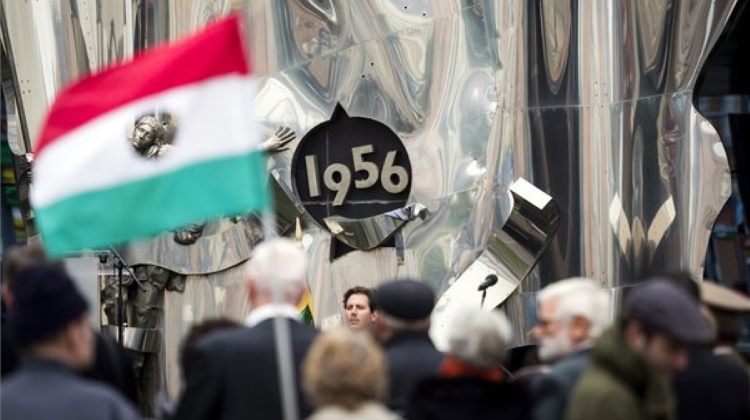
The 1956 Hungarian Revolution was a spontaneous nationwide revolt against Soviet control, sparked by student protests on October 23. Demanding freedom and independence, Hungarians briefly overthrew the communist regime before Soviet forces crushed the uprising.
Though defeated, it endures as a symbol of Hungary’s courage and quest for liberty, with the '56 Revolution marked by a national holiday.
This year in Budapest various commemorative events and happenings offer expats an opportunity to reflect on Hungary’s fight for freedom. Here's a summary of what to expect:
Wednesday 22 October
-
14:00 — Wreath-laying at the 1956 Memorial at the Budapest University of Technology
-
15:00 — Ceremony at the Budapest University of Technology, featuring a speech by János Nagy, State Secretary of the Prime Minister's Office
-
16:00 — Traditional torchlight procession
Route: Budapest University of Technology – Saint Gellért Square – Saint Gellért Embankment – Várkert Embankment – Casino – Ybl Miklós Square – Clark Ádám Square – Fő Street – Jégverem Street – Bem Embankment – Bem Square -
17:00 — Ceremony at Bem Square with a speech by Defense Minister Kristóf Szalay-Bobrovniczky
Thursday 23 October
-
07:30 — Flag-raising ceremony on Kossuth Lajos Square
-
13:00 — Official commemoration on Kossuth Lajos Square with a speech by Prime Minister Viktor Orbán
-
15:00–20:00 — Open Parliament Day
Visitors can tour the grand staircase, the Dome Hall, and view the Holy Crown of Hungary free of charge
Additional Programs on 23 October 23:
-
301st Cemetery Plot: All-day informal commemoration and honor guard ceremony
-
Terror House Museum: Free admission from 10:00 to 18:00 featuring all-day informal candle lighting at the Wall of Heroes
-
Outdoor, temporary exhibition “1956 – For Freedom and Independence” in front of the Terror House Museum building
Summary of the 1956 Hungarian Revolution
On October 23 in 1956 a student march in Budapest sparked a nationwide uprising against Soviet occupation and communist oppression. After the student demonstrations, hundreds of thousands gathered in front of the Parliament to hear Imre Nagy's speech promising reform.
When Soviet forces opened fire at the Radio building, turning an unarmed crowd into armed insurgents by evening, protesters toppled the Stalin statue on Dózsa György Avenue - a symbol of the communist regime - and by dawn, seized the Hungarian Radio building.
Though Imre Nagy's legally established government took initial steps towards democratic change and began negotiating Soviet troop withdrawal, Russian tanks advanced on Budapest without warning on November 4.
By around November 10, overwhelming force crushed the armed civilian resistance. In the aftermath, hundreds of thousands fled Hungary, while thousands were imprisoned and hundreds executed by the Kádár regime.
For years after, remembering October 23 was forbidden; official communist rhetoric labeled the events a "counter-revolution" orchestrated by "reactionary" and criminal elements.
Only emigrants abroad openly preserved the memory of the revolution. In the late 1980s, as the regime weakened, the true history of 1956 resurfaced publicly.
The symbolic significance of October 23 was cemented when, on October 23, 1989, acting head of state Mátyás Szűrös proclaimed the Third Hungarian Republic to a crowd of hundreds of thousands outside Parliament.
In 1991, the newly elected democratic Parliament officially declared October 23 a national holiday, a status reaffirmed by the 2012 Fundamental Law.
Since then, every year on this day, after the national flag is raised, commemorations are held at key sites of the revolution, including the Budapest University of Technology, the Bem Statue, the Hungarian Radio building, and locations where major clashes took place.
More:
oktober23.kormany.hu



LATEST NEWS IN community & culture