






















Growing Number of Ukrainian Spies Exposed in Hungary, Claims Gov't
- 27 Mar 2026 8:17 AM
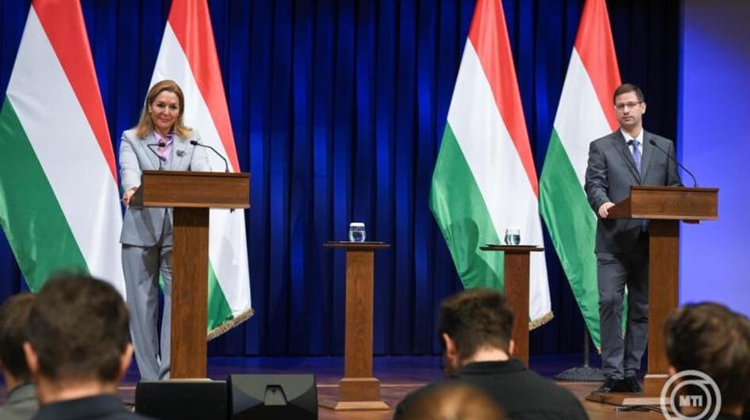
The number of Ukrainian spies exposed in Hungary is growing, the minister heading the Prime Minister's Office told a regular press conference on Thursday. "The first was Szabolcs Panyi, who has been spying on his own country in cooperation with a foreign state, and the IT experts working for the Tisza Party," Gergely Gulyas said.
He insisted that the two IT experts had been trained abroad "and they are constantly in and out of the Ukrainian embassy."
Gulyas said the former police officer in a video published yesterday was "sharing information on anti-espionage operations which is a crime. He knows that himself and admitted it during a hearing," Gulyas said.
Espionage activities had picked up ahead of the Hungarian parliamentary election, Gulyas said, calling on Ukraine and President Volodymyr Zelensky to "stop state-sponsored espionage in the Hungarian election campaign."
"An election campaign often comes with the clash of opinions, opposition and at times inflicts harm unfairly" but there should be agreement on fundamental issues such as national security and sovereignty, Gulyas said.
"Interference by agents and spies of foreign countries must be uniformly rejected, and authorities must take action, regardless of the cover activities of those spies," he said.
Referring to the Panyi case, Gulyas said that the justice minister would file a criminal complaint on charges of espionage. Concerning the IT specialists, he said "just as journalism served as a cover for Panyi, IT also served as a cover for the two exposed spies."
Following Wednesday’s national security committee meeting, "everyone can be convinced that these two spies were trained abroad … and they come and go in and out of the Ukrainian embassy," he said.
He said the two suspected spies had acquired devices capable of eavesdropping on others, which were later seized by the authorities; they also attempted to acquire illegal spyware.
Meanwhile, Gulyas said the Home Start subsidised credit scheme has helped 45,000 young Hungarians buy their first homes since its launch in September, adding that 31,000 loans had been disbursed.
The average age of borrowers was 34 and 80 percent were under 40, while 46 percent were married couples, he said. The average loan size was 35 million forints (EUR 90,000), he added.
Of the 254 billion forints of home loans disbursed by banks in January, 183 billion forints were Home Start loans, Gulyas said, citing data from the National Bank of Hungary. Borrowers pay a fixed 3 percent on the Home Start loans, while the average loan term is 21.5 years, he added.
Gulyas also said that the government has fast-tracked the development of 16,000 new homes across 23 projects with fixed incentives. This means these properties will be completed in 2026–2027 or by 2028 at the latest, he said.
He also said that despite assumptions of a rapid increase property prices grew more slowly last year than in the same period a year earlier, and rents have fallen. Rental prices in Budapest have not fallen for a long time, "which is clearly a result of this programme" he said, adding that growth in the real estate market will contribute to economic recovery.
Government spokeswoman Eszter Vitalyos said the US-owned pharmaceutical company Viatris Komarom Mylan Hungary Kft. is expanding its packaging and quality control capacities at a cost of 6.4 billion forints (EUR 16.5m), creating more than 800 jobs. The government is providing 1.3 billion forints in support, she said.
Flextronics is investing 35.5 billion forints with an 8 billion government grant in capacity expansion in Zalaegerszeg, creating 210 new jobs, she said.
The Hungarian-owned Controlsoft Automatika Kft. is building a new regional service center in Veszprem, with 2.5 billion forints in government support, creating 25 jobs, and Herendi Porcelánmanufaktúra is upgrading its energy supply as part of the factory rescue programme at a cost of approximately 742 million forints.
This will save 40,000 cubic meters of natural gas annually, she said. The government provided 293 million forints in support for the investment, helping to secure 600 jobs, she added.
She highlighted that TLC Sennebogen, a German-owned company specialising in the manufacture of welded heavy steel structural components, is carrying out a capacity expansion worth two billion forints in Liter, in western Hungary, using a 230 million forint government grant and securing 500 jobs.
Vitalyos said Chinese heavy construction equipment manufacturer Zoomlion is building its first European smart plant in Tatabánya with an investment of more than 43 billion forints.
The government is supporting the investment with 7 billion forints. The company plans to source 70 percent of the facility’s supply chain from the domestic market, she added.
Vitalyos also noted that corn distributor Pannon Genetic has built a new seed plant in Kiskunhalas-Fuzespuszta with an investment of two billion forints.
Among health-care investments, she mentioned that the Boldog Gellert Specialised Hospital in Pomaz, in the Danube Bend, will receive 2.475 billion forints in development funding. The goal of the energy efficiency development grant is to ensure safe and sustainable operation in the long term.
She noted that the building of the former oncology department at the Szent Rokus Hospital in Baja has been renovated.
Vitalyos highlighted that the government is contributing 500 million forints toward the development of the Jozsef Petzelt Technical and Vocational School in Szentendre.
In Morahalom, an ecotourism investment worth 1.4 billion forints was implemented, she said.
Gulyas said in response to a question on the ongoing "spy scandal" that spies always had a cover occupation; in this case, they were IT specialists.
"We know this because they themselves admit that they were trained abroad; we know that they frequented the Ukrainian embassy, possessed prohibited devices, and attempted to acquire illegal spyware," he said.
In response to a proposal by Tisza leader Peter Magyar that the Office of the Prosecutor General should investigate the case and that a search should also be conducted at the prime minister's offices, Gulyas said: "This is a counterintelligence matter, but of course the prosecution is overseeing the investigation."
Gulyas accused the Tisza Party of evading questions about "Ukrainian spies" in its ranks, calling its responses "incoherent lies".
Asked about journalist Szabolcs Panyi, against whom the government has filed a report, Gulyas said: "Handing a minister's number to a foreign power for eavesdropping isn't investigative journalism … it's espionage, a crime against his country." He called Panyi's case a "textbook example of spying and treason".
Asked if Panyi's case was unique, Gulyas said there were two spy scandals linked to Tisza. Gulyas said Tisza's would-be foreign minister had ties to a foreign agent who "dictated future hires" for the foreign ministry and "demanded access to all kinds of information".
Referring to the would-be foreign minister, he said: "The fact that Anita Orban still operates in public life is staggering." He insisted that "Ukrainian spy networks are actively aiding the Tisza Party."
Addressing a leaked 2020 call involving Foreign Minister Peter Szijjártó, he dismissed claims of wrongdoing, saying the recording was from before the start of the war between Russia and Ukraine, and that it contained no secrets.
He noted the foreign ministry had issued a statement making clear that "inter-state communication isn't at odds with Hungarian interests -- it's called diplomacy."
In response to another question concerning the wiretapping case, Gulyas said he was in favour of full transparency, but "classification is for the specialist services to lift". The police's role, he added, was "to complete their investigation".
Asked if Tisza had been warned, he said: "The strongest warning was the launch of legal proceedings, forcing them to halt their activities." He said authorities had acted as soon as they had sufficient evidence, adding that that "the operation predates Tisza's formation".
He said "these people" had been trained abroad, used illegal surveillance tools, and sought black-market spyware.
"The intelligence services handled this exactly as protocol demands in a counterespionage case," he said. "If details leaked, they came from somewhere else."
Meanwhile, asked about another case linked to a hacking attempt involving a Tisza Party IT specialist, he said a criminal investigation was under way.
Commenting on the prime minister's call on the Ukrainian president to "order his agents home", Gulyas said that "the authorities must act by the book", and the government expected nothing less.
"Foreign spies can be expelled, but when it's about Hungarian citizens, there's nowhere to expel them to," he said.
Asked about security at Fidesz campaign events, he stressed the right to free assembly but warned that "no one should disrupt rallies".
Regarding election security, he said "Hungary's vote will be professional, transparent and observed by all parties."
Asked about a new poll by Median that showed Tisza leading by 23 points among decided voters, Gulyas called the poll "a political opinion" rather than a measurement of opinion, adding he was "surprised that they don't have Tisza at 100 percent".
Gulyas ruled out an alliance between Fidesz and the radical Our Homeland movement, saying the ruling parties aimed to win 100 seats on their own to form a government. "Anything above that is a bonus," he said, but left the door open to "working with allies who share our goals".
Gulyas accused the Tisza Party of evading questions about "Ukrainian spies" in its ranks, calling its responses "incoherent lies".
Asked about journalist Szabolcs Panyi, against whom the government has filed a report, Gulyas said: "Handing a minister's number to a foreign power for eavesdropping isn't investigative journalism … it's espionage, a crime against his country." He called Panyi's case a "textbook example of spying and treason".
Asked if Panyi's case was unique, Gulyas said there were two spy scandals linked to Tisza.
Gulyas said Tisza's would-be foreign minister had ties to a foreign agent who "dictated future hires" for the foreign ministry and "demanded access to all kinds of information".
Referring to the would-be foreign minister, he said: "The fact that Anita Orban still operates in public life is staggering." He insisted that "Ukrainian spy networks are actively aiding the Tisza Party."
Addressing a leaked 2020 call involving Foreign Minister Peter Szijjarto, he dismissed claims of wrongdoing, saying the recording was from before the start of the war between Russia and Ukraine, and that it contained no secrets.
He noted the foreign ministry had issued a statement making clear that "inter-state communication isn't at odds with Hungarian interests -- it's called diplomacy."
In response to another question concerning the wiretapping case, Gulyas said he was in favour of full transparency, but "classification is for the specialist services to lift". The police's role, he added, was "to complete their investigation".
Asked if Tisza had been warned, he said: "The strongest warning was the launch of legal proceedings, forcing them to halt their activities."
He said authorities had acted as soon as they had sufficient evidence, adding that that "the operation predates Tisza's formation".
He said "these people" had been trained abroad, used illegal surveillance tools, and sought black-market spyware.
"The intelligence services handled this exactly as protocol demands in a counterespionage case," he said. "If details leaked, they came from somewhere else."
Meanwhile, asked about another case linked to a hacking attempt involving a Tisza Party IT specialist, he said a criminal investigation was under way.
Commenting on the prime minister's call on the Ukrainian president to "order his agents home", Gulyas said that "the authorities must act by the book", and the government expected nothing less.
"Foreign spies can be expelled, but when it's about Hungarian citizens, there's nowhere to expel them to," he said.
Asked about security at Fidesz campaign events, he stressed the right to free assembly but warned that "no one should disrupt rallies".
Regarding election security, he said "Hungary's vote will be professional, transparent and observed by all parties."
Asked about a new poll by Median that showed Tisza leading by 23 points among decided voters, Gulyas called the poll "a political opinion" rather than a measurement of opinion, adding he was "surprised that they don't have Tisza at 100 percent".
Gulyas ruled out an alliance between Fidesz and the radical Our Homeland movement, saying the ruling parties aimed to win 100 seats on their own to form a government. "Anything above that is a bonus," he said, but left the door open to "working with allies who share our goals".
Regarding the suspension of gas supplies to Ukraine, Gulyas said that the government had made a clear decision, and a government resolution had been issued: Hungary will fulfill its existing contracts but will not enter into any new ones.
Further measures were not needed, he said, as the current ones were sufficient for Ukraine to open the Druzhba pipeline.
He said that Ukraine could have shut down the pipeline at any time since the war began. "They did so now because they wanted to help the Hungarian opposition during the election campaign."
"Nevertheless, Hungary has the necessary means at its disposal: we will not approve the 90 billion euro loan to be disbursed to Ukraine, so Ukraine will only be able to maintain this situation for up to a week after the elections," he said.
He also said that Hungary does not anticipate any loss of revenue due to the suspension of gas deliveries to Ukraine, given the current global energy crunch.
Gulyas said the suspension of gas deliveries did not violate existing contracts. "It has always been a matter of economic policy to decide who signs what kind of contract with whom in the energy sector."
He said criticism levelled at the government was "unfair" because Ukraine was blocking the Druzhba oil pipeline in order to provoke an energy crisis in Hungary and Slovakia.
Asked about Ukrainian communication regarding the Druzhba oil pipeline, he said: "The Ukrainians are communicating through the press and in Brussels; there is no direct communication because it makes no sense."
The minister said that Hungary was certain that the pipeline was operable, "so any Ukrainian claim to the contrary is a lie".
Meanwhile, regarding the difficulties faced by Hungarian businesses, Gulyas said protected fuel prices should be extended to agricultural machinery, trucks and corporate entrepreneurs to counter the ripple-effects of the global energy price surge.
He said sufficient fuel was available, with more than 85 percent of reserves still untouched, while three-quarters of the strategic crude oil reserves was also available.
Regarding the extension of the fixed 3 percent loan to young people working abroad, he said the proposal would be ready for a decision in the coming weeks, but the legislation would only take effect after the election.
Put to him that Prime Minister Viktor Orban was in a position to ask for a meeting of the Board of Peace to be convened in the interest of peace in Iran, the minister said the government was able to assess Hungary's strengths and standing in world politics. Accordingly, it could not undertake a more significant role.
He said Hungary had an interest in a broad peace, especially in regions where war led to soaring energy prices, so would welcome a swift end to the war.
Asked about Hungary's intentions if Donald Trump requested military presence in Iran, Gulyas said: "Hungary has no navy and no coastline, so it cannot contribute to securing the Strait of Hormuz."
The minister said he was unaware of a Lithuanian request reportedly seeking to exclude Hungary from a NATO meeting as early as 2019 due to leaks to Russia, adding that this would have been unjustified since Hungary fulfilled its obligations to all its allies, including within NATO.
In response to a question regarding the teachers' union PDSZ threatening to mount a strike, the minister said the salaries of support staff in schools were indeed low, and although pay was increased this year, more was needed.
Gulyas insisted that PDSZ had announced a strike that they themselves knew to be unlawful, noting that the announcement should have been made at least five working days before strike action.
Orban calls on Zelensky to 'order his agents home'
Prime Minister Viktor Orban called on Ukrainian President Volodymyr Zelensky to "instantly order his agents to return" in a Facebook post on Thursday.
In his post, Orban also called on Zelensky to "respect the will of the Hungarian people".
He said Zelensky had turned Hungary into an "zone for Ukrainian intelligence operations" ahead of Hungary's upcoming election. The Ukrainian president "activated agents he had previously deployed in Hungarian politics", Orban said, adding that "they are working at full steam: Ukrainian spies and IT specialists paid by the Ukrainians are coming and going within the Tisza Party."
Orban insisted that there had never been an election in Hungary in which foreign intelligence services interfered to such an extent.
"They are working to ensure that a pro-Ukrainian government is formed in Hungary after the election, one that supports the war, cuts Hungary off cheap Russian energy, and hands over Hungarians’ money to Ukraine," he added.
Hungarian authorities are constantly working to thwart foreign interference and are doing everything they can "to ensure that Hungarians can vote on their future without foreign manipulation," the prime minister said.
Kocsis decries police officer's account of 'Ukraine spy scandal' as 'false'
"The young Tisza sympathiser police officer's story on the Ukrainian spy scandal is moving but false," the parliamentary group leader of ruling Fidesz said on Facebook on Thursday.
"Bence Szabo, boosted by the leftist propaganda media, is taking umbrage for the most natural thing in the world: secret services busting spies," Kocsis said in a video.
"They keep quiet about the IT experts of Tisza having been trained in Ukraine, and that they were in contact with the Ukrainian embassy. They have been recruited," Kocsis said, adding that the experts in question had been in the field of vision of secret services long before Tisza was launched.
"The policeman is trying to turn this espionage case into a political matter by creating fake conspiracy theories without knowledge of the world of intelligence agencies," he said.
"We must protect Hungary's security rather than attacking those doing the job," he said.
Meanwhile, Fidesz MEP: Brussels 'using all means' to interfere in Hungary election
Brussels is "using every means" to interfere in Hungary's general election with a view to installing a "pliant government" that will not block war, enlargement or economic plans, Csaba Domotor, an MEP of ruling Fidesz, said in Brussels on Thursday, adding that "they have picked the Tisza Party for this job."
Speaking to Hungarian reporters, Domotor listed oil blockades, inflationary sanctions, online censorship, withheld EU funds and "threats of violence" as tools of interference.
"What we saw in past elections was amateur hour compared to the scale of the interference we're seeing now," he said.
He accused the "grand coalition led by [European People's Party leader Manfred] Weber" of backing Ukraine's weeks-long oil blockade of Hungary, arguing that no Hungarian or Slovak experts were allowed to inspect the Druzhba pipeline, and Ukrainian authorities were denying access to delegations.
Domotor suggested the EPP also had plans to extend sanctions to nuclear fuel, targeting Hungary's Paks nuclear power plant and driving up energy costs. The European Commission, he said, was also sharpening "online censorship tools", empowering "left-wing fact-checkers" to flag content for social media restrictions.
He said defence funding for Hungary was being held hostage, aligning with Tisza MEP Kinga Kollar's claim that withholding EU cash aims to cripple Hungary's economy and boost Tisza's chances.
Domotor said "Weber’s grand coalition" supported foreign intelligence groups spying on Hungary's foreign minister and wanted to rewrite decision-making rules to silence dissent, "making not secret of the fact that they're tying these moves to the outcome of the election".
The MEP said Tisza politicians like foreign policy expert Anita Orban rejected vetoes, preferring to be "just a spoke on the wheel", which he said was a "2026 update of their 'dare to be small' policy". Domotor cited Tisza MEP Zoltan Tarr as calling it a "duty to align with the EPP's positions", and Tisza leader Peter Magyar as arguing that Hungary should "surrender just a little sovereignty".
"Giving up a little sovereignty means pouring every resource into war and Ukraine for years," Domotor said, adding it would also involve imposing "the austerity measures that have leaked from Tisza's plans".
He said that on April 12, voters would have to choose between peace and war, independence and economic surrender and whether decisions about Hungary should be made in Hungary or Brussels.
Source: MTI – Hungary’s national news agency since 1881. While MTI articles are usually factual, some may contain political bias, and readers should be aware that such content does not reflect the position of XpatLoop, which is neutral and independent.
Since the goal of XpatLoop is to keep readers well briefed, right across the spectrum of opinions, MTI items are shared to ensure readers are aware of all narratives within the local media.
XpatLoop believes in empowering readers to form their own views through complete and comprehensive coverage. To facilitate this XpatLoop has a balanced range of news partners, as you can see when you surf around XpatLoop.com
*********************************************************************************************
You're very welcome to comment, discuss and enjoy more stories via our Facebook page:
Facebook.com/XpatLoopNews + via XpatLoop’s groups: Budapest Expats / Expats Hungary
You can subscribe to our newsletter here: XpatLoop.com/Newsletters
Showcase Your Business to Expats in the Loop:
As an independent portal we’re grateful to all commercial supporters who help keep you in the loop with fresh insights and inspiration. Do you want your business to reach tens of thousands of potential high-value expat customers? If so please contact us here.




LATEST NEWS IN current affairs