



















Watch: Foreigner Found with 10kg of Cocaine in Hungary
- 18 May 2026 2:16 PM

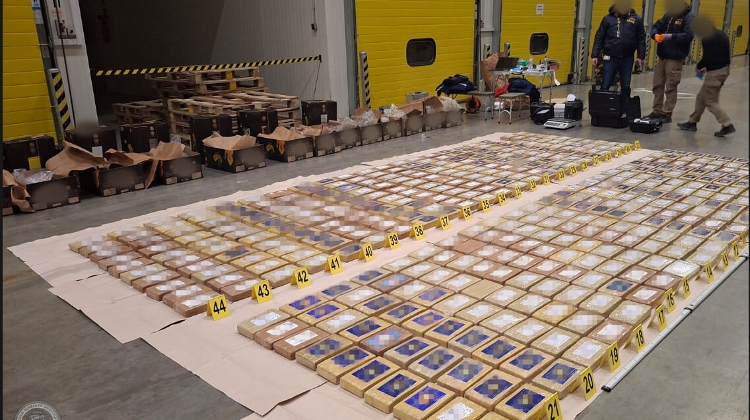
The estimated street value of the ten kilograms of cocaine discovered in the possession of a Serbian national at Hungary’s border with Slovenia is HUF 300 million (€833,000), according to an announcement by the National Bureau of Investigation in Hungary.
Authorities said officers from Hungary’s National Tax and Customs Administration (NAV) stopped and inspected a vehicle with Hungarian license plates near Letenye on May 13. During the inspection, officials uncovered eight packages concealed inside the vehicle. Rapid field tests later confirmed the substance was cocaine.
The 24-year-old Serbian driver was immediately detained and questioned on suspicion of possessing a particularly significant quantity of narcotics. Investigators have since initiated legal proceedings and are seeking his formal arrest. The suspect remains in custody as the investigation continues.
The seizure highlights Hungary’s continued efforts to combat drug trafficking along its borders, which serve as important transit routes between Western Europe and the Balkans. Border authorities have increased inspections in recent years in response to concerns over organized criminal networks using regional transport corridors for smuggling operations.
Under Hungarian law, trafficking quantities of narcotics at this scale are treated as among the most serious drug-related offenses. A seizure of 10 kilograms of cocaine falls into the category of a particularly large quantity, exposing suspects to severe criminal penalties if convicted.
Hungary maintains some of the strictest drug laws in the European Union. Under the country’s Criminal Code (Act C of 2012, Section 178), the possession, acquisition, production, or cultivation of narcotic substances is a criminal offense, with virtually no broad exemptions for personal use. Even small amounts intended for personal consumption can lead to criminal penalties of up to two years’ imprisonment.
Sentences increase significantly depending on the amount involved. Significant quantities can carry prison terms ranging from five to fifteen years, while particularly large quantities may result in sentences of five to twenty years or, in exceptional circumstances, life imprisonment. Penalties can also be increased if offenses involve organized criminal activity, minors, or occur near schools and educational institutions.
Following legal changes introduced in 2025, diversion programs — such as treatment in lieu of prosecution — have become more limited and often require cooperation with law enforcement, including providing information about suppliers or criminal networks. The tightening of regulations reflects Hungary’s long-standing zero-tolerance approach to narcotics, aimed at both drug users and traffickers.
Could Hungary’s Drug Policy Change Under the New Government?
Questions have emerged over whether Hungary’s strict anti-drug framework could shift under PM Péter Magyar and his government. For now, however, there are few indications that major liberalization is on the horizon.
The new administration’s policy priorities have largely centered on anti-corruption efforts, healthcare reform, economic measures, institutional restructuring, and improving relations with the European Union.
Drug policy has not featured prominently in the government’s publicly discussed agenda or broader reform messaging. Analysts and early reporting suggest the administration is focused primarily on governance and economic issues rather than pursuing controversial social policy changes.
Hungary also only recently tightened narcotics legislation in 2025, introducing stricter enforcement measures and narrowing access to diversion programs that allow treatment alternatives in some cases. Reversing those changes in the short term could carry political risks, particularly because strong anti-drug policies have traditionally enjoyed support across much of Hungary’s political spectrum.
If reforms eventually emerge, experts suggest they are more likely to involve procedural or public health adjustments rather than sweeping legalization measures. Potential areas for change could include expanded rehabilitation services, harm-reduction initiatives, or revised approaches for first-time offenders, while maintaining severe penalties for organized trafficking networks.
On cannabis policy specifically, there is currently no evidence that Hungary is moving toward more permissive systems adopted elsewhere in Europe, such as in parts of Germany or Malta. Hungary remains among the European Union’s stricter jurisdictions regarding narcotics enforcement, and no significant proposals for legalization or decriminalization have become a major part of the government’s agenda.
For now, despite Hungary’s political transition, the country’s zero-tolerance approach toward drugs appears likely to remain largely intact, with continuity seeming more probable than major policy change.
Photo: police.hu
*********************************************************************************************
You're very welcome to comment, discuss and enjoy more stories via our Facebook page:
Facebook.com/XpatLoopNews + via XpatLoop’s groups: Budapest Expats / Expats Hungary
You can subscribe to our newsletter here: XpatLoop.com/Newsletters
Showcase Your Business to Expats in the Loop:
As an independent portal we’re grateful to all commercial supporters who help keep you in the loop with fresh insights and inspiration. Do you want your business to reach tens of thousands of potential high-value expat customers? If so please contact us here.

LATEST NEWS IN current affairs