



















Greenwashing: Coca-Cola Hungary Agrees to Change Bottle Claims
- 18 Aug 2026 9:14 AM

The Hungarian Competition Authority (GVH) has launched simultaneous competition supervision proceedings against multiple companies for likely misleading consumers with claims about the environmental impact of their products on the labels of mineral water and soft drinks bottles and in other forms of commercial communication.
The GVH suspects that Fonte Viva Kft. has been misleading consumers since 9 March 2022 with claims on the labels of Fonte Natura mineral waters and in its commercial communications promoting the product, such as "100% recycled PET bottle", "100% rePET", "bottle from 100% rePET bottle".
From 18 November 2019, Szentkirályi Hungary Kft. promotes the "Get in the Cycle" circular system on the labels and in the commercial communication of Szentkirályi mineral waters and flavoured drinks.
In the framework of this promotion the "Collect selectively! ", "100% recyclable", "Bottle to bottle, 50% rePET" as well as similar claims and imagery is also likely to have misled consumers with certain so-called green claims.
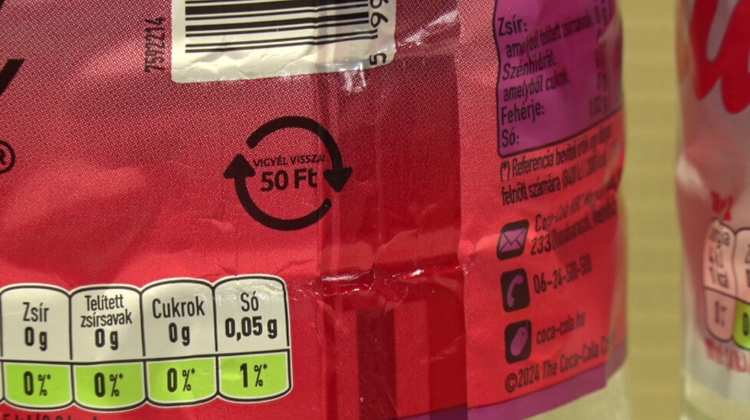
The GVH is also investigating Coca-Cola HBC Magyarország Kft., Coca-Cola Magyarország Szolgáltató Kft. and The Coca Cola Company, as it suspects that they are likely to have misled consumers with claims such as " Recycle me, I am a 100% recyclable PET bottle", "100% recyclable" as well as similar statements and imagery on the labels and in their commercial communications of mineral waters and soft drinks sold under the Naturaqua brand from 10 December 2020.
What is common in the likely misleading claims made by these companies is that they refer to the essential characteristics of the products concerning their impact on the environment.
However, the advertising claims are likely to be unsubstantiated, and the companies are unlikely to have sufficient evidence to justify the environmental benefits of the bottles.
Greenwashing is the marketing or PR strategy of a company that portrays itself as environmentally friendly and responsible, while its actual operations do not show any real steps towards achieving these goals.
If greenwashing appears in the company's specific marketing communications, the term refers to unverifiable environmental claims.
The opening of competition supervision proceedings does not mean that the undertaking has committed the infringement. The proceeding aims at clarifying the facts and thereby proving the alleged infringement.
The time allowed for the proceeding is three months, which may be extended twice, each time for a maximum of two months, where justified.
The Hungarian Competition Authority points out that under the Hungarian Competition Act, the period from the date on which the undertaking is requested to provide the information necessary to clarify the facts until the date on which the undertaking is required to do so does not count towards the time limit for the administration of the case.
In recent years, the Hungarian Competition Authority has paid particular attention to so-called "green claims". Its advice to help businesses is summarised in its Green Marketing Guidance.
There is also an episode of the GVH Podcast (in Hungarian) on what businesses should look out for in terms of a sustainability and environmental perspective.
In January 2024, the GVH published its market analysis of green claims, which highlighted, among other things, that green advertising messages are often unclear and confusing, and a significant proportion of consumers are not aware of the exact content and meaning of certain claims and labels.
Based on the findings of the market analysis, the GVH has made a number of recommendations to market participants, legislators and enforcement authorities, in order to promote the use of fair green claims by market operators.
More:
gvh.hu/en/press
MTI Stock Photo
*********************************************************************************************
You're very welcome to comment, discuss and enjoy more stories via our Facebook page:
Facebook.com/XpatLoopNews + via XpatLoop’s groups: Budapest Expats / Expats Hungary
You can subscribe to our newsletter here: XpatLoop.com/Newsletters

LATEST NEWS IN shopping