














Insider’s Guide: How to Handle Sick Leave in Hungary
- 13 Aug 2026 4:22 PM

Calling in sick can feel intimidating for anyone, especially expats. Between navigating medical jargon in Hungarian, understanding related paperwork (orvosi igazolás), and figuring out payroll implications, some expats can find themselves getting stressed when they should be resting.
This handy guide designed for expats in the loop aims to help you avoid any such stress and get well soon. The good news is that Hungary’s Labour Code offers social protections for employees.
So, don't hesitate to call in sick if you fall ill, as recovering at home isn’t just better for you - it’s better for everyone. Working while sick can slow recovery and leave you less productive, which is not good for anyone. Also of course if you have something contagious, going into the office risks spreading it to your colleagues.
Now here below is what you need to know to take sick leave properly and protect your income, whilst satisfying HR requirements.
Sick Pay Allowance Summary
First up, here's a quick overview of the sick pay allowance rules in Hungary: The system is divided into two distinct phases:
Employer Sick Leave (Betegszabadság) and State Sick Pay (Táppénz).
* First 15 days: Your employer covers sick leave (szabadság), paying 70% of your regular salary.
* After 15 days: Long-term sick pay drops to 50% to 60% and is split between the state and your employer.
* Healthcare coverage: Because you pay social insurance (taj number contributions) directly from your salary in Hungary, public healthcare visits for illness are free, so take advantage of them as required.
Two-Tier System Explained
Hungary differentiates between short-term illness covered directly by your employer, and longer-term medical leave backed by the state social security system.
Phase 1: Employer Sick Leave
For the first 15 working days of illness in a calendar year, you are covered directly by your employer. During this initial phase, you will receive 70% of your base absence pay (távolléti díj).
Because this is an employer-paid benefit, there is no legal cap on the daily amount you can receive - your payout scales directly with your regular salary. However, keep in mind that betegszabadság strictly applies to your own personal illness and cannot be used for other medical absences.
Phase 2: State Sick Pay
If you are unwell for more than 15 working days, your leave transitions into táppénz from day 16 onwards, which can cover you for up to a full year.
At this stage, the financial burden shifts, and your sick pay is co-funded by the Hungarian state health insurance (NEAK).
Your compensation will adjust to between 50% and 60% of your average gross earnings. Unlike the first phase, state sick pay has a statutory maximum: payouts are capped at twice the daily minimum wage (roughly HUF 21,520 per day).
Táppénz also offers broader eligibility, covering not just your own illness, but also hospital stays or time taken off to care for a sick child.
What to Do When You Fall Ill
Step 1: Notify Your Employer, Immediately
On the first day you are unfit for work, inform your direct line manager or HR department before your working hours begin (via email, Slack, or phone call according to your internal policy).
Step 2: Contact Your General Practitioner (Háziorvos)
Under Hungarian law, only a registered doctor can officially certify incapacity for work (keresőképtelenség).
Don't wait: Hungarian doctors are restricted in issuing retroactive sick leave notes (generally limited to a maximum of 5 calendar days retroactively under justified medical circumstances).
Where to go: Contact your assigned local GP (háziorvos) linked to your TAJ card (national health insurance) or visit a private medical provider in Hungary that is authorized to issue official state medical certificates.
Step 3: Obtain the Medical Certificate (Orvosi Igazolás)
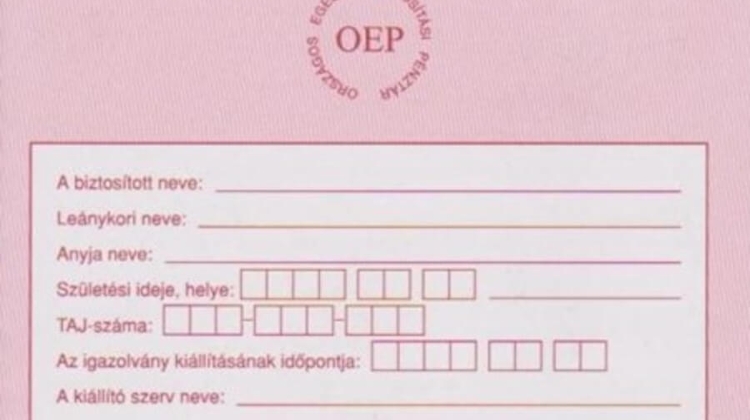
Your doctor will log your sick leave into the official system and issue a paper certificate (often referred to as the "pink slip" or form printed from the medical registry). This document contains:
* The start and expected end date of your sick leave.
* A standardized medical diagnostic code (orvosi kód, e.g., code 8 for general illness, code 9 for occupational/other).
* The doctor’s official stamp and signature.
Step 4: Submit Your Paperwork to HR
Deliver the original paper note (or scanned copy if permitted digitally by your HR) promptly to payroll. Most companies require these submissions bi-weekly or by the end of the monthly payroll cycle.
Top 5 Insider Tips for Expats
1. Sick Leave During Your Probation Period
You are legally entitled to sick pay even during your probation period (próbaidő), provided you have an active employment contract and TAJ coverage. However, keep in mind that during probation, either party can terminate employment without giving a reason, so open communication with your manager is crucial.
2. Caring for a Sick Child (GYÁP)
If your child under 12 falls ill, parents are eligible for Child Care Sick Pay (Gyermekápolási táppénz - GYÁP). This skips the 15-day employer phase and goes directly to state-backed sick pay, with annual day allowances depending on the child's age.
3. Carefully Keep Track of Your 15 Days
If you switch jobs mid-year, your 15 days of Betegszabadság are calculated proportionally for the remainder of the calendar year. Your previous employer will issue a formal exit document specifying how many sick days you used.
4. Don't Work While on Sick Leave in Hungary
This might sound obvious, but some expats try to help out at work while ill and then suffer for it. Hungarian social security rules prohibit performing any paid work (including remote freelancing or secondary jobs) while certified unfit for work. Breaching this can lead to loss of benefits and legal penalties.
5. What If I Had a Workplace Accident?
If you have a workplace accident that leaves you unable to work, you may be entitled to 100% of your salary for the duration of your recovery - for up to one year.
Sick Leave Summary Checklist
* Day 1: Email your manager/HR.
* Day 1–2: Visit or call your doctor to open your sick leave record.
* Recovery: Attend follow-up doctor appointments to extend or close the sick note.
* Return: Hand in the official paperwork (orvosi igazolás) to HR/Payroll.
* Overall, focus on recovering properly, consider your colleagues health, and just work again when you’re well enough to do your best.
*********************************************************************************************
You're very welcome to comment, discuss and enjoy more stories via our Facebook page:
Facebook.com/XpatLoopNews + via XpatLoop’s groups: Budapest Expats / Expats Hungary
You can subscribe to our newsletter here: XpatLoop.com/Newsletters

LATEST NEWS IN health & wellness