














Is Budapest Tap Water Really 'Excellent' Quality? - A Definitive Answer
- 15 Aug 2026 6:19 AM

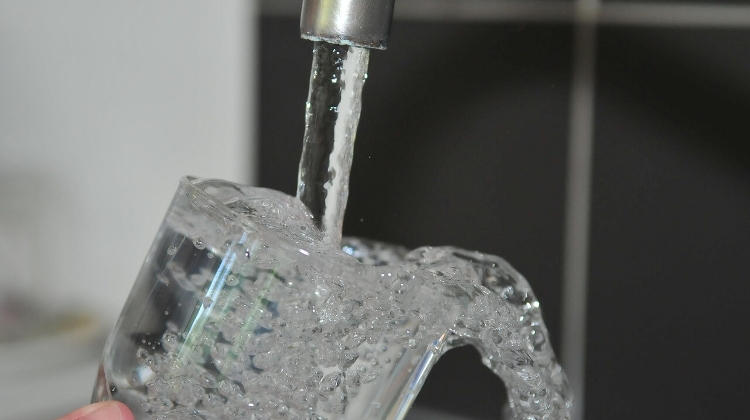
Experts say that the capital's drinking water remains “impeccable” despite the exceptionally low level of the Danube. That certainly sounds reassuring, but it's worth taking a closer look.
The source of Budapest's tap water is the Danube, making the river's unusually low level this summer an obvious reason to ask whether it could affect the quality of the water coming out of household taps.
"The quality of Budapest’s drinking water remains excellent despite the low water levels of the River Danube", Budapest Waterworks said on its website on Friday, August 14.
The water utility says its experts are continuously monitoring the water supply and that natural bank filtration, treatment technologies and regular quality checks ensure that Budapest residents continue to receive safe, high-quality drinking water.
This article looks into that statement, and into the chemical composition of Budapest tap water, possible differences between districts, fluoride levels, hardness, chlorine, lead and other contaminants.
The Danube is the source - but nature does much of the filtering
Budapest's water supply is based almost entirely on bank filtration, a natural process that has been used in the capital for more than 130 years.
Around 150 horizontal-filter wells are located along the Danube banks and on river islands. Water from the river moves through layers of sand and gravel before being collected by the wells, providing a substantial natural filtration stage before further treatment and disinfection.
This is one reason the low river level does not automatically translate into poorer drinking water.
The system is extensively monitored. Budapest Waterworks says its experts continuously check the water extracted from the bank-filtered wells and the water entering the distribution network.
The national drinking-water database likewise classifies Budapest's supply as “safely consumable drinking water”, based on extensive microbiological and chemical testing.
So, what's actually in Budapest tap water?
Budapest water is not chemically pure H₂O - and that is a good thing. Like virtually all natural drinking water, it contains dissolved minerals that give it its characteristic taste and contribute to its hardness.
The latest full-year figures published by Budapest Waterworks, for 2024, provide a useful picture.
The average pH was 7.6, comfortably within the permitted range of 6.5–8.5.
Average hardness was 141 mg/l as CaO, while the water contained approximately 74 mg/l calcium and 19 mg/l magnesium, together with 259 mg/l bicarbonate.
Sodium averaged 15.5 mg/l, chloride 23 mg/l and sulphate 41 mg/l.
In practical terms, Budapest water is moderately mineralised and medium hard.
There is enough calcium and magnesium to produce the familiar white limescale deposits found in kettles, showerheads and coffee machines.
The hardness is primarily a domestic-appliance issue rather than a health concern.
What about chlorine?
Well yes, Budapest drinking water is disinfected.
The 2024 figures show less than 0.1 mg/l of bound active chlorine on the city's average water-quality figures, while district-level consumer-tap measurements show free active chlorine around 0.2 mg/l in the reported measurements.
A slight chlorine smell or taste can therefore occasionally be noticeable, particularly after water has stood in a glass or jug, or depending on local network conditions.
That does not mean the water is unsafe. Chlorination is part of maintaining microbiological safety as water travels through the distribution system.
Is there fluoride in Budapest tap water?
This is a particularly common question among expats.
Budapest does not fluoridate its drinking water to the levels used in countries with deliberate community water-fluoridation programmes.
The latest Budapest Waterworks monitoring data report fluoride at below 0.2 mg/l, compared with the Hungarian drinking-water limit of 1.5 mg/l.
So while naturally occurring fluoride can be present at very low levels, Budapest tap water should not be thought of as artificially fluoridated drinking water.
Is Budapest tap water the same quality in every district?
Broadly yes, but not perfectly.
There is no simple “good-water district” versus “bad-water district” divide between Buda and Pest. Budapest has a large, interconnected water-supply system, and the water supplied by Budapest Waterworks is subject to the same regulatory requirements.
However, measurements taken at consumer taps do show small differences between districts in parameters such as hardness, calcium, magnesium, conductivity, nitrate and lead.
Those differences do not necessarily indicate different-quality source water. They can reflect different supply zones, water sources, network characteristics, sampling locations and the plumbing of individual buildings - more on that later.
The Waterworks' latest district-level dataset covering April 2024 to March 2025, for example, recorded hardness of around 144 mg/l CaO in District VI and 134 mg/l in District VIII. Both districts recorded 100% compliance for the parameters shown.
The differences are therefore real but relatively modest, and they do not support the idea that tap water is generally unsafe in particular Budapest districts.
Not every parameter is measured sufficiently often in every district to produce a meaningful district-specific average. Where the sample number is too low, Budapest Waterworks uses the Budapest-wide average.
What about nitrates or pesticides in Budapest tap water?
The numbers are also reassuring.
Budapest's 2024 average nitrate concentration was 7.8 mg/l, compared with a limit of 50 mg/l. Nitrite was below 0.03 mg/l. Total pesticides were below the laboratory reporting limit of 0.05 µg/l, while total PAHs were below 0.03 µg/l.
The same dataset records very low concentrations of a range of metals and industrial contaminants. Arsenic averaged 1.4 µg/l against a 10 µg/l limit, while nickel averaged 1.1 µg/l against 20 µg/l. Cadmium, antimony, cyanide and several other substances were below their respective analytical detection limits.
Radiological indicators were also very low, including total alpha activity below 0.04 Bq/l and total beta activity below 0.4 Bq/l.
The available monitoring therefore does not suggest that Budapest residents need to be concerned about significant levels of industrial or agricultural contaminants in the municipal supply.
Is Budapest tap water microbiologically safe?
This is perhaps the most important test of all.
The national drinking-water database recorded zero E. coli and zero enterococci in the Budapest samples reported for its 2024 assessment.
The Waterworks' April 2024–March 2025 consumer-tap monitoring likewise shows 100% compliance for the reported microbiological parameters, including E. coli and enterococci.
That is consistent with Budapest Waterworks' current statement that the city's drinking water remains safe despite the exceptionally low Danube level.
Do you need a water filter in Budapest?
For most people, no. A household filter can improve taste or reduce limescale, and some people simply prefer filtered water. But there is no general public-health requirement for Budapest residents to filter municipal drinking water.
If the concern is lead from an old building, however, a generic jug filter should not automatically be regarded as a solution. The first step is to establish whether there is actually a problem with the water at the tap and, if necessary, use a filtration system specifically certified for the contaminant concerned.
Anyone living in an older apartment can take one simple precaution: if water has been sitting in the plumbing for many hours, allow the cold tap to run briefly until the water is fresh and cold before drinking or cooking with it.
Drinking water should come from the cold-water tap, rather than the hot-water system.
Bottled water versus Budapest tap water
Budapest's tap water is not merely an acceptable emergency alternative to bottled water.
For normal consumption, it is a fully regulated drinking-water supply with extensive monitoring, and the available official data show very low concentrations of the contaminants that people commonly worry about.
The attraction of bottled water is therefore largely one of taste, convenience and personal preference - not because Budapest's municipal water is generally considered unsafe.
There is also a practical environmental argument for using the tap: transporting, refrigerating and disposing of millions of plastic bottles carries a considerable environmental cost.
How is the low Danube affecting water supplies?
The extraordinary drought conditions make the timing of the Budapest Waterworks' announcement particularly significant.
Budapest's water system depends on the Danube, but its bank-filtration system provides a natural barrier between the river and the drinking-water supply. The Waterworks says the exceptionally low river level is creating operational challenges, requiring increased monitoring and effort, but it has not resulted in a deterioration of drinking-water quality at consumers' taps.
"Our experts are continuously monitoring the quality of the drinking water extracted and fed into the network," Budapest Waterworks said.
"Thanks to water production based on the natural process of bank filtration, the necessary water treatment technologies and regular quality checks, our consumers can enjoy safe, high-quality drinking water even under the current exceptional hydrological conditions," it added.
So far, so good - but what about your water pipes?
There is an important distinction to note between the quality of Budapest's municipal water and the water that eventually comes out of an individual tap.
The national public-health authority highlights that drinking-water assessments generally cover the supply up to the point where it enters a building's internal plumbing. In older buildings, pipes and fittings can potentially affect water quality, particularly through lead.
Budapest's 2024 average lead concentration was 0.9 µg/l, well below the regulatory limit of 10 µg/l. However, individual buildings can differ considerably depending on their plumbing. For example, some district-level consumer-tap samples recorded higher averages, including 4.6 µg/l in District XIV.
This does not mean that District XIV's water is unsafe; rather, it illustrates why the condition of an individual building can matter more than a district-wide average.
For anyone concerned about an older building, testing water from the actual household tap is the most reliable way to establish whether there is a problem.
The bottom line about Budapest's tap water quality
For the overwhelming majority of people, the evidence supports Budapest Waterworks' reassuring assessment.
Budapest tap water is safe to drink and the available monitoring data support the description of its quality as excellent.
It is moderately hard and contains naturally occurring minerals such as calcium and magnesium. It contains only very low levels of fluoride and is not artificially fluoridated at the concentrations used in some countries. Chlorine is used to maintain microbiological safety, but reported concentrations are low.
The city's water also performs strongly on contaminants that tend to cause concern: the latest official data show very low arsenic, nitrate, pesticide and industrial-contaminant levels, while microbiological monitoring has found no E. coli or enterococci in the reported Budapest samples.
For anyone in Budapest wondering about the quality of the water coming from their taps here, all the official evidence is reassuring: Budapest has a high-quality drinking water supply, and the low Danube has not changed that fact.
To close, it's worth noting the Waterworks emphasises that responsible and moderate use of drinking water remains important while the Danube remains at such unusually low levels in Hungary.
Photo: Pixabay
********************************************************************************************
You're very welcome to comment, discuss and enjoy more stories via our Facebook page:
Facebook.com/XpatLoopNews + via XpatLoop’s groups: Budapest Expats / Expats Hungary
You can subscribe to our newsletter here: XpatLoop.com/Newsletters



LATEST NEWS IN food & drink