





















Economy Minister Signals Plan to Reduce Number of Major Banks in Hungary
- 24 Feb 2026 2:13 PM
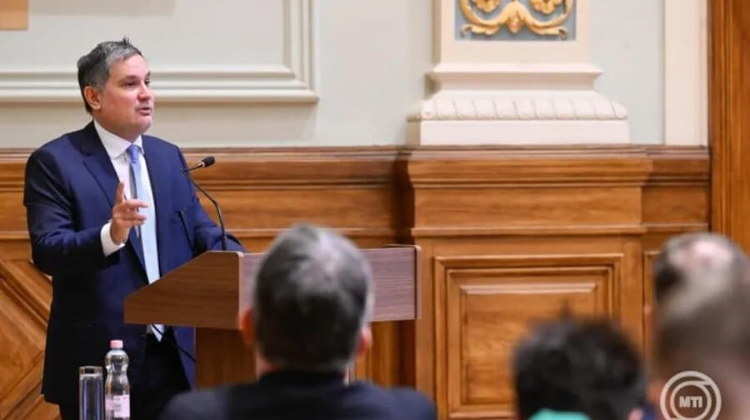
Hungary’s National Economy Minister, Márton Nagy, has indicated that the government would like to see the number of major banks operating in Hungary reduced to five.
Speaking at a conference at the Ludovika University of Public Service on Monday, Nagy named four institutions he considers central to the country’s future banking structure: OTP Bank, MBH Bank, K&H Bank and UniCredit Bank.
He described a “fifth spot” as still open.
The comments follow remarks made days earlier by Prime Minister Viktor Orbán, who suggested in a speech that at least one foreign bank should leave Hungary.
Seven Major Players at Present
According to the Hungarian National Bank (MNB), Hungary currently has seven large banks dominating the market.
In addition to the four mentioned by Nagy, the list includes Erste Bank Hungary, Raiffeisen Bank Hungary and CIB Bank.
OTP and MBH are domestically owned, while several of the others are subsidiaries of Austrian or Italian banking groups.
MBH Bank is widely seen as aligned with business interests linked to Lőrinc Mészáros, one of Hungary’s wealthiest entrepreneurs and a long-time associate of Prime Minister Orbán.
In his recent State of the Nation speech, Orbán sharply criticised Erste, referring to it as a “tax collector of death” — a comment widely interpreted as signalling political tension with the Austrian-owned bank.
Why Fewer Banks?
Nagy argues that reducing the number of major banks would make the sector more efficient and cost-effective. In a recent Facebook post, he said a leaner structure could improve size efficiency while maintaining competition.
He cited Austria and Sweden as examples of countries operating with fewer than five dominant banks.
The minister did not address the impact of Hungary’s special banking taxes, which have been introduced over the past decade and remain a significant factor affecting profitability in the sector.
Budget and Sector Taxes
Responding to criticism of Hungary’s fiscal policy, Nagy rejected claims of excessive government spending. He said the country’s general government deficit stood at 4.7% of GDP last year under EU accounting rules, adding that much of this was due to debt servicing costs. He pointed to a stable primary balance and a current-account surplus as signs of stability.
He also defended sector-specific taxes imposed on banks, energy companies and retailers. According to the minister, these levies generated HUF 17,000 billion in revenue between 2010 and 2026, with an additional HUF 2,000 billion expected this year.
Government-imposed price caps, introduced to curb inflation, were described by Nagy as “necessary”, despite criticism that they represent unorthodox economic policy.
Why This Matters for Expats
For foreign residents in Hungary, the key question is whether any restructuring would affect everyday banking services, international transfers, or foreign-currency accounts.
At this stage, no concrete measures have been announced, and all major banks continue to operate as normal. However, the political messaging suggests the government is prioritising stronger domestic ownership in strategic sectors — including banking — ahead of the 2026 elections.
*********************************************************************************************
You're very welcome to comment, discuss and enjoy more stories via our Facebook page:
Facebook.com/XpatLoopNews + via XpatLoop’s groups: Budapest Expats / Expats Hungary
You can subscribe to our newsletter here: XpatLoop.com/Newsletters
Showcase Your Business to Expats in the Loop:
As an independent portal we’re grateful to all commercial supporters who help keep you in the loop with fresh insights and inspiration. Do you want your business to reach tens of thousands of potential high-value expat customers? If so please contact us here.




LATEST NEWS IN finance