

















New Harvard Research Traces Hungarian Language Origins
- 23 Feb 2026 2:50 PM

Recent genetic research led by scientists at Harvard University is reshaping what we thought we knew about the origins of Hungarian and other Uralic languages. The findings suggest that the roots of Hungarian may lie far deeper in Siberia than previously believed — and that the language’s westward journey began more than 4,000 years ago.
For expats living in Hungary, where the language often feels distinct from its Indo-European neighbours, this research offers fresh insight into why Hungarian sounds and functions so differently from most other European tongues.
An Eastern Genetic Signature
Linguists have long grouped Hungarian together with Finnish and Estonian within the Uralic language family. Geneticists, meanwhile, have observed that speakers of these languages carry a small but distinct East Eurasian genetic component.
For decades, this was broadly associated with the Ural Mountains region. However, the new research went further. Harvard scientists collected and analysed DNA samples from previously unstudied Siberian populations.
One striking discovery was a genetic link between the Yakuts — an Indigenous people of northeastern Siberia — and both modern Finns and Estonians, as well as the medieval Hungarians who settled the Carpathian Basin in the late 9th century.
This specific genetic pattern does not appear in other language families. According to the researchers, the connection is unlikely to be coincidental. Instead, it points to a shared ancestral population far to the east.
Not the Steppe, but the Taiga
The findings also challenge long-standing assumptions about how Uralic languages spread westward.
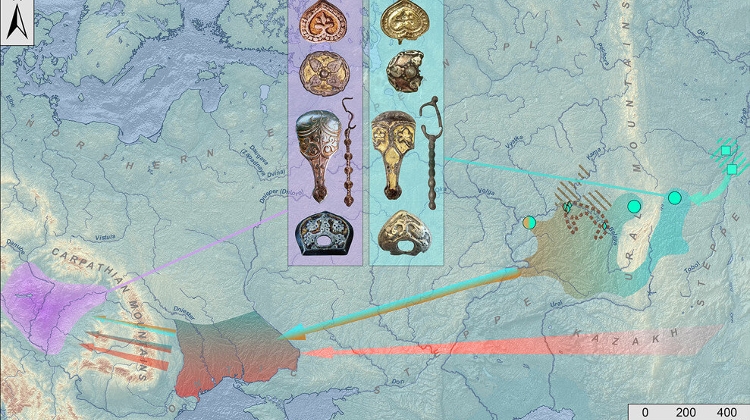
Rather than moving primarily across the open grasslands of the Eurasian steppe, researchers now believe these early communities travelled through the vast northern taiga — the forest belt stretching across Siberia.
The genetic signal of this Siberian ancestry varies today:
In Estonians, it accounts for roughly 2% of the genetic profile.
In Finns, around 10%.
Among the Nganasans of northern Russia, it is much higher.
In modern Hungarians, it is barely detectable.
However, when scientists examined the DNA of early Hungarian conquerors — the groups who arrived in the Carpathian Basin over 1,100 years ago — the eastern genetic signature was clearly present. Over centuries, intermarriage with other European populations largely diluted it, but traces remain embedded in the historical record.
Closer to Alaska Than to Finland?
Perhaps the most dramatic implication is geographical. The earliest homeland of the Uralic language family may have been located much farther east than previously assumed — in remote northern Siberia, potentially closer to Alaska than to present-day Finland.
This suggests that the ancestors of today’s Hungarians were connected to ancient northern communities who maintained contact across enormous distances for centuries. Rather than a single large migration, the spread of proto-Hungarian was likely a gradual process carried by small, mobile groups adapting to changing environments.
A Wider Northern Story
The research also intersects with debates about the Yeniseian language family, now represented only by the critically endangered Ket language of central Siberia.
Some linguists — most notably Edward Vajda — have argued that Yeniseian languages may be related to the Na-Dene languages of North America. Genetic evidence from Siberia now adds weight to the possibility that ancient northern populations once connected linguistic traditions across two continents.
If confirmed, it would suggest that prehistoric movements across the far north were far more extensive than previously imagined.
What This Means for Hungary Today
Hungarian has often been described as a linguistic outlier in Europe. For many expats, its structure, vocabulary and sound system reinforce that impression daily.
This new research doesn’t change how Hungarian works, but it deepens our understanding of why it is so distinct. Rather than emerging from the same Indo-European roots as German, Slavic or Romance languages, Hungarian belongs to a family whose origins likely lie thousands of kilometres to the east, in the forests of Siberia.
Far from being an isolated curiosity, Hungarian is part of a much broader Eurasian story — one that ancient DNA is only now beginning to illuminate.
More:
news.harvard.edu
*********************************************************************************************
You're very welcome to comment, discuss and enjoy more stories via our Facebook page:
Facebook.com/XpatLoopNews + via XpatLoop’s groups: Budapest Expats / Expats Hungary
You can subscribe to our newsletter here: XpatLoop.com/Newsletters
Showcase Your Business to Expats in the Loop:
As an independent portal we’re grateful to all commercial supporters who help keep you in the loop with fresh insights and inspiration. Do you want your business to reach tens of thousands of potential high-value expat customers? If so please contact us here.

LATEST NEWS IN community & culture