
























From Start-Ups to Students: Is this a New Golden Age for Hungary?
- 30 Mar 2026 5:35 AM
- Budapest Business Journal
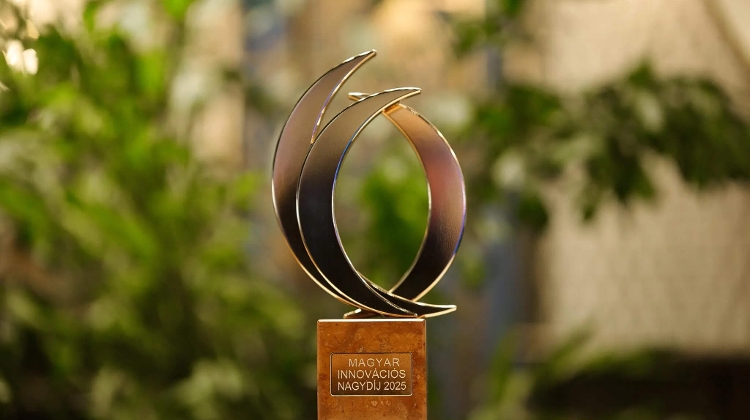
The Hungarian Innovation Grand Prize has seen a significant surge in interest this year, with nearly twice as many projects submitted compared to previous editions. By the recent deadline, 91 companies had filed applications, marking a new milestone for the competition.
Now in its 34th year, the award program is organized by the Hungarian Innovation Association (MISZ) in collaboration with the Hungarian Chamber of Commerce and Industry, the National Chamber of Agriculture, and the National Innovation Agency.
The initiative receives primary support from the Ministry of Culture and Innovation alongside the National Research, Development, and Innovation Office (NKFIH).
A Diverse Field of Contenders
This year’s entries span a wide range of industries, reflecting the multifaceted nature of the local economy. The industrial sector leads with 25 submissions, followed closely by IT with 19.
Agriculture contributed 10 applications, while the energy and environmental protection sectors each submitted eight. Healthcare projects accounted for six entries. Notably, the startup community showed its strongest presence to date, with 15 early-stage companies entering the fray.
The criteria for the prize are rigorous: projects must be implemented in practice and have demonstrated measurable business or social benefits during 2025. MISZ aims to highlight the most effective Hungarian innovations, particularly those that prioritize environmental sustainability and modern technological standards.
Expanding the Search for Talent
To ensure no breakthrough goes unnoticed, organizers introduced a new nomination pathway this year. Various domestic organizations — including the Entrepreneurship Club of Corvinus, the Hungarian Business Angel Network, the National Bank of Hungary, Startup Hungary, and STRT Holding—were invited to recommend standout companies.
By the end of November, these bodies had suggested over 230 companies. This broader approach, coupled with the record number of formal applications, suggests a deeper level of engagement across all sectors. It also serves to bring international attention to achievements that might otherwise stay within niche local markets.
Defining the Innovation Elite
Since its inception in 1991, the Grand Prize has received over 1,500 entries. Of these, 255 have been honored with awards, forming what MISZ calls the "domestic innovation elite."
Recently, a new "Innovation Trademark" was established by the Innovation Coalition. This mark has already been granted to nine former MISZ prize winners, while another 16 current trademark holders are competing for the Grand Prize this year.
Csaba Bőthe, Managing Director of MISZ, noted that these achievements are the engines of the national economy. He expressed satisfaction that more companies than ever were able to showcase tangible results from 2025, providing a foundation for sustained economic growth in Hungary.
The judging panel is currently evaluating the entries. Results will be announced on the evening of March 18, with winners being showcased the following day at the InnoSummit 2026 conference.
Young Scientists from Hungary Excel on the Global Stage
While established companies are breaking records at home, the next generation of talent is making waves abroad. At the recent Taiwan International Science Fair—one of the world’s most prestigious student competitions — two Hungarian secondary school students both secured fourth-place finishes in a field of 700 participants from 32 countries.
Award-Winning Student Projects
The students were selected by MISZ following their success at the National Science and Innovation Olympiad.
Natali Júlia Hajsz (Deutsche Schule Budapest Thomas Mann Gymnasium): Developed a 3D-printed, customizable wound dressing. Her design is partially absorbable, promoting faster healing while significantly reducing medical waste.
Dániel Czapák (Ferenc Medgyessy Secondary School of Arts): Created a wireless system using flexible sensors designed to predict mechanical failures in industrial machinery. This allows for proactive maintenance and prevents costly malfunctions.
Cultivating Future Innovators
The Hungarian delegation was led by Zsófia Pazsák, director of the National Science and Innovation Olympiad. These results underscore a core mission of MISZ: fostering creative problem-solving and an "innovation first" mindset in younger generations.
Hungarian students have a long history of success at international forums, including the EU Contest for Young Scientists and the world championships in the United States.
Recent accolades include a silver medal at the 2025 world championships and a bronze at the European level, proving that the future of technology in Hungary is in capable hands.
*********************************************************************************************
You're very welcome to comment, discuss and enjoy more stories via our Facebook page:
Facebook.com/XpatLoopNews + via XpatLoop’s groups: Budapest Expats / Expats Hungary
You can subscribe to our newsletter here: XpatLoop.com/Newsletters
Showcase Your Business to Expats in the Loop:
As an independent portal we’re grateful to all commercial supporters who help keep you in the loop with fresh insights and inspiration. Do you want your business to reach tens of thousands of potential high-value expat customers? If so please contact us here.
XpatLoop Media Partner


LATEST NEWS IN tech