




















Why People Queue for this Soup at a Market in Budapest
- 20 Mar 2026 10:58 AM
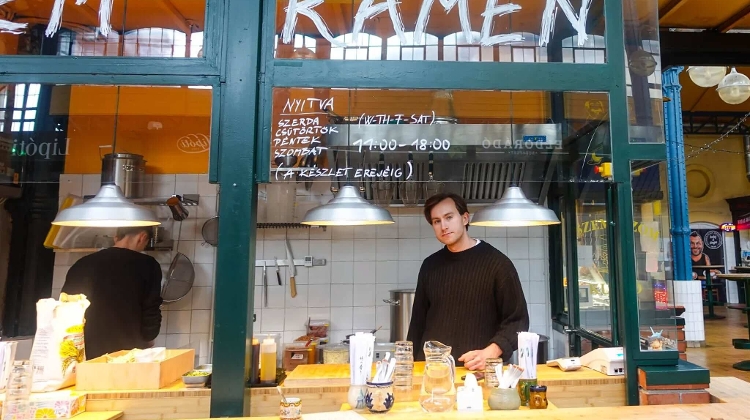
“There’s no simpler dish in the world than soup – it’s like how it’s hot in summer and cold in winter. You just boil bones in water, it’s delicious, nourishing, everyone loves it. These are the kinds of things that bring me joy,” says Márton Hetey, who trained as a chef and has spent the past decade working in kitchens and bakeries.
He started out in Hungary, then spent years cooking and baking in Scandinavia, including in fine dining restaurants.
Although much of his professional knowledge comes from high-end kitchens, after a while he realised he was craving something simpler and slower. He worked in Copenhagen for several years, including at a trendy ramen spot, and later in Norway, but eventually began to feel homesick.
“I think it works like this: I learn abroad, but I put that knowledge to use at home,” he says.
He returned to Hungary a year ago and continued working in bakeries in Budapest, but missed cooking.
“I’m not really a baker or a chef – I just love cooking and baking.” Unable to find the kind of ramen place he had come to enjoy abroad, he decided to create one himself. The idea clearly struck a chord: even a month after opening, people are still queueing at the market for one of the six seats.
“I didn’t have big expectations. I just imagined a small place where a few locals might drop by. I would have been happy if it simply ticked along – I never expected queues. My concept was simple: I’d do something I love, and maybe people would like it too.”
In Budapest, it was in Józsefváros where he encountered the most interesting people, eateries and hangouts. He often visited the small food stalls along Népszínház Street and wanted to recreate that atmosphere. That’s how he discovered the space at Rákóczi Square Market.
He hopes traditional market halls will become fashionable again among younger generations, even though he acknowledges how much easier it is to buy everything in one go at a supermarket.
“Going to the market is a slow activity, but it’s personal. It means a lot to me to know who produced or prepared the food I’m buying.”
The market operators were also pleased to welcome a new business that brings life to the area. And it’s not the only one: there has long been a canteen and a lángos stand here, a pasta place opened recently, and there are good cheesemongers and butchers – it’s no longer just about fried sausages.
Small Place, Big Demand
The tiny “Nem Ramen” spot has just six seats; that’s how many people can eat at once, while others queue outside. Passers-by constantly ask questions – what is ramen, is this pho, why is there no takeaway, why no gluten-free option – so conversations often turn into informal гастрonomy lessons.
Despite the many “no” answers, customers remain curious, patient and friendly.
Not only is the place small, but so is the menu. There are just two soups (around HUF 3,200, with extra noodles available for an additional fee). There are no vegetarian options, no special dietary versions, no takeaway, and it’s only open four days a week.
“What matters to me is that the food I make is good – and for that, I need these boundaries.”
Before opening, Hetey expected to sell around twenty bowls a day. In reality, demand is much higher – sometimes up to seventy people arrive within a few hours, and queues can stretch to two hours.
Despite this, he has no plans to expand the kitchen or extend opening hours.
“I want to stay true to what I originally envisioned, even if it remains this small.”
Maintaining a personal atmosphere is essential to him, and that requires his physical presence.
“For this place to work, this is how it has to be – people simply have to accept it.”
So far, they do. He always lets the last ten people in line know they’ll get the final bowls, and then puts up the “sold out” sign.
Ideally, he hopes demand will even out over time and that regular customers will return.
“I feel sorry for those who’d just pop out during their lunch break – they can’t afford to wait an hour.”
A Personal Experience
Sitting at the counter, eating directly opposite the chef, creates a uniquely intimate dining experience. As you eat your soup, you watch him prepare the next one – skimming fat from the broth, chopping spring onions – and finally placing the bowl in front of you himself.
It’s a rare format in Hungary, though common elsewhere. Interestingly, the only similar experience the writer had before was in a Copenhagen soup bar – which turns out to be the very place where Hetey once worked.
“I like putting people into new situations,” he says. “I think they need it.”
Although naturally reserved, this level of interaction is also a challenge for him – but it has already made him more open.
“Here I have to keep talking to people while cooking and paying attention to the food.”
Many customers discover that eating doesn’t have to mean sitting in silence while a stressed chef rushes around. But to maintain this calm, attentive environment, slowness – and limited volume – are essential.
Not Ramen
In Japan, ramen is a simple, cheap street food. But like many imported trends, it arrived in Hungary as something more elevated. Until now, Budapest has mainly offered two extremes: cheap instant noodles or expensive, refined restaurant ramen.
This place finds a middle ground – a format that’s already popular in many European cities.
The name “Nem Ramen” (“Not Ramen”) is not just a joke, but a statement: nothing here is traditional, and the ramen itself is deliberately unorthodox.
According to Hetey, a good soup is about balance – the richness of the meat, the fat, and acidity. But it doesn’t need to be an overwhelming flavour bomb. The broth should be full-bodied, paired with properly cooked noodles, marinated eggs and fresh vegetables.
He consciously ignores many traditional Japanese ramen rules – including the intensity of the broth. In Japan, people typically don’t drink the soup itself, only eat the noodles and toppings. At Nem Ramen, however, the broth is meant to be consumed too.
“I’d feel it was a waste to throw it away,” he says.
“I’ve eaten a lot of ramen in Japan, and when I first made these two soups, I went back in my mind to the ones I liked. It’s not about recipes – it’s about ten years of experience. Most things require constant attention, not a fixed formula. Even the eggs turn out differently every day. You just have to understand time, temperature, and the methods that make something taste good or become rich in collagen.”
Despite his success, Hetey remains modest:
“I don’t consider myself particularly good at anything. And even if I did, someone would come along and say they’re better. I listen to feedback, respect my customers’ opinions, and often make changes if I agree – but not based on rules, only on instinct.”
The Food
The soups are made with chicken broth but include pork toppings. One is a clear broth with pork neck, the other richer, with miso and minced pork. Both include fresh vegetables, sprouts, chilli oil, marinated egg, and homemade noodles.
The result is a genuinely rich, hearty soup – generous in portion, with soft-centred eggs, flavourful meat, and springy noodles that absorb the broth beautifully.
After standing in line for a while, you’re just cold enough for it to taste even better.
Nem Ramen
Rákóczi Square Market Hall
Wednesday–Saturday, 11:00–18:00
Original article published on telex.hu
*********************************************************************************************
You're very welcome to comment, discuss and enjoy more stories via our Facebook page:
Facebook.com/XpatLoopNews + via XpatLoop’s groups: Budapest Expats / Expats Hungary
You can subscribe to our newsletter here: XpatLoop.com/Newsletters
Showcase Your Business to Expats in the Loop:
As an independent portal we’re grateful to all commercial supporters who help keep you in the loop with fresh insights and inspiration. Do you want your business to reach tens of thousands of potential high-value expat customers? If so please contact us here.


LATEST NEWS IN food & drink