















EU Erasmus to Return to Hungarian Universities
- 17 Sep 2026 7:46 PM
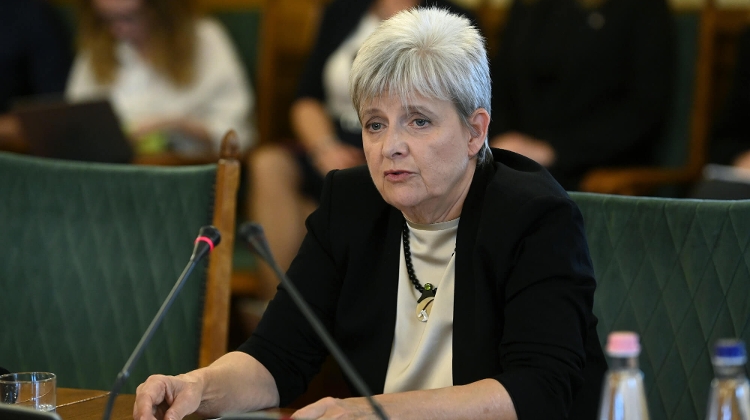
The European Union's Erasmus programme will return to Hungarian universities, the minister of education and children's affairs said on Facebook.
Judit Lannert said the Hungarian government had taken all necessary steps by the end of August to ensure the Erasmus programme was again available to Hungarian university students.
The 21 universities affected by the restrictions already have valid Erasmus mobility applications for the 2026-27 academic year, she said. "Erasmus can thus return to these Hungarian universities as well, and international mobility opportunities will open up again for students."
"The place for young Hungarians and researchers is in the European scientific and higher education bloodstream. The international mobility of Hungarian students must not once again become a victim of party political interests," she said.
The Erasmus programme is an initiative of the European Commission that has been present in Hungary since 1998. According to the programme’s website, a total of about 300,000 people from Hungary have participated since its launch.
In 2022, the Council of the European Union excluded higher education institutions operated by public-interest asset management foundations (KEKVAs) from the programme citing compatibility and transparency problems.
Abolishing the kekva system introduced under the Orban government was also a condition on Hungary access to EU funding.
Govt official: All Hungarian uni students eligible for Erasmus from Oct
Hungarian university students will have the opportunity to participate in the European Union's Erasmus mobility programme by October, the state secretary for higher education said on public radio on Thursday, adding that students may start semesters abroad as early as this autumn.
Sandor Katz recalled that a lengthy and complex legal process was required, including the reorganisation of boards of trustees and the withdrawal of a previous decision by the Council of the European Union.
While some students will be able to study abroad with "short mobility" as early as this autumn, the programme will be fully operational from the spring semester, he said.
"Hopefully", there will be no difference between institutions previously maintained by public asset management foundations (kekvas) and state institutions, Katz said. This also depends on the universities, as they are the ones applying for Erasmus on behalf of their own students, he added.
The state secretary also said that to unlock EU funds, two important steps had to be taken at the universities: first, the boards of trustees had to be re-elected, which was completed by Aug 31 through open tenders; second, the organisational and operational regulations had to be amended to comply with the legal regulations for state institutions.
He noted that the greatest merit of the kekva system was the flexible financing of institutions, as they operated not as budgetary bodies but with six-year financing agreements. "This should be retained in some form," he said. However, the asset management function was entirely unnecessary, he added.
Katz said that, per student, the universities that switched to the kekva model received roughly twice as much funding as state universities, so it would be important to compensate the latter in next year's budget.
Regarding the Central European University (CEU), Katz said negotiations were under way, and he hoped the issue would be resolved shortly. The government is open to CEU once again operating as a full degree-granting university in Budapest, but the rest depended on the institution, he said.
CEU moved its US-accredited programmes to Vienna from the 2019-2020 academic year after failing to reach an agreement with the government on whether any activities it conducted in the US at Bard College, in New York, complied with the requirements of the 2017 amendment to the higher education act,
Meanwhile, Gov't strives for partnership with universities
The government offers "real partnership" to universities "as the basis of all cooperation in future", the prime minister said on Friday, at a year-opening senate meeting of Budapest's Eotvos Lorand University.
Improving the financing of higher education and helping universities to a world-class performance is a shared interest, Peter Magyar said.
"This requires strategic planning, facing facts, and well-prepared decisions," the prime minister added.
He noted that among its very first measures, his government restored the autonomy of universities, and created new and transparent structures by abolishing public-interest asset management foundations (KEKVAs).
Lannert: Ministry starts developing new education strategy
The ministry of education and children's affairs has started to work on an education strategy under the working title Back to the Future, the minister said in a video on Facebook on Friday, calling for the development of critical thinking and creativity in public education.
"The title refers in part to the fact that we have had good things in the past that are worth revisiting. On the other hand, it means that in a world of ever-faster technology, we must return to our essence as humans, to our feelings," Judit Lannert said. "We need to raise thinking, feeling humans, not robots."
The main outlines of the new policy were presented to teachers and headmasters last week in Pecs and Szekszard, in southern Hungary, she added.
Marietta Kokay Lanyi, the state secretary for public education, said that the new system would shift the focus from the teacher to the "creating, creative, inquisitive child".
"Children need schools where their personalities, individual needs matter; where they themselves matter," she added.
Source: MTI – Hungary’s national news agency since 1881.
MTI photo
*********************************************************************************************
You're very welcome to comment and discuss this via our Facebook page: XpatLoopNews
& via: Budapest Expats - The International Community / Expats Hungary - The Original Group
You can subscribe to our newsletter here: XpatLoop.com/Newsletters


LATEST NEWS IN community & culture