





















Coolest Cafeteria in Hungary Shows Eating Together Makes You More Open-Minded
- 24 Mar 2026 6:54 AM
Food is a powerful way to connect and to understand that we are all different – and that it’s worth getting to know and accept one another. When this message is conveyed through gastronomy, it reaches people much more easily than through lectures.
Eating together makes people more open,” says Zoltán Győrffy, Director of International Relations at the University of Pécs, speaking about the university’s international гастro initiatives.
With the expansion of English- and German-language programmes, the University of Pécs has attracted an increasing number of international students – now around 5,600–6,000 in total. Most come from outside Europe, including China, Japan, India and Iran, many of them studying medicine, though other faculties are also represented.
According to Győrffy, Pécs has long been unique in this respect, as multiculturalism has always been part of the city’s fabric. Various minority communities – Croatian, German, Greek and Roma among others – have lived side by side for generations, each bringing elements of their own culture.
Over the past decade, the presence of the university has accelerated this diversity significantly, making it a defining feature of the city today.
Hungarian and international students still tend to mix less with each other than international students do among themselves, so the university actively organises events and initiatives to bring different nationalities together.
Anikó Berta, who has been teaching at the university for 24 years, has long invited her international student groups to cook together at her home.
On these occasions, each student would bring a dish from their home country. Over the years, she collected these recipes and organised them by continent. The shared meals later continued at the university’s international evenings, where dishes from 20–22 different countries could be sampled at once.
These cooking sessions eventually led to the idea of creating a university-wide cookbook, with students submitting their favourite recipes. Fifty were selected to ensure a diverse mix of countries and cuisines. Over the course of a week, the dishes were prepared, photographed and documented together with chef Ákos Lokodi and the students, with texts included in both English and Hungarian.
Alongside each recipe, students shared the story behind the dish – often linked to family celebrations, weddings or cultural traditions.
The project clearly meant a great deal to participants. One student even returned home to Tehran and brought back a whole leg of lamb so it could be properly featured in the book. He left his clothes behind to make space, but still had to pay an excess baggage fee at the airport.
The cooking sessions themselves became social events, where people stayed on to help prepare each other’s dishes, forming friendships along the way.
A Chinese New Year cooking session turned into a particularly lively celebration. While not every unfamiliar flavour was embraced equally, some dishes found their way into the everyday cooking habits of Hungarian students.
Two volumes of the cookbook were eventually published. The first focused on more complex main dishes with a wide range of ingredients, while the second featured lighter, vegetable-based meals and salads.
"One of my hidden goals was to reduce people’s fear of foreigners – especially among those who had never met anyone from abroad,” says Berta.
“Interestingly, one of the students wrote exactly this in his text – that he was sharing his recipe so people wouldn’t be afraid of the unknown.” As Győrffy adds, not everyone has to love every new thing, but initiatives like this can gently encourage openness.
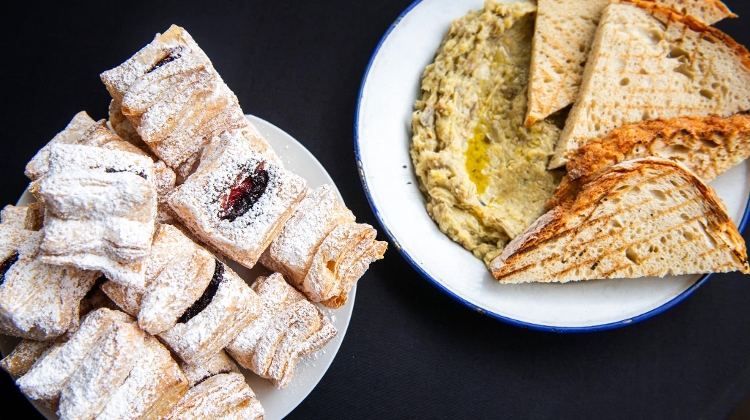
The University of Pécs has even developed its own biscuit, created by pastry chef Ádám Frey. It was designed as a nutritious, practical breakfast or snack for busy students. It’s gluten-free, made with oat flour and almonds to provide slow-release energy, with plum jam in the centre.
The ingredients were also chosen to reflect regional flavours. The biscuit features the Anjou lily, a symbol also found in the university’s crest. It has been developed to be long-lasting and easy to package, so students can take it with them or give it as a gift. In summer, it is also available as an ice cream version, made with oat milk, crunchy almonds and fruit layers.
One of the most distinctive aspects of the university is its canteen. The largest campus was completed six years ago, and given the high number of international students, it was designed from the outset to cater to a wide range of tastes, dietary needs and cultural preferences.
As Győrffy points out, students today don’t choose universities based solely on academic quality – factors like the city’s atmosphere and even the food options also play an important role. They expect better-quality meals, coffee and snacks, and pay more attention to nutrition.
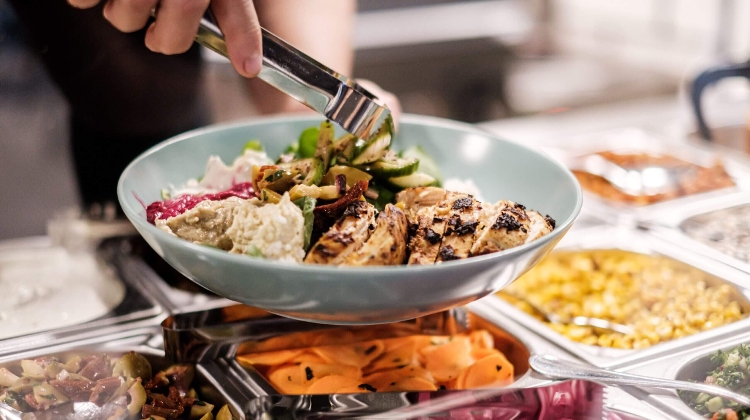
“I couldn’t find a canteen in Hungary that matched what I had in mind, so I started looking at university dining halls abroad for inspiration,” says Katalin Nagy, manager of the Umami canteen, who previously worked in the restaurant sector. Her goal was to create a place where international cuisine plays a central role, while still offering options that suit different diets and tastes, alongside familiar Hungarian dishes.
Many international students struggle with food options in Pécs, especially if Hungarian cuisine feels unfamiliar. They often default to fried food or pizza, or cook for themselves. That’s why they are particularly appreciative of finding dishes closer to their own culinary traditions.
The international cookbook has also influenced the canteen’s menu. Several dishes from the collection have been introduced, with some becoming regular favourites. Not all of them have been equally successful – more unusual dishes can divide opinion – but they still play an important educational role.
As Nagy explains, exposure to Middle Eastern and Asian dishes helped her discover new spices and ingredients, which she now incorporates into the menu. The food has become more vegetable-focused, better textured, less overcooked, and overall fresher and healthier.
For many students, trying tahini or Indian-style chicken here can be a first step toward exploring new cuisines. Openness works both ways. Many international students also try Hungarian dishes here, with Korean students in particular showing strong interest, perhaps due to similarities in the use of spice and paprika.
There have been occasional complaints from customers uneasy about the number of foreign students, but these are in the minority. Most visitors appreciate the atmosphere, which often feels more like being abroad – not just because of the food, but the mix of people.
The canteen is open to the public, and many people come from outside the university because it offers restaurant-quality food at more affordable prices, with greater variety. While Hungarian diners often opt for the traditional two-course lunch of soup and a main, international students typically prefer a single dish.
At the same time, staple Hungarian canteen favourites – fried cheese, chicken, stews and vegetable dishes – remain available.
It’s fair to ask whether a self-service restaurant offering everything from spinach with fried eggs to Indian butter chicken, alongside pickles, salads, poppy seed cake and chia pudding, can still be called a “canteen”. Improving mass catering is not just about better ingredients, though higher costs are part of it.
According to Nagy, even small price increases make a difference here, while school canteens often lack that flexibility. Despite slightly higher prices than average, profit margins remain extremely tight due to inflation.
Quality also depends on attention to detail: eggs that are soft and gently set rather than overcooked, duck gizzards that are tender rather than tough.
Achieving this requires time, coordination and a different approach from traditional canteen routines, where everything is prepared in advance. Timing and workflow are key to maintaining consistency.
Umami is not just an interesting model for those considering opening a modern canteen or self-service restaurant, but also well worth visiting for breakfast, coffee or lunch. The daily menu costs around HUF 2,790, while other dishes range between HUF 2,400 and 3,400.
On a January visit, the selection leaned more toward Hungarian tastes, as fewer international students were present during the exam period. Alongside the usual fried options, there were dishes such as spinach, pork knuckle stew, Chinese vegetable noodles, burrata salad and cod croquettes, as well as a wide range of special dietary desserts, traditional cakes, and a mascarpone cream-based cottage cheese dumpling.
In addition to its international offerings, Umami is particularly well known for its duck gizzards, which are genuinely excellent.
Queues are common, so it’s worth arriving early – lunch service starts at 11:00 and runs until around 14:30. From time to time, themed weeks are also organised, including past menus focused on Latin cuisine.
More:
umamipecs.hu/en
Original article in Hungarian published on Telex.hu
*********************************************************************************************
You're very welcome to comment, discuss and enjoy more stories via our Facebook page:
Facebook.com/XpatLoopNews + via XpatLoop’s groups: Budapest Expats / Expats Hungary
You can subscribe to our newsletter here: XpatLoop.com/Newsletters
Showcase Your Business to Expats in the Loop:
As an independent portal we’re grateful to all commercial supporters who help keep you in the loop with fresh insights and inspiration. Do you want your business to reach tens of thousands of potential high-value expat customers? If so please contact us here.



LATEST NEWS IN food & drink