




















Folk Music Community in Hungary Mourns Sebo
- 28 Apr 2026 7:12 AM
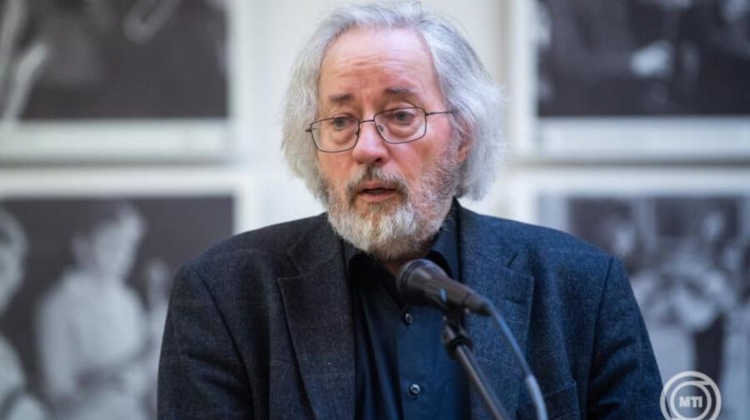
Tributes poured in from across Hungary's cultural scene after Ferenc Sebő, the Kossuth Prize-winning performer, composer, and co-founder of the dance house movement, died on Monday at the age of 79.
Among those paying homage on social media were the Kaláka Ensemble, Hobo (Laszlo Foldes), Agi Szalóki, Zoltan Krulik (Makam), Mihaly Borbely, Tamas Szarka, the Sündörgő Ensemble, the House of Traditions, the Müpa concert hall, and Budapest Mayor Gergely Karácsony.
The Ministry of Culture and Innovation described Sebő as "one of its own" in a statement to MTI.
Gergely Karácsony asked: "How will we 'sebő' now?" -- referencing the verb inspired by Sebő's name, which came to mean embracing tradition through song, dance, poetry, and community-building.
"Only the greatest names become verbs," he wrote, calling it a "badge of honour -- because 'to sebő' means to sing, dance, recite, and create together. It's Hungarian at its noblest. As Sebő himself said: 'Our Hungarianness is a linguistic and cultural community -- we must cherish it.'"
Karácsony highlighted Sebő's role in turning the dance house movement -- now part of UNESCO's Intangible Cultural Heritage -- into a "revolution that kept tradition alive by living it. Tradition isn't something to preserve like a patient or guard like a prisoner, he taught us. It survives only if we live it."
The Kaláka Ensemble posted: "We mourn. Sebő Feri is gone. We last saw him on Attila József’s birthday. May he rest in peace."
Folk singer Agi Szalóki called Sebő one of the most important figures in her life after her parents: "Through his recordings, I learned Hungarian. He opened windows for me not just to Hungarian folk music, but to Roma and Balkan traditions. The world owes him gratitude."
Hobo (Laszlo Foldes) wrote: "We've lost a true man, a masterful musician. His contributions to Hungarian culture are impossible to list. It was an honour to play with him. He guided me toward Hungarian poetry. His memory and modest smile will stay with me forever. Rest in peace."
Tamas Szarka (Ghymes) bid farewell: "Now that you've rested in the cradle of Hungarian music, sleep there forever, smiling. Thank you for your life, dear FERENC SEBO -- in all caps -- as it should be."
Mihaly Borbely, the Sündörgő Ensemble, and Zoltán Králik (Makam) shared brief tributes. Ambrus Tövisházi (Erik Sumo, Péterfy Bori & Love Band) recalled visiting Sebő just a week and a half ago: "Thank God I could tell him how much his music still means to me, how much I owe him, and play my own songs for him. Take care on your journey!"
Writer Krisztian Nyári noted Sebő's legacy as artistic director of the Hungarian State Folk Ensemble, co-founder of the House of Traditions, and a radio host who "taught and embedded Hungarian musical and folk traditions into our identity -- reviving, researching, and making them beloved."
The Palace of Arts (Mupa) recalled Seő's "unforgettable, magical concerts" on its stages: "Rest in peace."
Ferenc Sebő, folk music pioneer and founder of dance house folk revival movement, dies at 79
Performer, composer and researcher Ferenc Sebő, a co-founder of the dance house folk revival movement, died early on Monday morning, member of the Sebő Ensemble, Laszlo Perger, told MTI.
The artist turned 79 in February this year. He received numerous awards for his work, including the Kossuth Prize and the Artist of the Nation award.
The Hungarian dance house movement has been inscribed on UNESCO's List of Intangible Heritage of Urgent Safeguarding since 2011.
Born on February 10, 1947, Sebo was the son of a military officer who, in autumn 1944, held the Gyimes Pass for three weeks against overwhelming Soviet forces.
He began his studies in Szekesfehervar, learning piano and cello, and later graduated from Budapest’s Eotvos Jozsef Gimnazium. In 1970, he earned a degree in architectural engineering from the Budapest University of Technology and Economics, working briefly as an architect.
At university, he played cello in the BME Symphony Orchestra and, with classmate and roommate Bela Halmos, performed Jozsef Attila poems set to music in their dormitory. Their duo evolved into an ensemble, blending historical songs, folk arrangements, and sung poetry.
Sebo's life changed when he heard Szeki folk music on radio. Drawn to authentic instruments such as the zither and hurdy-gurdy, he began collecting folk music under the influence of ethnomusicologist Gyorgy Martin.
At the invitation of choreographer Sandor Timar, he became musical director of the Bartok Dance Ensemble, studying folk dance alongside the music.
In 1972, the Sebo Ensemble's club at the Capital Cultural Centre became a hub for communal dancing. By late 1973, they moved to the Kassak Club, where Marta Sebestyen joined as vocalist.
Together with Halmos, they pioneered the dance house movement, teaching musicians and fostering a vibrant club scene with exhibitions, discussions, and summer camps. Their work culminated in Hungary's dance house tradition being inscribed on UNESCO’s Intangible Cultural Heritage list in 2011.
Sebo's career wove research, composition, and performance into a single tapestry. From 1984-1989, he studied ethnomusicology at the Liszt Ferenc Academy of Music, writing his thesis on Bela Vikar's folk music collection.
He taught folk music, hurdy-gurdy, and chamber music at the Bartok Bela Secondary School of Music and the Liszt Ferenc Academy.
His professional roles included carrying out research at the Institute for Cultural Education (1970s) and the Hungarian Academy of Sciences' Institute for Musicology (1988), and he was an editor and composer for folk and early music programmes at Hungarian Television, contributing to educational series and children's shows like Cimbora.
He was also artistic director of the State Folk Ensemble (1996-2001) and co-president of the Hungarian Dance Art Association (1999-2000).
In addition, Sebo was director of the House of Traditions (2002-2011), a centre for folk art research and modern application as well as jury president for the folk music and dance talent show Folszallott a Pava and host of the radio programme Nepzene-Sebo.
The first Sebo Ensemble album (1975) featured folk arrangements and musical poetry, followed by over 30 more records. They set poems by Attila Jozsef, Sandor Weores, Laszlo Nagy, and Ervin Lazar to music.
Sebo also published his own collections, composed film scores (Meg ker a nep, Fotografia, Amerikai anzix), and collaborated with theatre and radio. In 2018, the ensemble released Ardelis szep tanc, a CD and book of poems by Andras Ferenc Kovacs, a Hungarian poet from Romania.
He was honoured with the State Prize (1985), Hungarian Art Foundation Prize (1995), Budapest Prize (2000), Prima Prize (2003), Officer's Cross of the Hungarian Order of Merit and Pro Cultura Urbis (2006), and the Kossuth Prize (2012), Hungary's highest cultural honour, for preserving folk heritage and innovating folk music and dance.
In 2019 he was elected corresponding Member of the Hungarian Academy of Arts.
MTI Stock Photo
Source: MTI – Hungary’s national news agency since 1881. While MTI articles are usually factual, some may contain political bias, and readers should be aware that such content does not reflect the position of XpatLoop, which is neutral and independent.
Since the goal of XpatLoop is to keep readers well briefed, right across the spectrum of opinions, MTI items are shared to ensure readers are aware of all narratives within the local media.
XpatLoop believes in empowering readers to form their own views through complete and comprehensive coverage. To facilitate this XpatLoop has a balanced range of news partners, as you can see when you surf around XpatLoop.com
*********************************************************************************************
You're very welcome to comment, discuss and enjoy more stories via our Facebook page:
Facebook.com/XpatLoopNews + via XpatLoop’s groups: Budapest Expats / Expats Hungary
You can subscribe to our newsletter here: XpatLoop.com/Newsletters
Showcase Your Business to Expats in the Loop:
As an independent portal we’re grateful to all commercial supporters who help keep you in the loop with fresh insights and inspiration. Do you want your business to reach tens of thousands of potential high-value expat customers? If so please contact us here.



LATEST NEWS IN community & culture