

















Hokusai and the Evolution of Manga: New Exhibition Opens at the Museum of Ethnography Budapest
- 27 Apr 2026 12:52 PM
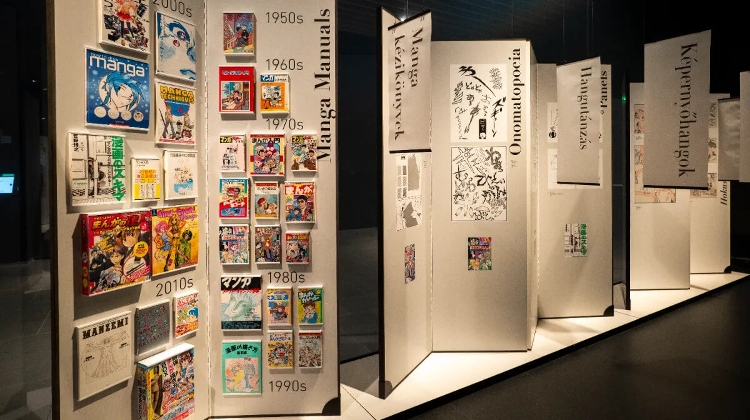
Budapest’s Museum of Ethnography is currently hosting a compelling exploration of Japanese visual culture, centering on the works of the legendary Katsushika Hokusai (1760–1849).
While Hokusai is often colloquially dubbed the "inventor" of manga, this exhibition takes a more nuanced approach, examining how the concept and meaning of "manga" have transformed over the last two centuries.
Rather than a dry historical timeline, the display contrasts Hokusai’s 19th-century mastery with contemporary Japanese comics to show how visual storytelling has evolved into the global phenomenon we recognize today.
More Than Just Reproductions
While the exhibition is part of a global traveling series organized by The Japan Foundation, the Budapest installment offers more than simple display panels. The collection is bolstered by significant original works, including:
* Original Woodblock Prints: Four pieces from Utagawa Hiroshige’s iconic series, Fifty-Three Stations of the Tōkaidō.
* Modern Classics: Original Japanese comics from the latter half of the 20th century.
* Contemporary Art: Original drawings and prints from seven distinct mangaka (manga artists).
A Visual Encyclopedia
Expats familiar with modern narrative-driven manga might be surprised by the original Hokusai Manga. Instead of a linear story, it serves as a massive visual encyclopedia. Its pages capture everything from mundane everyday gestures and facial expressions to plants, mythical creatures, and humorous social observations.
Originally intended as a "model book" for Hokusai's students to copy and learn from, these works are essentially the 19th-century ancestors of modern "How to Draw" manuals.
Key Themes: Participation and Evolution
The exhibition’s curator-led approach avoids rigid historical "proofs" of influence, instead inviting visitors to draw their own comparisons between the different eras.
Several unique sections highlight this:
* Hokusai as a Character: See how the artist himself is portrayed in modern comics - sometimes as a historical figure, other times as a fictional pop-culture icon.
* Live Legacy: New works created specifically for this exhibition by modern artists demonstrate how Hokusai’s motifs continue to inspire new creative perspectives.
* Participatory Art: A central takeaway is that manga has always been a "participatory" medium—built on the culture of copying, sharing, and reinterpreting ideas rather than just passive viewing.
Save the Date: Manga Day on May 9
For those looking for a deeper dive into Japanese culture, the museum will host a dedicated Manga Day on May 9, 2026.
This all-day event offers a variety of activities for families and enthusiasts alike:
* Workshops: Try your hand at traditional crafts like origami, sashiko (embroidery), and mizuhiki (cord-weaving).
* Performances: Experience the power of a taiko drum concert and martial arts demonstrations.
* Cultural Insights: Attend curator-led tours, lectures on pop culture, and a traditional Japanese tea ceremony.
This exhibition serves as a bridge between 19th-century Edo-period artistry and the modern global practice of manga, challenging visitors to think about how we "read" images and how artistic traditions are inherited across generations.
More:
neprajz.hu/en
Photo by: László Incze/ Museum of Ethnography
*********************************************************************************************
You're very welcome to comment, discuss and enjoy more stories via our Facebook page:
Facebook.com/XpatLoopNews + via XpatLoop’s groups: Budapest Expats / Expats Hungary
You can subscribe to our newsletter here: XpatLoop.com/Newsletters
Showcase Your Business to Expats in the Loop:
As an independent portal we’re grateful to all commercial supporters who help keep you in the loop with fresh insights and inspiration. Do you want your business to reach tens of thousands of potential high-value expat customers? If so please contact us here.



LATEST NEWS IN community & culture