
















Polgár Says No to Presidential Role
- 21 Jul 2026 9:21 AM
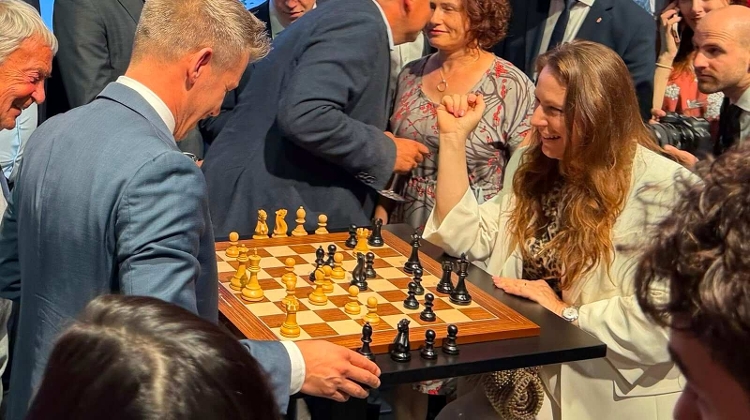
Judit Polgar announced on Facebook on Monday evening that she would not accept the nomination for president.
Prime Minister Peter Magyar wrote in response to Polgar's post that she would still be counted on in the future.
Polgar said she considered the initiative to nominate her a great honour and was extremely grateful for it.
"I highly respect the prime minister's gesture in asking an independent candidate above party politics to stand for president, despite his party's decisive parliamentary weight," she wrote.
"At the same time, I do not feel I have the strength to take on the historic responsibility of uniting a divided nation, and so I am unable to accept the nomination," she added.
Polgar said she would support a new, independent and respected president in every way possible to achieve these goals.
Magyar wrote under her post: "Dear Judit! Thank you for everything you have done for Hungary! Perhaps I can say on behalf of millions of Hungarians that we will count on you in the future, one way or another."
Kriszta Bodis, a Tisza party MP and government commissioner, wrote that she, the entire Tisza parliamentary group, and many Tisza supporters believed Polgar would have made an excellent president.
"I am saddened to learn of your decision, but I understand it, as you have received so much undeserved abuse. I hope we will meet again, and I can tell you in person how much I respect you. Wishing you strength and peace," Bodis wrote.
Magyar regrets but respects Polgar's decision
Prime Minister Peter Magyar wrote on Facebook on Monday evening that he regretted but respected chess grandmaster Judit Polgar's decision not to accept the governing Tisza party's nomination of her as the President of the Republic.
The prime minister said: "Today I held discussions with Judit Polgar, a living legend of Hungary. Judit told me that, in light of the circumstances, she would not accept the nomination. I regret this, but I respect her decision."
He added: "I thank her for taking the nomination seriously! I thank her for her openness, her straightforwardness, and the dignity with which she handled this situation."
"I regret if my enthusiasm, borne of joy and unconditional trust, contributed to any communication errors that may have led to this situation and her decision. The responsibility for any mistakes lies solely with me."
Magyar thanked Polgar for considering the nomination and noted: "Thank you for what you have done for the Hungarian nation."
Boka: Judit Polgar made right decision to reject presidency nomination
"Judit Polgar has made the right decision," the deputy leader of the opposition Fidesz parliamentary group said on Monday evening in response to the international chess grandmaster's decision not to accept the nomination for the office of President of the Republic.
Boka said on Facebook that Prime Minister Peter Magyar bore responsibility for the undignified situation that had developed.
"We will not participate in any further acts of this charade," he added.
Retvari: Polgar not accepting presidential nomination Magyar's 'first spectacular failure'
The opposition Christian Democrats' parliamentary group leader said on Monday that Judit Polgar's refusal to accept Prime Minister Peter Magyar's offer for the presidential nomination was Magyar's "first spectacular failure".
Bence Retvari said on Facebook that "the former president's forcible removal and Magyar's aggressive style" had alarmed many, and for a good reason.
He added that turning public consultation process "into a farce" had only further undermined the credibility of the entire procedure.
Magyar: At least ten serious presidential candidates have emerged
At least ten serious candidates for president of the republic have emerged, but the final decision must be made by the Tisza party parliamentary group and by parliament, Prime Minister Peter Magyar said on Facebook.
"This is what representative democracy is called, and this is what the current Fundamental Law prescribes," the prime minister said.
Magyar said the Tisza party was the first to ask people to submit nominees for the presidential position.
Tamas Sulyok signed the 17th amendment to the Fundamental Law on Saturday, ending his term as president at midnight on July 20.
On Sunday, 16 figures from the fields of science, culture, and sport wrote to Agnes Forsthoffer, the speaker of parliament, proposing that chess grandmaster Judit Polgar be asked to stand and be elected president.
On Sunday, Magyar wrote in a post on Facebook that he would meet Polgar on Monday and that he would consider it an honour if she accepted the nomination.
Earlier today, Tisza's group leader, Andrea Bujdoso, said the Tisza parliamentary group unanimously agreed that Polgar was the most suitable candidate for president.
Bujdoso said a president needs three qualities: dignity, integrity, and empathy. She said Tisza had held lengthy consultations on the presidential election and unanimously concluded that Polgar possessed all these qualities.
She described Polgar as a patriotic, honest, empathetic, brave, outstanding professional, and a dedicated person who could embody the nation's unity.
Tisza will make its final decision at its next meeting, she added.
Duro: Our Homeland to propose own presidential candidate
The opposition Our Homeland party will propose its own presidential candidate, but the party has not yet picked a nominee, deputy leader Dora Duro said.
She told the press in parliament that outgoing President Tamas Sulyok "ran away by signing the 17th amendment to the Fundamental Law without a word and in what was essentially a servile manner."
She added that there had been intense public debate over several points of the amendment, so if Sulyok had been a "truly responsible" president, "he would not have done this in such a manner."
Duro said she did not yet wish to take a position regarding the governing Tisza party's nominee, chess grandmaster Judit Polgar, but she called it strange that whereas Prime Minister Peter Magyar had spoken about "broad public consultation", he had already announced the candidate.
In response to a question concerning whether she had any concerns about Polgar "potentially becoming president as a citizen of another country", Duro said "I would like this press report to be confirmed; it does indeed raise very serious questions."
Magyar: New president should 'love homeland unconditionally'
Unconditional love of the country is a key requirement for the next candidate for president of the republic, Prime Minister Peter Magyar said in parliament ahead of the agenda on Monday.
He also listed six conditions necessary for representing Hungarian interests successfully, and pledged that the government will review all decisions made by former foreign minister Peter Szijjarto in connection with Chinese car manufacturer BYD.
Concerning the presidential election, the prime minister said: "We'll start with a clean slate, unbound by earlier pacts or habits."
Magyar said MPs would "not elect a president to favour the old opposition or Tisza voters... The right decision is to select a president who at last will be a president for the whole country."
He asked the political parties and civil society to make recommendations. He added, however, that "it is natural that we won't find a candidate that everybody likes."
The new president "does not need to be a politician in the everyday sense of the world; not even a lawyer," Magyar said.
Hungary has been headed by professional politicians and "excellent lawyers" for years, who "knew the rules of power, the labyrinth of laws and constitutional rules. Even so, they made the state and legislation a servant to their own interests," he said.
Magyar said that "the president must be someone who safeguards the nation's unity and constitutionalism. They could be a biologist, historian, doctor, artist, or lawyer, as long as their integrity and life story suggest they can carry out the role with strength, honesty, perseverance, and patriotism. The essential thing is that they love the country unconditionally," he said.
The next president must be willing to undertake "this difficult but beautiful task, which is nothing less than representing the entire nation" during the entirety of a transitional period, the constitutional process, Magyar said.
Hungary has had seven presidents in the past 36 years, all elected as a result of political agreements, pacts, or party-political decisions, Magyar said, adding that their affiliations had affected their acceptance. "This is the first opportunity since 1990 to elect a candidate above party lines," he said.
He urged government and opposition MPs to consider the presidency, the independence of public law institutions, children's safety, the protection of public assets, the future of education, and Hungary's international security as matters in which party-political interests must be subordinated to Hungarian interests.
In the speech entitled "Real Hungarian interests", Magyar said that there were six conditions necessary for representing Hungarian interests successfully: a functional, independent and fair state, a strong and sustainable economy, knowledge, a safe and dignified life, national security and a united nation.
"Hungary's greatest historical achievements occurred when Hungarians found common ground. While major figures in Hungarian history often debated fiercely, they always understood that the purpose of debate is to advance the country, and there are boundaries that should never be crossed for momentary political gain," he said, adding that Hungary was once again at such a historical moment.
"A long, inglorious era has ended, and the voters' mandate was not merely a change of government but a change of system," he said.
The Orban government had left a severe legacy, he said, citing a "historic" budget deficit, weakened public services, indebted institutions and citizens who had lost trust in governance.
The prime minister said that a functioning, independent, and fair state required a prosecution service, courts, constitutional court, state audit office, authorities, and a presidential institution that protect the law, public assets, and citizens' rights.
This is why, he said, the Fundamental Law had to be amended and why the independence of public law institutions is being re-established. He accused the Orban government having used the law to cement privileges, rescue assets and disable political opponents.
He pledged that under Tisza's leadership, laws would protect the community, check power, ensure fundamental rights and create accountability.
As the second condition, Magyar highlighted a strong, fair and sustainable economy. "Hungary welcomes any investor that creates jobs, brings knowledge, strengthens Hungarian suppliers, respects workers, and pays heed to the country's land, water, air, and the rights of local communities.
"Investments serve Hungarian interests only if workers earn a fair wage, settlements can develop, Hungarian entrepreneurs receive orders, and that does not make Hungarian water, air, and land bear the cost of profit."
Referring to the government's tax proposals submitted last week, Magyar pledged to create uniform, public, and predictable rules for all businesses.
He pledged to bring order to corporate tax payments by global giants, broaden tax bases, and reduce certain tax benefits.
The government will also eliminate tax avoidance practices used by asset managers, double the air pollution fees to be paid by polluting companies, and introduce environmental regulations and tax changes to force major water users and polluting companies to comply with environmental and health regulations, Magyar said.
Additionally, several smaller taxes will be abolished, and the "Orban government's selective punitive taxation of certain companies will end," he said.
Magyar stressed the need for public data, genuine impact studies, strong authorities, and meaningful local community participation in all major investments, and he lambasted the Orban government for neglecting those steps.
The prime minister also said that the government would scrutinise all decisions taken by Peter Szijjarto, the former foreign minister, related to an investment by Chinese vehicle maker BYD in Szeged, in south-eastern Hungary.
Magyar noted that Szijjarto had recently taken a position with BYD after coordinating "hundreds of billions" of forints of support, state infrastructure and diplomatic assistance for the company as the minister in charge of foreign direct investment in the former government.
He said the government would revisit decisions on all support, tax preferences and permits issued for BYD's plant in expedited procedures, weighing the consideration for taxpayers, labourers, local residents and the environment.
Magyar said that the third condition regarding "the Hungarian interest" was knowledge, emphasising that no Hungarian child's future should depend on their parents' place of residence or financial means, and no teacher's work should go unappreciated.
The back-to-school allowance to be disbursed to families in need aims to give children equal opportunities at least by the start of the school year in September, he said, adding at the same time that "education requires much more: damage control and healing."
Magyar stressed that the future of children must be the most important common cause, a matter beyond debate between opposition and governing parties.
Regarding the fourth condition, a dignified daily life, Magyar said that "repairing the care systems destroyed by the Orban government will be a tremendous task that will not happen overnight."
"But the Hungarian interest is clear: we must work to improve health care, make child protection safer, ensure decent care for the elderly, provide accessible housing, predictable public services, and strong local governments," he said.
The fifth condition for Hungarian interests to thrive is national security and a predictable international situation, he said.
Hungary's strength, he added, lay in its own defence capabilities, European and Atlantic alliances, sound diplomacy and making decisions based on Hungarian considerations in cooperation with its allies, while respecting peace and international law.
The security, rights and well-being of Hungarian communities beyond the borders was also a key factor, he said.
Magyar said the essence of the sixth condition, national unity, was mutual respect, a common constitutional framework and recognition of the dignity of every Hungarian, including political opponents and voters of other parties.
Returning to the matter of the presidential election at the conclusion of the speech, Magyar said that Hungary finally had the opportunity to start with a clean slate and not nominate a former politician or party member as president.
He emphasised that in the coming days, he would work to turn this opportunity into certainty.
"To achieve this, all those who shape public discourse must find and jump over their own shadow, rising above daily perceived or real interests and grievances. The goal is to make a wise and fair decision," he said.
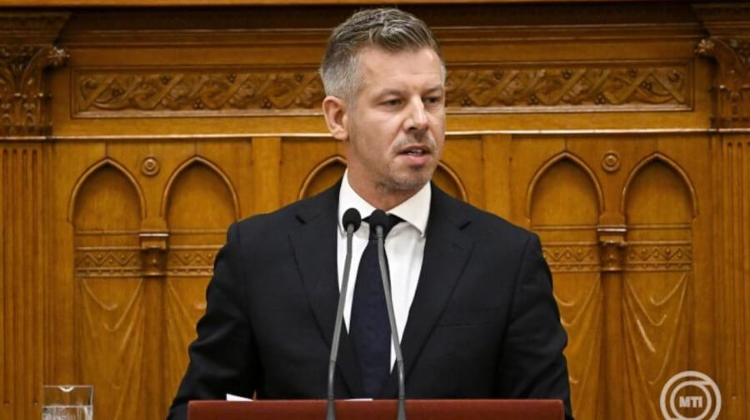
MTI Stock Photo
Source: MTI – Hungary’s national news agency since 1881.
*********************************************************************************************
You're very welcome to comment, discuss and enjoy more stories via our Facebook page:
Facebook.com/XpatLoopNews + via XpatLoop’s groups: Budapest Expats / Expats Hungary
You can subscribe to our newsletter here: XpatLoop.com/Newsletters




LATEST NEWS IN current affairs