


















Sziget Struggles for International Visitors, Founder Explains Why - Loss Expected
- 17 Aug 2026 11:15 AM
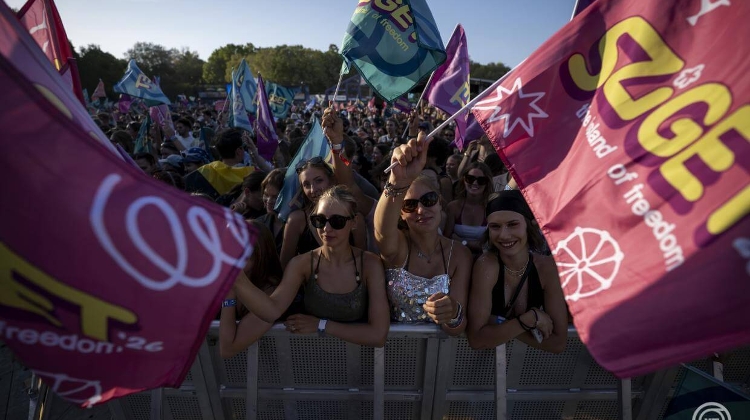
Sziget Festival attracted around 350,000–360,000 visitors this year, well below its target of 400,000 and down from the 416,000 who attended last year's six-day event. Founder Károly Gerendai says the festival now needs to “move forward to break free” from a model that has become increasingly difficult to sustain.
The most popular performances this year included Twenty One Pilots and SOMBR, which attracted the largest audiences at the main stage.
The festival also saw a further increase in Hungarian visitors, who accounted for 53% of total attendance, while its international audience continued to decline.
Gerendai said international attendance declined across Sziget’s main overseas markets, including the Netherlands, UK, Germany, France and Italy.
Visitor numbers from Israel, Ukraine and Russia fell drastically amid the wars, while rising travel costs contributed to a significant decline in visitors from more distant countries.
Although international attendance fell overall, Sziget did see an increase in visitors from neighbouring countries, he reported.
“Based on feedback from the audience and the media, the direction we have outlined is good, but many circumstances were not in our favour, so the numbers did not turn out as we would have liked,” Gerendai said on Saturday, the final day of the festival.
“Our main goal with this year's festival was to show where we want to go in the future. The reactions show that this test was a success, almost everyone received our efforts favourably. I think we put on a really good Sziget, which can lay the foundations for an upturn next year,” he said.
The 2026 festival was the first under the new ownership structure after the previous foreign owners decided to withdraw. Gerendai said the change came at an extremely difficult time.
“Last autumn, we suddenly had to take over the festival from the departing foreign owners, and then political disputes almost brought Sziget to an end. In the spring, we were optimistic, but we will fall short of the hoped-for numbers,” he said.
The previous owner, London-based Superstruct Entertainment, recorded a loss of HUF 2.8 billion (€7.7 million) last year.
This year was deliberately treated as a “break-even” or “investment” year, with the organisers expecting a loss of around HUF 1.5 billion while targeting 400,000 visitors. That attendance target was not reached.
Gerendai said this was a strategic decision: rather than attempting to eliminate the expected loss by cutting costs, the new management chose to invest in development and improvements that could create a stronger foundation for the festival's future.
He identified three main reasons why attendance and the financial result fell short of expectations.
“The organisation and ticket sales started with a four-month delay, whereas previously we had sold a third of our tickets during this early period. The strengthening of the forint made the festival more expensive for foreigners, and the third factor was that among Hungarian ticket buyers, the extreme heatwave, drought, and questions about the power supply created a kind of disaster mentality, which dampened the mood for festival-going,” he explained.
The ownership structure itself has also changed. Major Sziget subcontractors have become minority investors, bringing companies involved in security, cleaning, containers, staging, catering, festival infrastructure, lighting and sound technology into the ownership structure.
“This allows us to have a favourable impact on prices, and also brings in additional expertise, with which we can build a much more professional foundation for construction and development,” Gerendai said.
The involvement of Budapest Park also helped give Hungarian performers a more prominent role, including the return of a dedicated Hungarian main stage.
“Bringing back the Hungarian main stage was a really good decision; the audience liked it. There were time slots when the Hungarian bands playing at the same time as the main stage headliners attracted fewer spectators. It is not certain that it was a good decision to have the Twenty One Pilots and Tankcsapda concerts simultaneously, as they are both in the rock category, but there were also counter-examples,” Gerendai said.
He nevertheless described this year's main stage programme as successful, with Twenty One Pilots and SOMBR attracting the largest audiences.
The more fundamental issue, however, is Sziget's future business model.
“Unfortunately, the model favoured by the previous owners, based on selling tickets with a strong headline line-up, is working less and less, because many major European festivals can offer strong line-ups. Sziget's future cannot be based on this alone; at an international level, we need other factors that can make the festival uniquely attractive,” Gerendai said.
He believes those factors already exist. Sziget offers a broader cultural experience than many competing festivals, combining music with a multidisciplinary programme, a holiday atmosphere and a distinctive community experience. Its value for money and location in Budapest are also important advantages.
The city itself could become an even more important part of Sziget's international appeal, particularly as the festival seeks to persuade visitors to travel from abroad rather than choose an event closer to home.
“We will be successful again when we can strengthen our international position, and to do this, we need to rebuild our former network of representatives in 26 countries. It is important that we were able to signal to the Hungarian audience this year that they are just as important to us,” Gerendai said.
The festival's international recovery will therefore be a major priority, while the organisers also want to maintain the stronger connection with Hungarian audiences established this year.
Two significant practical issues remain to be resolved.
The long-awaited renovation of the K Bridge, the main access route to Hajógyári (Óbudai) Island, is expected to begin in the autumn. Gerendai said the work will take place over two years in two phases, with reinforcement of the bridge structure expected to be completed by next summer.
There is also an agreement with Budapest Mayor Gergely Karácsony concerning two drilled wells on the island.
“We have agreed with the mayor that two drilled wells will be created on the island, and one of these can be used to create a continuously sprinkled, watered area in one of Budapest’s largest public parks, which will also have a positive impact on the conditions of the festival,” Gerendai said.
The 2026 edition was ultimately a year of transition for Sziget, with the new management prioritising long-term changes over maximising profits. However, the festival still fell well short of its hoped-for 400,000 visitors, making this year's result weaker than expected.
The challenge for Sziget now is to turn that new direction into a sustainable model. With international attendance falling, the festival will need to rebuild its overseas audience while giving visitors a compelling reason to choose Budapest over the growing number of major European festivals competing for the same crowd.
MTI Stock Photo
*********************************************************************************************
You're very welcome to comment, discuss and enjoy more stories via our Facebook page:
Facebook.com/XpatLoopNews + via XpatLoop’s groups: Budapest Expats / Expats Hungary
You can subscribe to our newsletter here: XpatLoop.com/Newsletters


LATEST NEWS IN entertainment