











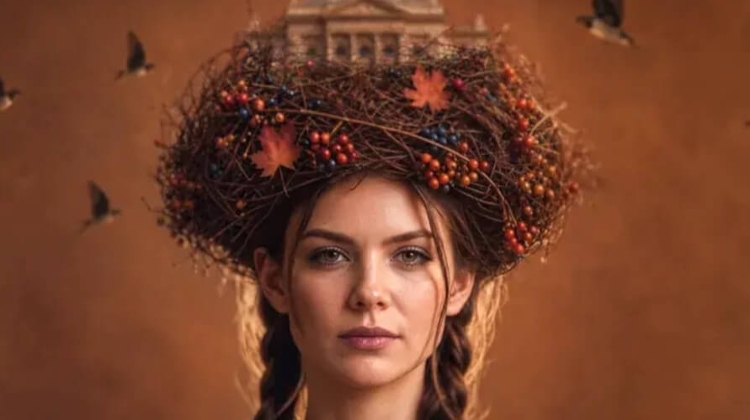




Surprising Expats: Katri-Ann Malina, Permaculture Gardener & Modern-Day ‘Witch’
- 4 Sep 2025 1:21 PM
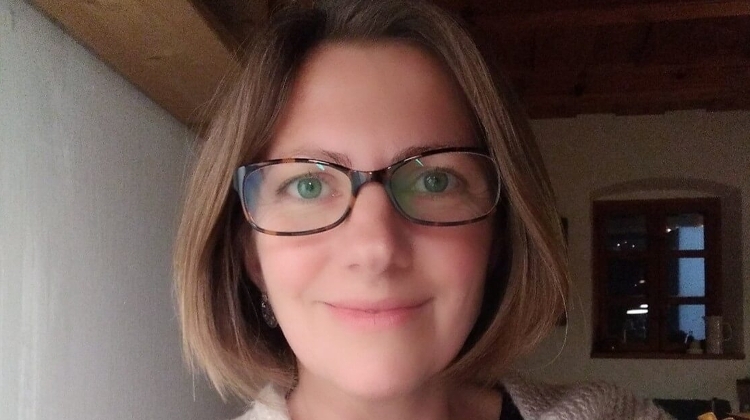
This is part of a series of in-depth interviews with some of the most surprising members of the expat community in Hungary, written by Marion Merrick.
If you would like to be interviewed as a Surprising Expat, please write with a few details of what you do, to: Marion by clicking here.
A stony unmade track leads steeply up from the road in Győrújbarát to the home of Kat Malina. The driveway to the house is steeper still, and I take her suggestion to leave the car and walk the last yards.
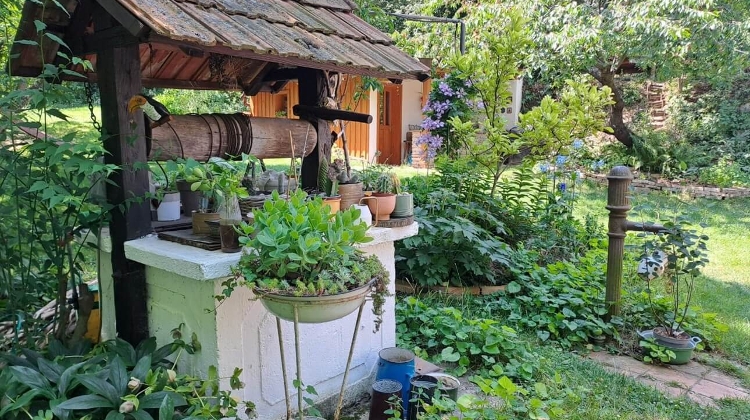
The steps from the wooden gate lead up into the main garden – it would hardly be an exaggeration to say a garden of paradise. Huge walnut trees shade the green areas, while both readily-identifiable and completely unknown plants fill the beds: blackberries, wild strawberries and blackcurrants, gooseberries and redcurrants, a herb garden with parsley, basil, chervil, tarragon, rosemary, thyme and mint, nasturtiums, and a vegetable bed with beets, leeks and carrots, - and this is just what grows close to the reed-roofed, wattle-and-daub house that was built in 1842.
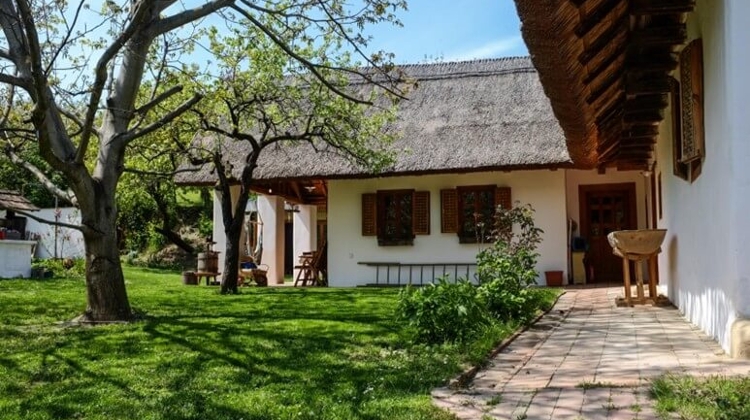
Estonian-born Kat and her family have been living here for the last five years. “I grew up in Estonia and my grandparents had a house with a large plot and a garden, what you'd call a homestead these days. But I myself never lived on the land before moving here – I always lived in cities. I went to Amsterdam to university (economics and finance), and then I went on an Erasmus to New York, to NYU, and I later got an investment banking job in London.
“I did banking for seven years. It was fun, but not sustainable as a human being, it's one of the things that I think… you're young, and you jump on this wave, you enjoy it and it has certain prestige and you think, this is great! Maybe I never really intended to stay there anyway, I do remember that even when I just started working at the bank, I looked at all these people, and they're super smart and very driven and I had never encountered people of that calibre in such concentration, before. And I was thinking, my God, if all these people, 30,000 employees of the firm (back then), were so driven about something real in the world, and put in 15-20 hours a day of actually doing it, you could really do amazing things!”
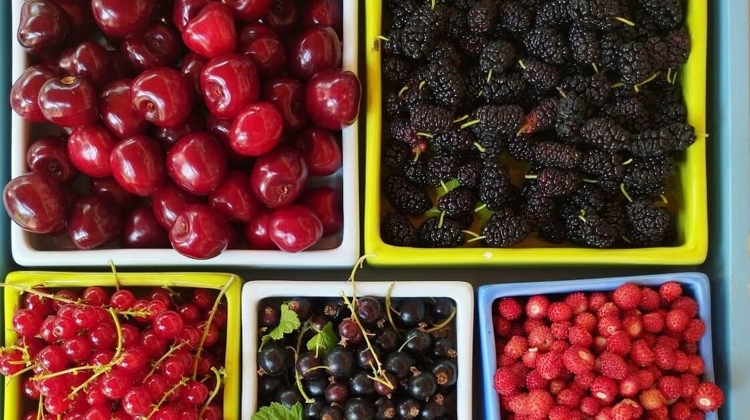
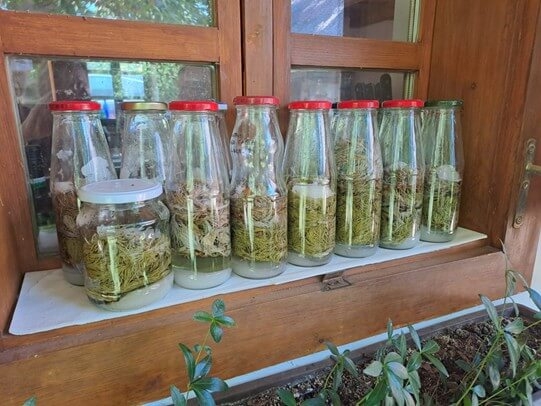
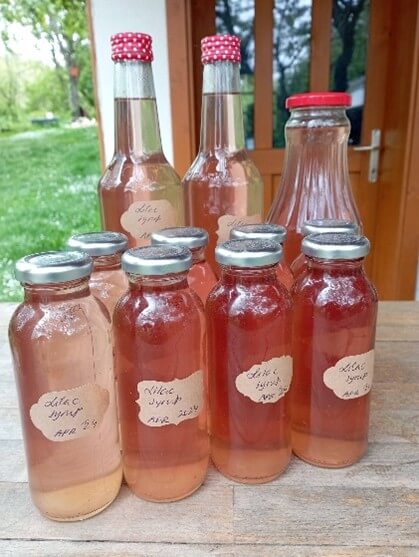
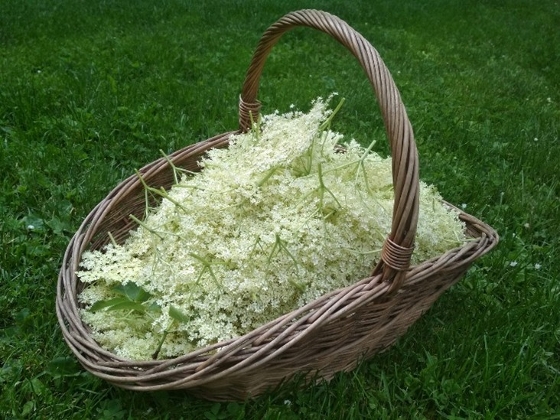
We sit down on the terrace, and Kat brings a selection of fruit she has picked that morning and some cordials she’s made: blackcurrant, lilac, acacia, elderflower, and something made from the tips of spruce trees. Having opted for the latter novelty, she pours some, undiluted, onto a spoon. “Can you taste the forest in this?” she asks. It is unlike anything else I’ve ever tasted, and is made by steeping the new spring growths of spruce tree branches in sugar, over a period of around eight months.
Even after leaving banking, Kat stayed in London, with her boyfriend (and now her husband), who was doing his MBA at London Business School. Their first daughter was born while they were still living in Clapham. “We really liked it there; but we watched friends as they committed to paying crazy mortgages, just to educate their kids in good schools, which for us meant that you can never leave the corporate world. But I didn't want to go back to banking, and Gergő didn't want to work while his children were taken care of by nannies. And that was a scary reality for us to face, and we didn't see how we were going to fit into all this…On the other hand, I never wanted to go back to Estonia because of the climate, the long winter darkness, and a very short summer – not guaranteed – it's too cold for me!”
So it was that Kat and (Hungarian) Gergő opted for Hungary. Laughingly, Kat tells me that she had already decided it was a country she could live in when, as a child, she was on a flight with her parents that had a stop-off in Budapest. “Coming as a child from the Soviet Union, I saw the food on the Malév airline, and it was good! And I said to my parents, I think we can stay in Hungary!”
The family of three – and later with a second daughter - began to settle in Budapest. Like many Hungarians, Gergő’s faimily had a house near Balaton where Kat and her family spent time. But a paradox of a holiday home soon became all too apparent to Kat: “You pack for longer than you actually manage to go away for! And while sitting in these traffic jams out of Budapest on Friday afternoons, we kind of looked at this, at the whole thing, including at ourselves in it. And we thought, it's very interesting that people, whenever they get free time, they want to run away from where they live. I mean, why do we live in a place that we try to leave whenever we get the chance?”
It wasn’t long before they began to explore the idea of leaving the city permanently – first with the idea of commuting to Budapest for work and school, but finally realising that a total change in life-style was what they wanted: uprooting entirely to the country. The children’s education was an overriding factor in picking a location, as well as the relative proximity to an international airport, since Kat’s family, as well as many old friends, fly in to visit from abroad. “There are beautiful places, with very affordable real estate, in many remote corners of Hungary. But not many of them have a combination of good elementary schools and high schools, to which the kids can commute with ease, on their own. Győrújbarát, it turned out, ticked all the boxes.
“When we told Gergő’s family and friends we're going to move to the countryside, everybody said, ‘Oh my God, they're crazy. They are crazy!’”
Finally, after seeing countless houses around the country, Kat, Gergő and the girls moved to their present home in Győrújbarát in 2020.
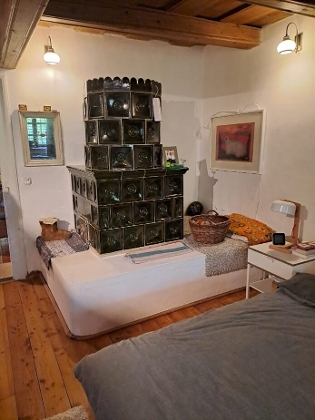
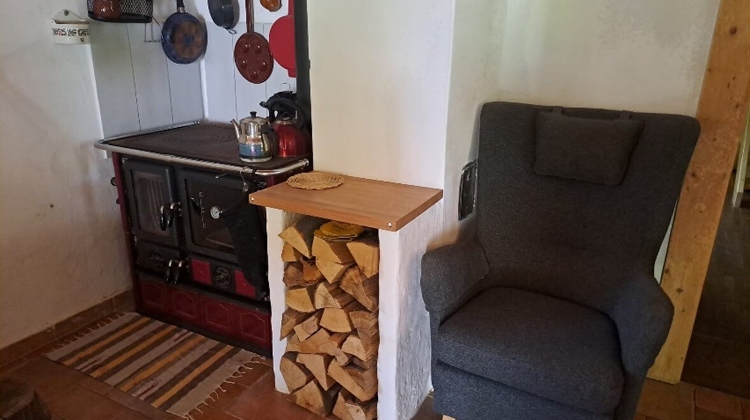
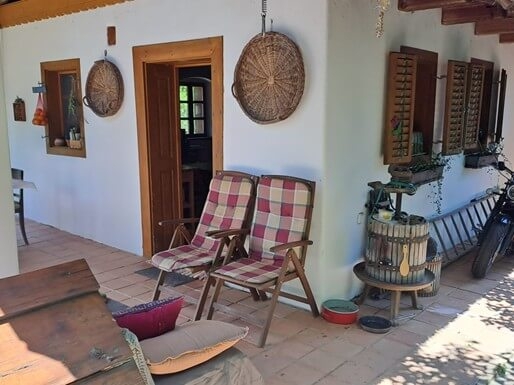
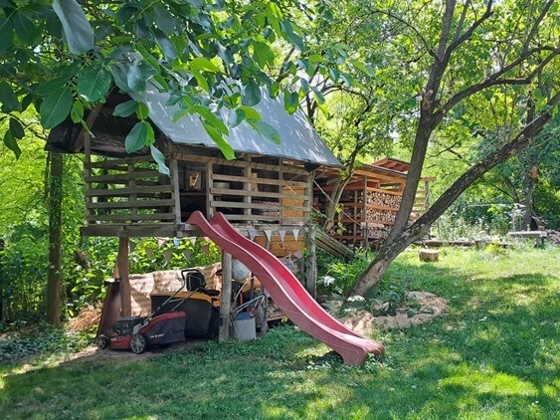
Alongside many improvement projects they planned in their new home, was the conversion of the hay loft under the roof into an area for the children. They decided to live modestly on savings and spend two years completing as much of the work as possible.
“It was also when the war with Ukraine started. I speak Russian, and so we took in some temporary refugees who were living in this little guest house we have on our land. Meanwhile, I started developing this very big plot into kind of a permaculture garden, with a focus on a wildlife garden. What appealed to me in permaculture is that you don’t fight against nature (as the more conventional gardening oftentimes does), but you work with it. You grow what would want to grow here naturally (so, as much as I love blueberries, I am not going to cultivate them against their will here), and you help to direct the garden and establish it, but with a view that once established, it will need very little human intervention to thrive. And along the way, I started to learn a lot about medicinal herbs and foraging.
“There are all these interesting principles in permaculture and my favourite one is: the problem is also the solution. For example, if you have moles, instead of trying to get rid of them, you see the molehole as a perfect place to plant something, because the soil has already been dug and softened (courtesy of the mole!). Hence, a “problematic” mole becomes a blessing. Or take the nettles: they have so many uses! Nettles can be used in tea as a blood cleanser, detoxifier and an energising agent. It’s also a food. It is a very good (and smelly!) garden fertiliser, and on top of that, ladybirds and butterflies like to lay their eggs underneath the leaves of the nettle. So, if you have a patch with nettles in the sun, that is a perfect breeding place for butterflies which pollinate your plants, and ladybirds, which eat aphids. So how can you possibly look at nettles as a problem, after all that? I started applying this principle in real life too, not just in the garden: You look at what is basically a problem and you decide, OK, it's a problem, but it's also a solution to something.”
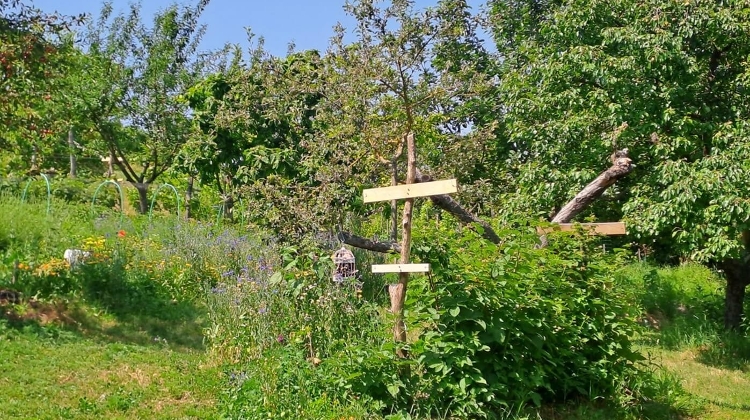
We walk up to the top garden which is a veritable market garden of fruit and vegetables: seven varieties of cherry trees, apples, pears, peach, more walnut, plums, asparagus beds, tomatoes, potatoes, courgettes, strawberries, onions, garlic, artichokes (still tiny, in their first year!). There’s a pond complete with water snails and frogs that have miraculously found it in a village that has no natural water sources.
Further up the hillside is an area left wild on purpose, where robins and blackbirds nest, and the woods from whence deer, foxes, hares and badgers emerge, some of them coming right down to the garden near the house. And all the while, there is the distant sound of wild bees and bumble bees humming, as vibrantly-coloured bee-eaters glide high above us, in the cloudless sky.
“There is so much wildlife here, and because we live on the edge of woodland and large forests, there are simple ways of attracting even more wildlife to this garden. If you put up bird feeders and nesting boxes in the winter, nuthatches, finches, tits and woodpeckers will move into your front garden and help with the pests later in the year. Create a patch of flowers, and you get countless types of butterflies to pollinate your garden. Create a pond and frogs move in, and dragonflies appear. Leave a nettle patch, and the ladybirds will flood the garden just in time to eat other pests. Create a rock garden, and the beautiful lizards will bask in the sun. Drill some holes into dead tree trunks and you will have more carpenter bees than you can dream of. The possibilities are endless, and so are wildlife gardening podcasts, unfortunately. I started listening to podcasts and suddenly I’m learning everything about bumble bees or damsel flies! [Kat intends keeping bees in the near future.] “Each episode takes you down some rabbit hole and before you know it, you are creating another habitat corner in your garden to attract more wildlife.”
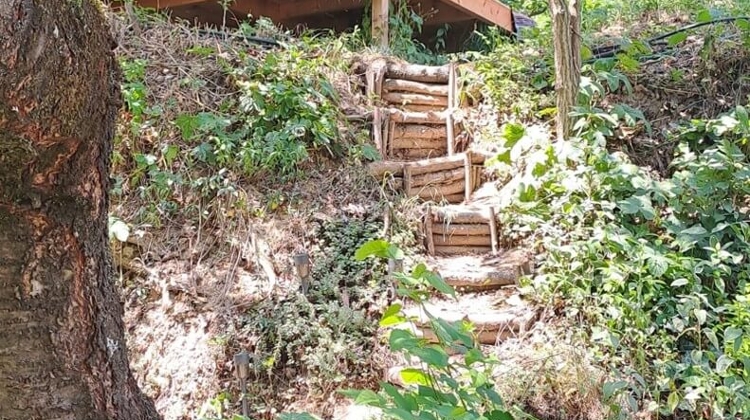
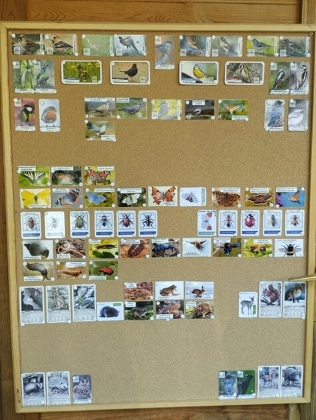
The family have a noticeboard (never quite updated as every day they discover another creature they need to document!) on which they collect pictures of all the fauna that surrounds them.
As regards the principle of “a problem is a solution,” soon after their arrival in the village, Kat discovered that her fellow Győrújbarát dwellers were paying for plastic bags in the autumn in which to put their dead leaves to be collected by the municipality.
“And it bugged me,” she says. “The mountains of single use plastic, and the absurdity of hauling away leaves in trucks. I posted on the village Facebook page saying that I am happy to receive fallen leaves in large quantities. Last autumn was already the third year that lots of households delivered leaves to me right to our garden, some bringing 40-50 giant bags (which get used by us or returned to the owners to be reused). So now their problem (too many leaves) has become my solution (not enough leaves!). Why do I need more leaves than what I get from more than 60 fruit trees we have? Because that's how you make garden beds in permaculture. You basically put down cardboard and you pile compost and leaves and everything organic on top, and the cardboard stops the weeds from growing through, and all of it decomposes and creates beautiful, fluffy soil that holds moisture far better than the compacted land we live on (think forest - this is basically mimicking how the soil in the forest is created, minus the cardboard). And then you can plant whatever you want into it.” Evidence of the huge quantities of leaves donated is apparent wherever one looks in the large garden.
Kat is keen to share her knowledge, but even more, her enthusiasm for all she has learnt so far, and still plans on learning. To this end, she has begun taking small groups on walks in the area, to forage and to learn what can be made from the abundant plant life, both as food, and to make herbal remedies. “It's something that you can use for self-care and for preventative care. It’s a skill that once you learn it, you use it. Knowing even just a few medicinal plants , you can find them and use them wherever you are. If you know that you have hayfever every spring, then you know there's certain herbs that you can collect and dry and start drinking this tea in good time.”
Initially, not everyone understood what Kat was trying to do. Her elderly neighbour, who has lived his whole life in the same house across the street, and knows the place and the plantlife here like the back of his hand, regarded Kat as a modern-day witch when she tried serving him her daily nettle tea. Yet with her friendly personality and enthusiasm, she has won him round, and it is from his trees she gathers her spruce tips to make cordial, and he has helped her with materials to build bee habitats and owl nests.
“My friends say, why don't you do a documentary about how you garden? Or start a YouTube channel about herbalism? But I just want to garden, and be in nature. I'm very happy to have collaborators, I know a lot of people have very good ideas, and would meybe see something here I have never thought of. I'm very happy to provide the space, you know, for guided meet ups, if some HR person wants to bring their team for bonding, I can come up with a programme…But to create online content to convince people that this is a great thing to do? No, that’s not for me. Of course, if somebody is interested in doing social media for me, I could work on that, but the real magic is in being here, doing this. Not on the screen.”
Meanwhile, the family enjoys its peaceful existence within the strong local community. The village is mostly Hungarian, with a few foreigners dotted here and there. In a world that is home to a mere 1.3 million Estonians, Kat was excited to find there was another one living in Győr, married to a person from the village. “She came on one of my walks, and she said, ‘You know, I’ve heard from my parents-in-law’s neighbour that there's a another Estonian somewhere here!’
“My husband always laughs,” says Kat. “He says there are only actually two Estonians in the whole world! And I said, See! There's another Estonian, a THIRD one in just this one village! But then my friend called me back in the evening and said: it’s you!”
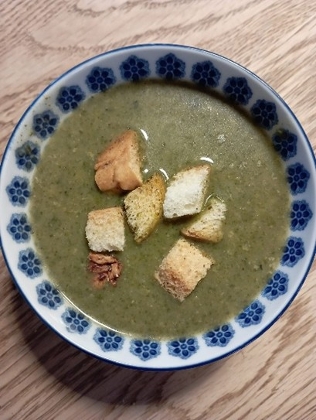
If you are interested in permaculture, taking part in foraging, cooking with wild plants or making herbal remedies, please contact Kat Malina here.
Marion Merrick is author of Now You See It, Now You Don’t and House of Cards and the website Budapest Retro.
If you would like to be interviewed as a Surprising Expat, please write with a few details of what you do, to: Marion by clicking here.