



















Parking Puzzle in Budapest: Growing Pressure, Missing Strategy
- 25 Mar 2026 12:07 PM
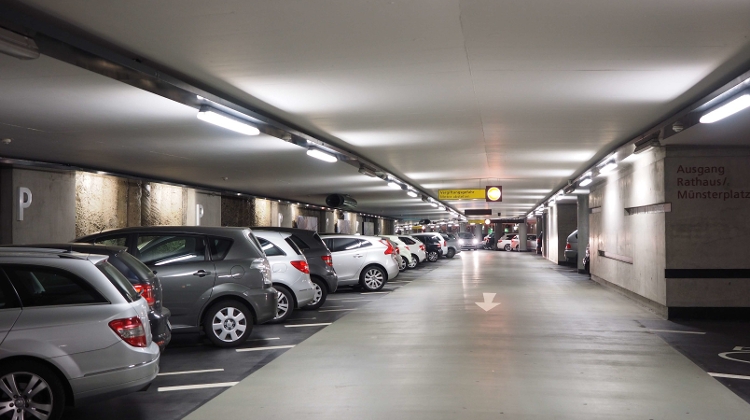
In recent years, the Budapest Municipality has prioritised the development of long-term plans and strategies in several areas of transport. However, urban road traffic has largely been left out. The road network plan amounts to little more than a single diagram, while a comprehensive parking strategy has yet to be produced, despite repeated requests and official responses acknowledging the issue.
This lack of direction is difficult to justify. More than 710,000 passenger cars are registered in the capital, and international comparisons suggest that this number is likely to rise further.
Budapest’s road network has not undergone any significant changes since the implementation of plans approved in 1938, which were carried out over roughly four decades.
In other words, the city is still trying to meet today’s mobility needs using a road system, including parking infrastructure, that was largely designed in the previous century. At the same time, there are efforts aimed at scaling it back.
A widely accepted but flawed assumption has taken hold: that increasing road capacity inevitably leads to more traffic, and that pushing traffic out of certain areas does not result in congestion elsewhere.
Unfortunately, the city lacks a clearly debated and adopted strategy for managing car traffic, parking, and vehicle storage. The primary tools in use are restrictions and displacement.
Measures are often introduced under the banner of environmental goals, strongly influenced by green and cycling advocacy groups, yet without properly assessing their expected or actual impact.
In many cases, the outcome runs counter to stated climate objectives, as it leads to longer driving distances and simply shifts traffic into other areas, often densely populated neighbourhoods.
As the issue of on-street parking has generally been sidelined, no comprehensive assessment has been carried out. Drawing on available data and practical experience, the Magyar Autóklub has summarised its position on public parking below.
Current Situation and Key Trends
Budapest’s parking system has seen several major changes in recent years. In July 2023, pricing for P+R car parks was revised, and in November the zoned parking system was expanded and tightened.
The most significant changes came in the second half of 2022, when paid parking zones and time periods were substantially extended and fees increased.
Altogether, higher tariffs, an approximately 80% expansion of paid zones, and the introduction of evening charges in many areas have resulted in an estimated 30% increase in costs for users.
Notably, the Hungarian Automobile Club was not consulted on any of these changes.
During the same period, the number of P+R parking spaces dropped from 4,000 to 3,800, according to Budapesti Közlekedési Központ. At the same time, parking spaces have been disappearing across the city, although no comprehensive data has been provided despite repeated requests.
A fundamental issue is the lack of coordination between the capital and district authorities. Districts can independently introduce parking-related measures, often reshaping local traffic conditions and, in many cases, making mobility significantly more difficult.
A review of the situation highlights several key problems:
Park-and-ride facilities are generally operating at or near full capacity, with demand far exceeding supply. At the same time, some P+R sites remain underused due to specific factors such as poor security or the availability of free parking nearby.
This suggests that many commuters are highly sensitive to costs and will avoid paying even modest monthly fees if alternatives exist, even if that means walking further.
In areas around major transport hubs, valuable public land is often underused. Large paved spaces, such as the former market area at Határ út, remain partially vacant. In other locations, land is occupied by functions that do not require central placement, such as car dealerships or sections of the former horse racing track.
In addition, airspace above single-level facilities, which could accommodate multi-storey car parks, remains unused in several cases.
High parking fees in expanded zones have also resulted in many previously well-used parking areas becoming underutilised. This is particularly evident in inner-city locations that are still accessible on foot from central areas, including riverfront and university districts.
Another concerning trend is the growing number of parking spaces reserved exclusively for residents, designated by district authorities. If this continues, it could have serious consequences for the city’s overall functionality and may even conflict with existing regulations.
The introduction of “school zones” has added further complexity. These areas, designed to calm traffic and improve safety around schools, lack consistent rules and signage and remove additional parking spaces from general use.
While the safety goals are supported, there is a clear need for standardisation and for allowing limited-time parking within these zones.
There is also increasing opposition to expanding P+R capacity, often based on simplified or ideological arguments. This stands in contrast to the fact that Budapest’s P+R provision falls significantly short of levels seen in comparable European cities.
Development of suburban P+R facilities has stalled, while within the city both the capital and districts have eliminated numerous parking spaces that could support a shift from car use to public transport.
Vienna is often cited as a benchmark. Publicly available data shows that its P+R capacity is roughly ten times greater than that of Budapest. The gap is similarly stark when comparing parking garages and underground facilities.
This raises an important question: does the city have a clear plan to address the growing shortage of parking spaces?
The Hungarian Automobile Club opposes excessive financial burdens on drivers but supports pricing that reflects a balanced relationship between supply and demand. At present, however, this principle is not being applied.
High tariffs and organisational shortcomings have left significant parking capacity unused, while overall supply, particularly in terms of P+R and parking garages, remains well below that of more developed European cities.
The Hungarian Automobile Club’s Position
A comprehensive strategy for public parking in Budapest must be developed without delay, including a thorough assessment of current conditions and the likely impacts of different policy options.
This strategy should be subject to genuine professional and public debate before being finalised.
Key principles should include:
* A unified parking system across the capital.
* Effective coordination between the city and district authorities, avoiding fragmented solutions driven solely by local interests.
* A transparent, data-driven approach based on supply and demand, including open discussion of future scenarios and pricing policies.
* Clear targets for expanding P+R and parking garage capacity, taking into account projected growth of 200,000 to 300,000 additional vehicles within the next decade, alongside international comparisons.
As developing such a strategy will take time, several immediate steps could help improve the situation. All of these measures would support more sustainable mobility and contribute to climate goals by encouraging a shift from private cars to public transport.
Reducing car use should be achieved by creating viable alternatives, not simply through restrictions.
There are significant underused or neglected areas near existing and potential P+R locations, particularly around KÖKI, Határ út, Népliget, and the Mexikói út terminus. These could be brought into use relatively quickly and at low cost to increase capacity.
Parking facilities at sports venues near metro stations are often empty outside event times. The city should work with owners to make these available for P+R use during weekdays, as is common in many major European cities.
Improving security, installing cameras, fencing, and creating a more attractive environment would make P+R facilities more appealing, especially to users willing to pay for higher-quality services.
Lower-quality P+R sites should be made free of charge until improvements are completed.
Public transport day tickets should include discounted access to P+R parking, and combined BKV and P+R passes should be introduced for cost-sensitive commuters.
Parking usage should be continuously monitored, with pricing adjusted accordingly to maximise occupancy and prevent spillover into residential streets outside paid zones.
Finally, real-time information on parking availability should be made accessible online and integrated into navigation systems. Better information would reduce the time and distance spent searching for parking, cutting both congestion and emissions.
Source of original article: autoklub.hu
Photo: Pixabay.com
*********************************************************************************************
You're very welcome to comment, discuss and enjoy more stories via our Facebook page:
Facebook.com/XpatLoopNews + via XpatLoop’s groups: Budapest Expats / Expats Hungary
You can subscribe to our newsletter here: XpatLoop.com/Newsletters
Showcase Your Business to Expats in the Loop:
As an independent portal we’re grateful to all commercial supporters who help keep you in the loop with fresh insights and inspiration. Do you want your business to reach tens of thousands of potential high-value expat customers? If so please contact us here.



LATEST NEWS IN getting around