















'Politics is Service': Orbán Shares Incredible Life Lessons Ahead of Election
- 7 Apr 2026 9:21 AM
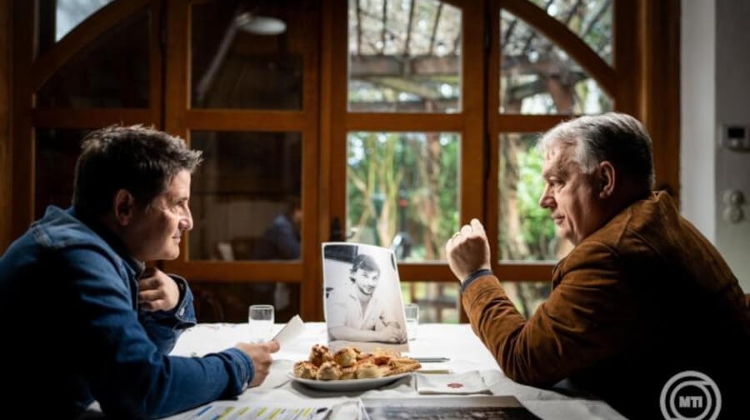
Politics should be thought of solely as a service, not as a career, Prime Minister Viktor Orban said in an interview uploaded to a YouTube channel on Thursday evening.
Orban said the key to ruling Fidesz's success was that it was a sovereign community which had traversed every stage since its founding, from a political organisation, through opposition work, to coalition government, and finally to governing with a two-thirds majority.
In the interview with Peter Hajdu on Frizbi TV's YouTube channel, he was asked about his family origins. Orban said they had not been involved in politics during the Kadar era.
On his mother's side, there had been "a sense of grievance" because the communists had taken land from the family, and his grandfather had been sidelined for having served under the Horthy regime.
On his father's side, however, "we were very poor; my grandfather had eight or nine siblings. Everyone made a living doing manual labour, and there were never any intellectuals in the family."
Orban said his parents had not viewed his political involvement through a political lens. As parents, they had been worried about him.
"It was always my opponents who made me famous," he said, recalling that in 1988, after Fidesz was founded, it was reported in the government-controlled newspaper Magyar Hirlap, and announced on the news, that five university students and young intellectuals, including himself, had received warnings from the police for anti-state activities.
"Until then, no one outside Felcsut knew me; from that point on, everyone knew me," he said.
Speaking about a speech he gave at martyred Prime Minister Imre Nagy's reburial, he said from the very start Fidesz had been a democratic community and voted on who would speak and discussed what needed to be said.
He added that Fidesz founding member Gabor Fodor, who generally represented the softer, more liberal wing within Fidesz, specifically argued that the message "Russians go home" had to be delivered or else the entire speech would be meaningless.
"Regardless of style, everyone felt that the moment had come to say this, and no one else was going to say it --only us," he said.
Orban said his relationship with the late Prime Minister Jozsef Antall had been close. He added that Antall had advised him on his deathbed to take great care of his party, because "everything will depend on that".
"And it really did depend on that... And even today everything depends on the fact that Fidesz, as a party, is a sovereign community."
In response to a question about the secret of Fidesz's long-term success, he said "we didn't skip a single step, not because we didn't want to, but because God willed it."
"We started out as a political organisation of 38 university students and young intellectuals. Later, we became a small opposition party facing a right-wing government, and then a left-wing government.
By the time we came to power, I had already been a member of parliament for eight years, and for four years I had chaired the parliament's committee on European integration," Orban said, adding that it was true that "I was only 35, but I had mastered all the basics of the profession."
After eight years spent in opposition, Fidesz won a two-thirds majority in 2010, he noted, and the time was ripe to begin drafting a constitution, building a completely new economic system, and creating a completely different social order.
"We dared take the plunge because we had experience and years of work behind us," he added.
Losing the 2006 election was the key to the two-thirds majority won in 2010, he said, adding: "Politics is a service, and it's a problem if someone views it as a career." The country could be served from the opposition benches, too, which is why he did not view the 2002-2010 period as "a drama" but as part of his work.
Orban said that in 2010, he had benefited greatly from the mindset his parents thought and worked with. They lived according to the natural order of life; at home, he learned that one should not be afraid of difficulties, but that solutions could be found.
Orban said that establishing a work-based economy required making very difficult decisions and reaching very serious agreements with many stakeholders.
"We had to tell people that those who don't work will, unfortunately, lose their livelihood," and then "we had to gently push everyone back into the labour market," he said.
Orban called the introduction of public works scheme the "toughest decision" at a time when hundreds of thousands of people were living on benefits. The government launched various schemes that steered people towards work, and it was also important to ensure there were job opportunities that made working worthwhile. "I had to put this together," he said.
Orban said that since 2010, his government had won every election by promising people job opportunities.
"So we didn't promise money, we promised jobs, and we promised that people could make a living from their work and that everyone could take a step forward," he said. This had functioned "perfectly" from 2010 to 2020, when the "setbacks" and more difficult situations arose with the coronavirus pandemic, and then with the war in 2022.
He recalled that while there had been political disputes with Brussels since 2010 over the budget deficit, the new constitution, and the introduction of a bank tax and a tax on multinationals, agreements had always been reached.
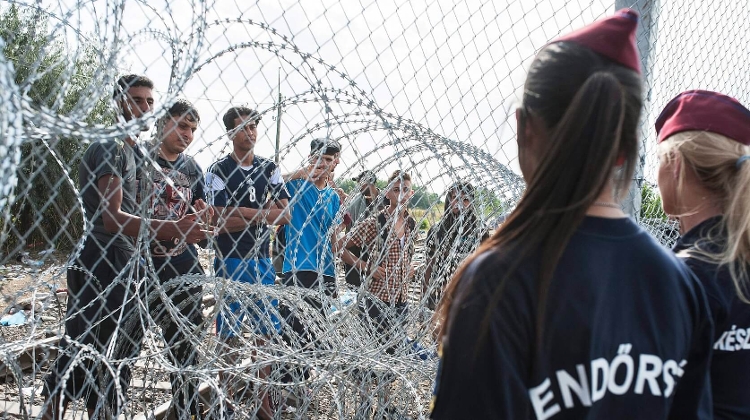
The first breakdown occurred over migration because "there is no compromise on migration: either it happens or it doesn’t," he said.
"They let them in, but I didn't, or rather, we didn't," he said, adding that this, along with the construction of the border fence, did not sit well with several European politicians, after which the attacks came one after another.
Orban said that the same thing was happening today -- "in modern garb" -- as what had taken place in the 19th century, when there was a dispute between Vienna and the Hungarian nobility.
He said that according to Brussels, it was good to shift as much power as possible towards the centre so it could tell member states what to do.
"Brussels wants to decide things for us that can only be decided poorly from there. These things can be decided well here, where there is national sovereignty and matters are still transparent."
He said only once the Patriots group in Brussels took power would any of this change. This, he reckoned, would be possible in 2029, in the next European Parliament elections.
Speaking about international relations, Orban said he maintained a good relationship with US President Donald Trump, whom he described as a politician "coming from the outside". He added that Trump's policies had offered the US a chance to avoid the decline of the West.
Orban said the good relationship was partly based on shared positions on issues such as migration, family policy, and economic freedom. He said relations with the US bought economic benefits to Hungary, with several major investments coming into the country, as well as collaborations established in the energy and defence industries.
He also spoke of a potential financial "safety net" from the US if necessary, adding that negotiations regarding the details were ongoing.
Orban said ties established with the US were partly based on personal political agreements, the stability of which "is key to maintaining economic cooperation".
Regarding ongoing disputes with the EU, Orban said Hungary's goal was cooperation, but it rejected interference in domestic politics. Regarding EU funds, he said "we must wait for the right moment", adding that the government had already secured significant amounts.
Orban said the government's strategy was to assert Hungarian interests in decision-making situations and thereby secure the disbursement of funds.
Regarding energy policy, he mentioned the importance of relations with Russia, saying that international agreements were often based on personal political relationships. He warned that in the event of a potential change of government, it may become necessary to renegotiate agreements, which could pose a risk in terms of energy supply and the development of utility costs.
Concerning security policy, Orban said Ukraine was actively trying to influence the political life of other countries, including Hungary.
The specific case in which a police officer disclosed details of a secret service operation could be harmful to the country, he added.
In response to a question about the central bank and its previous leadership, Orban said his responsibility for Matolcsy pertained to his tenure as a minister. The central bank, he noted, is legally under the protection and supervision of the European Central Bank and he had no authority over it.
At the same time, his feelings towards Matolcsy were rather negative, he said. The case involving Matolcsy had caused many difficulties for him and for the community. But in ongoing cases, the results of official investigations must be awaited, he added.
Speaking about the upcoming election, Orban said the campaign should focus not on his opponents but on the challenges facing the country.
Every election, he said, was a covenant between the voters and the government, and Hungary will faced challenges in the future that required "broad national unity" to address.
MTI Stock Photo
Source: MTI – Hungary’s national news agency since 1881. While MTI articles are usually factual, some may contain political bias, and readers should be aware that such content does not reflect the position of XpatLoop, which is neutral and independent.
Since the goal of XpatLoop is to keep readers well briefed, right across the spectrum of opinions, MTI items are shared to ensure readers are aware of all narratives within the local media.
XpatLoop believes in empowering readers to form their own views through complete and comprehensive coverage. To facilitate this XpatLoop has a balanced range of news partners, as you can see when you surf around XpatLoop.com
*********************************************************************************************
You're very welcome to comment, discuss and enjoy more stories via our Facebook page:
Facebook.com/XpatLoopNews + via XpatLoop’s groups: Budapest Expats / Expats Hungary
You can subscribe to our newsletter here: XpatLoop.com/Newsletters
Showcase Your Business to Expats in the Loop:
As an independent portal we’re grateful to all commercial supporters who help keep you in the loop with fresh insights and inspiration. Do you want your business to reach tens of thousands of potential high-value expat customers? If so please contact us here.




LATEST NEWS IN current affairs