


















Watch: Who is Péter Magyar? What Does His Tisza Party Stand For? And Can Magyar beat Orbán?
- 28 Nov 2025 12:49 PM

Magyar is the most visible new face on Hungary’s political stage — a former Fidesz insider who turned into a high-profile opposition leader almost overnight. He now accuses the government of nepotism, misusing EU funds, and using state media for propaganda, advocating for policies to combat corruption and restore democratic institutions.
Péter Magyar alleges that Prime Minister Viktor Orbán's government enriches friends and family through questionable means, such as privatizing state assets like lakeside hotels through short tenders. He also criticizes the government for spending more on propaganda than on healthcare and education, arguing this has led to a lack of free media.
His political movement Tisza - formed after he left his position as an ex-diplomat and Fidesz party member - aims to restore the rule of law and the independence of the judiciary. A key policy proposal is to empower the police and public prosecutor's office to operate independently of political influence, a concept he calls "road to the jail".
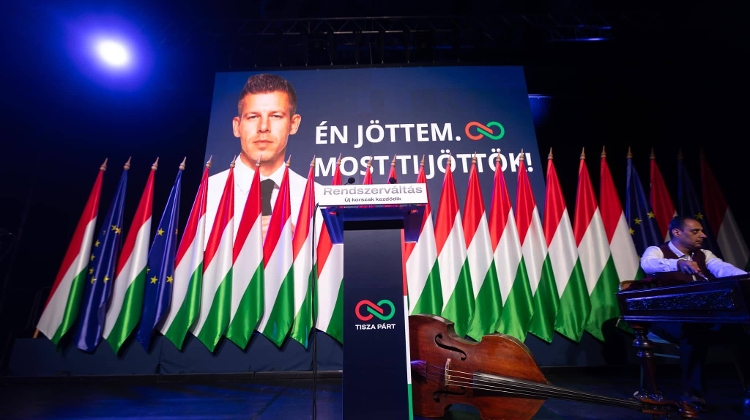
Trained as a lawyer and with a career that included diplomatic and government posts, Magyar served inside the orbit of Viktor Orbán’s ruling camp for years before breaking publicly with the party in 2024. He is now the president of the Respect and Freedom (TISZA, commonly “Tisza”) party and has a seat in the European Parliament.
How Tisza went from small party to centre-right challenger
Tisza began life as a minor conservative grouping but changed rapidly after Magyar allied his grassroots movement with the party ahead of the 2024 European Parliament elections. Under his leadership the party repositioned itself as a broadly centre-right, pragmatic force and joined the European People’s Party (EPP) grouping in Brussels.
That jump — from marginal to a multi-MEP delegation — gave Tisza nationwide visibility and transformed Magyar from a curiosity into a serious political actor.
What does the Tisza party say it stands for?
Tisza’s public pitch blends conservative instincts with a strong anti-establishment message. The party campaigns on restoring institutional checks, fighting corruption and “breaking” what Magyar calls the System of National Cooperation (the informal network of political and economic power that critics say keeps Fidesz dominant).
At the same time Tisza courts voters who want a pro-European, centre-right alternative to both Orbán and the fragmented opposition. In practice this has meant keeping policy positions deliberately broad so the party can attract a wide cross-section of disaffected voters.
For expats, the most immediately relevant signals are Tisza’s pro-European orientation and its stated interest in re-anchoring Hungary in EU institutions — a difference in emphasis compared with Orbán’s more confrontational approach to Brussels.
Magyar and his MPs sit with the EPP in the European Parliament, which matters for EU-level politics and for policy areas that affect foreigners living in Hungary (funding, rule-of-law mechanisms, professional recognition and so on).
How Magyar became an anti-Orbán figurehead
Magyar’s trajectory is unusual: a well-connected former insider who publicly resigned from government-linked roles in 2024 and then mounted a rapid media-centred campaign. He tapped largely into voter dissatisfaction with corruption and the concentration of power, attracting voters from across the opposition spectrum as well as some disillusioned Fidesz supporters.
Large rallies, aggressive social media content and high-profile TV and podcast appearances helped him gain traction fast. Observers describe his rise as part political marketing, part legitimate reaction to a crisis of trust in established parties.
Legal and political headwinds
Magyar’s sudden prominence has brought scrutiny and, at times, pressure. The European Parliament has recently handled requests related to lifting his immunity amid investigations and accusations that critics argue are politically motivated.
Those maneuvers — and the broader climate of legal and administrative pressure used against opponents in Hungary — are part of the environment any challenger faces. International institutions and many EU lawmakers have pushed back against what they see as weaponised prosecutions.
Can Magyar beat Orbán?
Short answer: it’s possible but far from guaranteed. Longer answer: Magyar and Tisza have altered the opposition landscape by consolidating votes that were previously split across several smaller parties and by attracting media attention and urban crowds. That gives them momentum heading into national contests.
But beating Orbán in a national election remains a huge logistical and political hurdle:
-
Electoral mechanics and loyalty networks: Fidesz retains deep institutional advantages at local and regional levels, strong media reach, and networks that mobilise voters efficiently. Those structures are hard to dismantle in a single electoral cycle.
-
Opposition unity and strategy: Past Hungarian elections showed the danger of a divided opposition. Tisza’s rise has alleviated some fragmentation by creating a single, media-savvy alternative — but it has also provoked counterattacks and legal challenges that could complicate a unified campaign.
-
Public mood and policy credibility: Magyar’s appeal so far has been strong on anti-corruption and renewal messaging, but converting enthusiasm into a coherent governing program that convinces rural and older voters will be decisive. Polls fluctuate and enthusiasm on the streets doesn’t always translate into votes on election day.
In short: Tisza has made the race competitive in ways few predicted a year earlier, but a full regime change would require overcoming structural incumbency advantages, surviving legal and political attacks, and building a functioning, nationwide party machine — not just rallies and viral interviews.
What expats should watch out for
If you live in Hungary or follow Hungarian politics from abroad, watch these signals over the coming months:
-
Tisza’s policy roll-outs on economy, healthcare, and housing — these indicate whether the party is moving from protest politics to governing detail.
-
Changes in media access and legal actions affecting opposition leaders, which could reshape campaign space.
-
Local election results and candidate slates: national outcomes will hinge on ground-level organisation.
The Bottom line
Péter Magyar is not just another opposition figure: he is a former insider who has converted that insider knowledge into a fast-growing challenge to Orbán’s dominance. Tisza’s pro-European, centre-right positioning and strong media campaign have raised real questions about Hungary’s political future — but translating momentum into a national victory will require time, unity, and an ability to withstand intense pressure from the incumbent system.
Check out the video below for more info.




LATEST NEWS IN current affairs