












Teachers' Day in Hungary, Creation of Real Child-Centred Education System Revealed
- 8 Jun 2026 3:40 PM
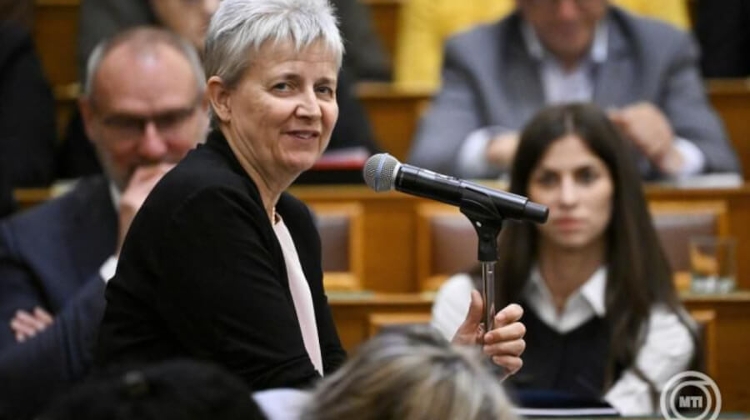
Prime Minister Peter Magyar and Judit Lannert, the minister of education and children's affairs, greeted teachers on Teachers' Day on Sunday.
"I warmly and respectfully greet everyone working for children and future generations," Magyar said on Facebook.
Lannert said in a video also posted on Facebook that teachers should be supported through an evaluation system that provides feedback, and fosters professional development rather than stigmatising and "simply assigning a score to human work".
The system should be based on trust, professionalism, and cooperation, she said.
"On Teachers' Day, for this reason, we not only express gratitude to all professionals engaged in educational work but also hope that they can carry out their work in an environment that values their knowledge, respects their autonomy, and provides genuine professional support," she said.
In the video, the minister also said that Teachers' Day was dedicated to those who educate, teach, develop skills and manage conflicts day in and day out. "The work of educators is a special vocation; it does not merely convey curriculum content but shapes people," she said.
The minister thanked the educators for their work, their dedication and "their commitment to future generations".
Lannert calls for strengthening school autonomy, child-centred public education system
Hungary needs to strengthen school autonomy and create a child-centred, competence-focused education system, Judit Lannert, the minister of education and children's affairs, said in an interview published on Saturday by the Balzac student media YouTube channel.
The minister said higher education reform would be a two-step process and that work has begun on establishing youth participation.
Describing her vision for a 21st-century school, Lannert said the emphasis should be on learning processes, supported by AI, but the focus must remain on "how we think and solve problems, not on listing facts and data as if we were in a quiz show".
She said the real danger of AI was that it could eliminate critical thinking, so students must develop strong reading comprehension and logical reasoning to use AI effectively. "If they don’t, AI will consume them," she said.
Lannert highlighted the importance of critical thinking, questioning, debate, creativity, communication and collaboration in modern education. "Only with these skills can AI be used for its intended purpose," she added.
She also supported restricting social media and mobile phone use at a very young age, noting that many countries have already introduced such measures.
She recommended that AI should only be introduced in education at ages 12-14 or in secondary school, when students can experiment with it. Before that, she advised an offline approach.
The minister said school-leaving exams needed to be reformed so that they assess 21st-century competencies as well.
She said the results of PISA tests showed that Hungarian students studied the most, but achieved only average results. "The solution could be more reasonable lesson organisation, reducing the high number of teaching hours and more flexible handling of subjects," she said.
Lannert called for a much more flexible, child-focused approach to learning, with the education system providing a framework and a "menu" of content guidelines that schools can adapt to their own student bodies.
Concerning higher education, she said public trust foundations had been misused, which had led to "public assets or funds being converted into non-public ones".
Lannert said this would likely be reformed in a two-step process. The first would involve changing the boards of trustees, and the second, "designing a well-functioning financing and operational mechanism for universities, in consultation with rectors, teachers and students."
"The goal is a transparent system where public funds are used effectively and visibly," she said, adding that indicator systems may also need adjustment.
She also said that her ministry has begun working on youth participation, citing domestic and international examples, such as the Irish parliament’s initiatives.
The plan is to bring 12-24-year-olds into parliamentary committees, where they can directly voice their concerns to decision-makers and receive feedback. The groups would rotate every one or two years, she said.
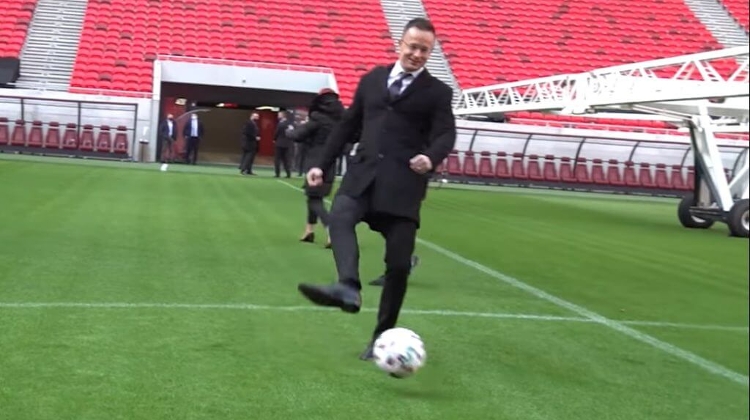
MTI Stock Photo
Source: MTI – Hungary’s national news agency since 1881.
*********************************************************************************************
You're very welcome to comment, discuss and enjoy more stories via our Facebook page:
Facebook.com/XpatLoopNews + via XpatLoop’s groups: Budapest Expats / Expats Hungary
You can subscribe to our newsletter here: XpatLoop.com/Newsletters
Showcase Your Business to Expats in the Loop:
As an independent portal we’re grateful to all commercial supporters who help keep you in the loop with fresh insights and inspiration. Do you want your business to reach tens of thousands of potential high-value expat customers? If so please contact us here.


LATEST NEWS IN community & culture