















National Unity at Heart of Search for Next Hungarian President
- 14 Jul 2026 9:08 AM

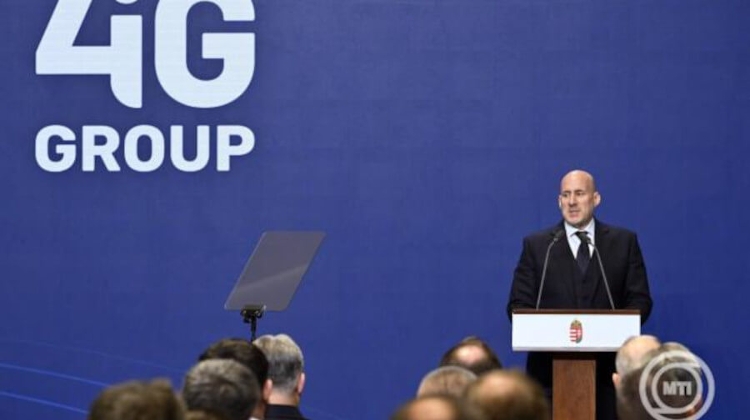
Hungary's government is seeking a consensus candidate for the office of the President of the Republic, who embodies national unity and is acceptable to everyone, Prime Minister Peter Magyar told a press conference in the Parliament building on Monday.
In response to a question, Magyar said the government wanted to find a candidate who "is acceptable to all Hungarians, both in and outside parliament".
Magyar noted that the new president will be elected under existing rules, meaning parliament will choose an interim president for up to five years. He said the ongoing constitutional overhaul will determine future presidential elections, adding that he personally favoured a direct election.
Parlt passes constitutional amendment, removes President Sulyok's mandate
Parliament on Monday adopted the 17th amendment to the Fundamental Law with 139 votes for and 6 against.
Under the amended constitution, President Tamas Sulyok's term will be concluded the day after the new legislation takes effect.
The amendment submitted by the prime minister also limits the maximum mandates of MPs to 12 years, or three terms, introduces a 70-year age limit for Constitutional Court judges and allows for the recall of the presidents of the Kuria, Hungary's supreme court, and the National Judicial Office (OBH) by judges. It also paves the way for the creation of a National Asset Recovery and Protection Office.
The opposition Fidesz and Christian Democrat groups boycotted Monday's plenary session.
According to the amendment's preamble, its goal is to "secure essential institutional conditions for the lawful operation of the state and lay the foundations for restoring constitutional democracy".
It mandates a new constitution, based on popular sovereignty, the separation of powers, the rule of law and the protection of fundamental rights, to be drafted after broad public and expert consultation.
The amendment explicitly enables the removal of President Sulyok, whom Magyar has repeatedly called on to resign since the April 12 election, accusing him of acting as a "puppet" of the previous Orban government.
Sulyok's mandate will end the day after the amendment takes effect, after which parliament will elect a new president for up to five years, or until the new constitution is adopted.
Magyar said in Facebook on Saturday that the president will have five days to sign the constitutional amendment, otherwise impeachment proceedings could begin against him.
The amendment introduces term limits for lawmakers, declaring that anyone who has served 12 years or three terms as an MP will be ineligible for re-election, though current MPs are exempt.
It also reforms the Constitutional Court, reducing judges' terms from 12 to 9 years and setting a 70-year age limit, which will affect Peter Polt, the court's president, and three other judges. Future presidents of the court will be elected by its members for three-year terms.
The amendment restores the Constitutional Court's power to review budgetary and tax-related laws, which was restricted in 2013.
It also reforms the election process for the presidents of the OBH and the Kuria, allowing judges to nominate candidates, from which the president will select one to propose to parliament. Their terms will be reduced from 9 to 6 years, and judges can initiate their recall under conditions set by law.
Under the amendment, a National Asset Recovery and Protection Office will be established to protect public assets and recover those illegally handled or misused.
The office will operate independently, acting as a public prosecutor to enforce the state's punitive claims. Its president and deputies will be elected by a two-thirds parliamentary majority for six-year terms.
The amendment also restores the term "megye" for counties in place of the historical term "varmegye" reintroduced under the Orban government effective Oct 1, but allows the use of "varmegye" until the transition to "megye" can be implemented under "principles of responsible management".
The amendment also disbands the Parliamentary Guard effective Oct 1.
It also removes the "cardinal law" status from several laws, including those on the national coat of arms and flag, state decorations, the National Authority for Data Protection and Freedom of Information, the National Bank of Hungary, the State Audit Office, parliamentary committee investigations and fundamental rules on public employment and pensions. This will allow future governments to amend these laws with a simple majority.
However, following a proposal by the parliament's legislative committee, the land law and the law on the protection of national assets will remain cardinal laws.
The amendment abolishes the requirement for the Fiscal Council's approval for the budget law and removes the definition of public funds from the Fundamental Law, arguing that its explicit definition unnecessarily restricted its interpretation and limited freedom of information.
Magyar: Parliament has carried out the will of voters
The Hungarian parliament has carried out the decision of voters by adopting the 17th amendment to the Fundamental Law, Prime Minister Peter Magyar told a press conference in the parliament building on Monday evening after the final votes.
Magyar noted that parliament had adopted the 17th amendment to the Fundamental Law with a two-thirds majority, marking the start of the legal transformation of the Orban system.
"From now on - from the beginning of September -- a comprehensive constitutional process will begin, involving and engaging as many Hungarians as possible," he said.
He said the decision ended the mandate of the current president, set limits to the "cementing of power", strengthened the independence of the Constitutional Court, and established the constitutional basis for the recovery of public assets by setting up the National Asset Recovery and Protection Office.
"We asked for and received a clear and unambiguous mandate from the Hungarian people for this; we did not pull the wool over anyone's eyes in any respect," he said.
He added that they would continue their work by opening the secret service files, further repatriating EU funds, and ensuring the efficient use of resources.
He said they had carried out the will of voters, and "no delay, no petition written in a party headquarters can prevent this", because "the ultimate source of power - however much the crumbling Fidesz or its puppets dislike it - is still the Hungarian people." He added that they would enforce this principle.
Magyar said President Tamas Sulyok would either submit his resignation immediately after the decision or sign the Fundamental Law amendment within five days, enabling the election of a new president.
If the president did anything else, he would clearly violate the provisions of the Hungarian Fundamental Law, making it inevitable to launch impeachment proceedings, strip him of his powers, and authorise the speaker of parliament to act as interim president and sign documents, he said.
In response to a question, Magyar said he trusted that Sulyok would realise "it is not worth continuing rear-guard actions" and would resign in the coming days.
In response to another question, he said the Tisza parliamentary group had not yet discussed its own presidential candidates, but there would likely be several.
Hungary's government is seeking a consensus candidate for the office of the President of the Republic, who embodies national unity and is acceptable to everyone, Magyar said.
In response to a question, he said the government wanted to find a candidate who "is acceptable to all Hungarians, both in and outside parliament".
He said that while Tisza will field a candidate, it would also engage with the other parliamentary group leaders.
"We truly want a candidate -- politician or not -- who embodies national unity, works for it and is trusted to uphold democratic values, stand up for the vulnerable and take moral stands even when it means defying their own political camp," the prime minister said.
This, he added, was why no candidates have been discussed yet. Magyar added that few people could meet these criteria.
Magyar noted that the new president will be elected under existing rules, meaning parliament will choose an interim president for up to five years. He said the ongoing constitutional overhaul will determine future presidential elections, adding that he personally favoured a direct election.
In response to a question about the Venice Commission postponing its response to Sulyok's request until October, Magyar said the commission had an advisory role and the government had held a constructive discussion with its head.
He said the commission also understood that "it is a tricky business to rebuild the rule of law after a semi-authoritarian system that dismantled the rule of law, and a temporary, one-off, rapid solution is needed to cut the Gordian knot, because otherwise it is impossible".
Magyar recalled that although they had tried to persuade the president through personal consultations and professional arguments, and "the president was inclined to agree, he was then blackmailed and threatened".
He said this, along with Gulyas's resignation as Fidesz group leader, showed that the former ruling party had "completely fallen apart".
He added that Gulyas's resignation meant Fidesz could only go further downhill, and whoever became leader of the "crumbling group" would only be worse than Gulyas.
Addressing Fidesz voters, Magyar said they should not believe the "lies" spread by the "crumbling" opposition party. If there were any autocracy, he said, Orban would be urging his community to take real action, not going to watch matches.
"A democratically elected parliament, with a democratic majority, has made a clear decision at the end of a procedure fully in line with the rule of law, for which it received a clear and unambiguous mandate from the Hungarian people," he said.
In response to a question from an ORF reporter about the introduction of the 12-year mandate limit, Magyar said such formats existed elsewhere in the world. However, he added that in recent years Hungary had developed a "political-economic mafia" that made this step necessary to prevent it from happening again.
He noted that Hungarians clearly supported the limit, with many even supporting an eight-year limit. However, he said a constitutional process would follow, where all questions would be open, meaning the mandate limit could be tightened or, if necessary, relaxed.
Asked whether Gulyas, who resigned as Fidesz group leader, was open to cooperation, Magyar said: "No, and I do not think it would be fair to expect that from him, and I do not believe he would engage."
Regarding the ombudsman’s office, Magyar said a well-functioning ombudsman was needed at both European and national levels. So they would work, regardless of leadership, to ensure ombudsmen received real powers and authorisation.
He also said that from September, a long constitutional process would begin, lasting several months, in which anyone could participate.
During this process, "many sensitive issues will be opened, which were previously unthinkable", he said, emphasising that now was the time to discuss even divisive issues and reach compromises.
By now, he argued, the majority of society may have finally realised that the source of power was the people, and that "you do not need to be a constitutional scholar or a political leader to participate" in a constitutional process. This was why, he said, he trusted that every Hungarian would take part in the process of creating the new constitution.
Asked whether this was the last Fundamental Law amendment, Magyar said it depended on how long the constitutional process, which he expected to last about a year, would take, and how long it would take for Orban's "puppets" to leave.
Until then, it would be "irresponsible" to claim this was the last amendment. "I have never claimed that this is a granite-solid Fundamental Law; rather, it is a draft in its current form," he said.
Magyar: 'Sulyok always preferred Fidesz’s interests'
Prime Minister Peter Magyar accused President Tamas Sulyok of consistently prioritising Fidesz’s interests over constitutional principles in a speech in parliament on Monday.
"Every Hungarian knows that whenever Tamas Sulyok had to choose between constitutionalism and Fidesz’s interests, he chose, and continues to choose, Fidesz’s interests," Magyar said ahead of the agenda.
He said Sulyok was currently "defending only the position he received from Fidesz."
Parliament will decide on Monday whether the Hungarian state "will continue to protect the figureheads, appointments and built-in safeguards of the failed Orban system" or return to its duty of serving the Hungarian people, he said.
He said that Sulyok’s participation in the debate on the Fundamental Law amendments would have been an opportunity to defend his decisions and account for how his brief presidency had served the Hungarian nation.
Sulyok rejects prime minister's 'untrue' claims
President Tamas Sulyok rejected as "unfair" Prime Minister Peter Magyar's recent, "untrue" claims about the president's powers concerning the 17th amendment to the constitution, in a Facebook post on Monday.
Sulyok said the prime minister's remarks were "obviously aimed at manipulating the public" as well as at "exerting pressure with respect to the president's autonomous decision to refer to constitutional amendment to the Constitutional Court for a review."
In his post, the president warned that "any attempt by representatives of the executive power to interfere with the powers of the president of the republic -- whether through deceptive manipulation, threats, or any other means -- blatantly violates the constitutional order."
Orban: Hungary will assert its right to resist
If the president is forcibly removed from office, "Hungary has the right to resist, and we will do so," former Prime Minister Viktor Orban, the leader of opposition Fidesz, said after parliament passed the 17th amendment to the Fundamental Law on Monday.
"We will never recognise the aggressive methods of autocracy as legitimate or legal," Orban said. "An illegally installed president cannot be lawful, neither can their decisions. If the president is forcibly removed, Hungary has the right to resist, and we will do so."
Orban said that "today they're settling the score with the president, but tomorrow they can do it with anyone." "Autocracy tolerates no criticism, no oversight," he added.
"The powers that be seek tools with which they could terminate anyone's employment or seize anyone's business," Orban said.
Meanwhile, Venice Commission to review President Sulyok's case only in October
The Venice Commission has informed President Tamas Sulyok that it will review his initiative related to the part of the 17th Fundamental Law amendment concerning the president's term in a regular procedure rather than the previously indicated urgent procedure, the presidential Sandor Palace said on its website on Monday.
It added that the commission would discuss Sulyok's initiatives at its next plenary session in October.
Sandor Palace said Sulyok maintained his position that, to resolve the constitutional conflict between public law institutions, it would have been justified to await and consider the opinion of the Venice Commission, an internationally recognised authority in constitutional law, before submitting the constitutional amendment.
This could have provided a guarantee that the settlement of the situation, "which is unprecedented even in a European context", would be in line with fundamental constitutional principles, it added.
MTI Stock Photo
Source: MTI – Hungary’s national news agency since 1881.
*********************************************************************************************
You're very welcome to comment, discuss and enjoy more stories via our Facebook page:
Facebook.com/XpatLoopNews + via XpatLoop’s groups: Budapest Expats / Expats Hungary
You can subscribe to our newsletter here: XpatLoop.com/Newsletters



LATEST NEWS IN current affairs