















New Sensor-Free Premature Baby Monitoring Enabled by AI in Hungary
- 15 Jul 2026 11:36 AM
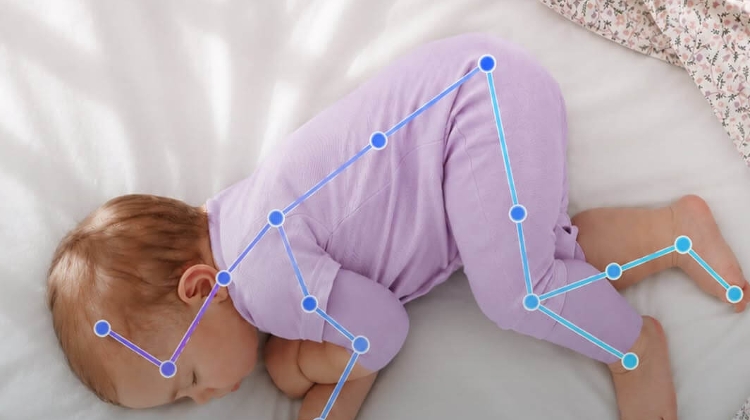
Hungarian researchers have developed an artificial intelligence-based camera system that can continuously monitor the body position and movement of premature infants in incubators without the need for wires or physical sensors, according to an announcement by the HUN-REN Hungarian Research Network reported by MTI.
The project represents a collaboration between HUN-REN SZTAKI, the Institute for Computer Science and Control, and Semmelweis University. The findings have been published in the journal Pediatric Research, highlighting the international significance of the work.
Tracking the movements and sleeping positions of newborns in neonatal intensive care units plays an important role in assessing the development of the nervous system and in identifying potential neurological issues at an early stage.
The newly developed system addresses this need by analysing video footage of infants in real time, with accuracy down to the centimetre. It is capable of distinguishing between typical movements and those that may signal stress or abnormalities.
The technology is based on advanced deep-learning algorithms trained on an extensive dataset.
During development, researchers examined approximately 8,400 hours of video recordings involving 88 premature infants, allowing the system to recognise subtle patterns in movement and behaviour.
Beyond monitoring, the system also supports more responsive and individualised care. By providing continuous data, it enables medical staff to better align examinations and daily routines with each infant’s natural sleep–wake cycle.
This approach has been shown to support faster development and can contribute to shorter hospital stays.
The method offers several practical advantages in a clinical setting. Because it operates entirely without physical contact, it avoids the skin irritation and restricted movement that can result from traditional sensors.
At the same time, round-the-clock monitoring provides a more comprehensive picture of an infant’s condition than periodic checks alone.
The combination of reduced stress and more tailored care can make a meaningful difference for some of the most vulnerable patients in neonatal care.
Photo courtesy: HUN-REN
*********************************************************************************************
You're very welcome to comment, discuss and enjoy more stories via our Facebook page:
Facebook.com/XpatLoopNews + via XpatLoop’s groups: Budapest Expats / Expats Hungary
You can subscribe to our newsletter here: XpatLoop.com/Newsletters


LATEST NEWS IN health & wellness