


















Attila the Hun Exhibition @ Hungarian National Museum
- 14 Jan 2026 2:29 PM
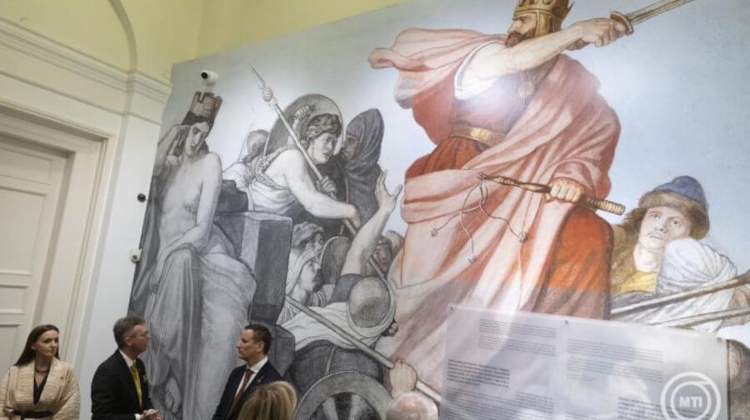
On display until 12 July 2026. An international exhibition titled Attila opened at the Hungarian National Museum on Thursday, marking the day of Hungarian culture. The show delves into the Hun ruler's personality, his era, and his legacy with the help of some 400 artifacts from 64 museums in 13 countries.
Minister of culture and innovation Balazs Hanko told the opening event that Attila, the great prince of the Huns, was often remembered in the West as a cruel barbarian, while in the East he was revered as a hero and historical forefather.
"Like Hungary, Attila is a bridge between East and West: we are all Attila's grandchildren," he added.
Gabor Zsigmond, president of the Hungarian National Museum's Public Collection Centre (MNMKK), said that priceless works of art had been brought to the exhibition from the United Kingdom, France, Germany, Italy, Moldova, Uzbekistan, Azerbaijan, Kazakhstan, and the United Arab Emirates.
The exhibition presents the weapons of the conquering Huns, the artificially deformed skulls found in Hun graves, and information about story of the Hun Empire, their customs, and the impact they had on later cultures around the world.
Visitors can see, among other things, the weapons of the conquering Huns and the distorted skulls found in graves, as well as learn about the history of the Hunnic Empire.
In addition, they can learn about the customs of the Huns, what they left behind for posterity, and what impact they had on later cultures around the world.
The exhibition uniquely examines the relationship between the myth surrounding Attila and historical reality in the light of the results of archaeology, history, art history, anthropology, archaeogenetics, and contemporary reflections.
The exhibition also features special jewelry from the Carpathian Basin and other parts of the former Hunnic Empire.
These include bracelets, rings, necklaces, garnet necklaces, or even "Attila's poison cup ", which was an electron chalice originally decorated with glass inlays and found near Szeged-Nagyszéksós.
The exhibition, which will be on display until July 12, is complemented by a rich series of accompanying programs.
Visitors can also expect an international conference, scientific lectures, roundtable discussions, traditional family and children's programs, museum education sessions, craft workshops, book presentations, film screenings, and live music programs.
Earlier:
New Attila Exhibition in Budapest to Showcase Largest Huns-Themed Display Ever
A major new exhibition exploring the legacy of Attila the Hun is set to open at the Hungarian National Museum in Budapest in early 2026, bringing together one of the most extensive collections ever assembled on this influential historical figure.
The show will present more than 400 artefacts from 64 museums across 13 countries, making it the largest Huns-themed exhibition staged in Europe in recent decades.
Attila has left a deep imprint on European cultural memory, and this exhibition looks beyond myth to examine how his image has evolved over the centuries.
While modern scholarship treats the direct link between Attila and today’s Hungarians cautiously, centuries of legend and storytelling have made him an enduring figure in Hungarian historical thinking.
One of the centrepieces is a monumental painting, The Meeting of Pope Leo the Great and Attila at the Walls of Rome, by Hungarian artist Antal Haan.
Based on a Renaissance work once created for the Vatican, the painting has not been publicly displayed for more than a century and has recently been restored for this exhibition.
The show is organised around two key narratives: one grounded in academic research from archaeology and history, and the other exploring the rich and varied mythology that has grown up around Attila’s life and rule.
Curators say the contrast between historical evidence and folklore is part of what makes the topic so compelling.
Objects on display will range from archaeological finds and fine art to cultural items that reflect Attila’s enduring legacy across Europe and Asia.
Prestigious lenders include institutions such as the British Museum, the Louvre Abu Dhabi, and the National Museum of Baku.
Running from 23 January to 12 July 2026, the exhibition will be accompanied by a broad programme of talks, family activities, panel discussions, film screenings, and music performances.
Visitors can also purchase high-quality reconstructions of jewellery and costume elements inspired by the exhibition.
More:
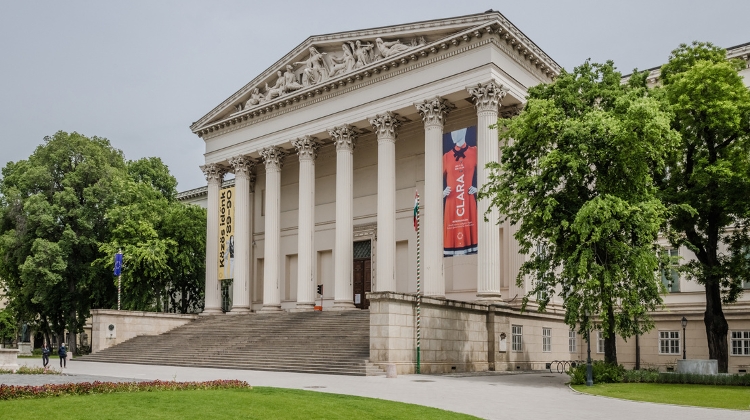
Hungarian National Museum
Address:
1088 Budapest, Múzeum krt. 14-16.



LATEST NEWS IN community & culture